
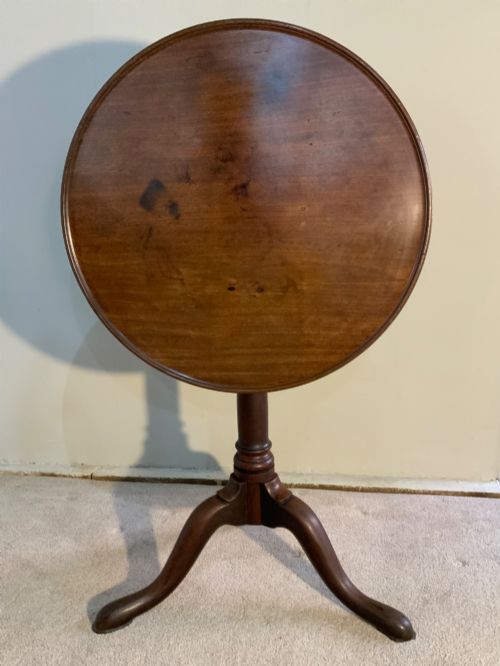
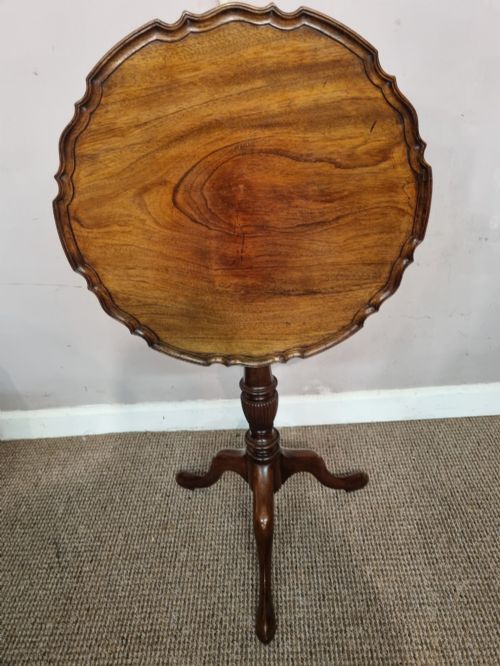
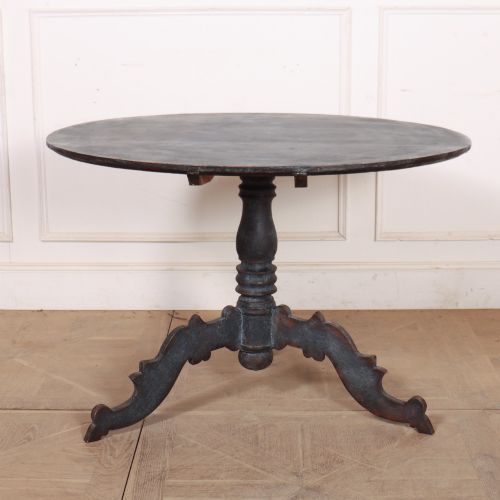

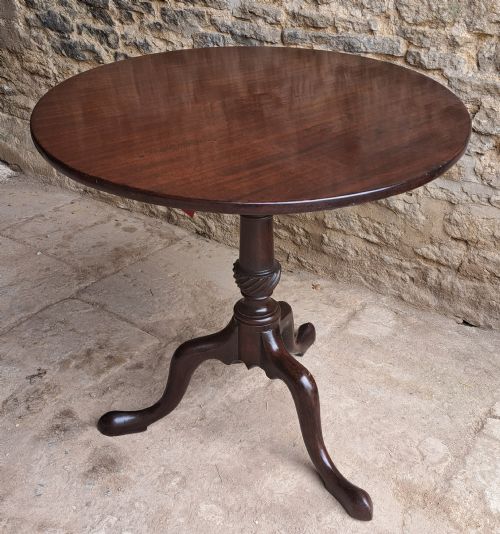



Tilt Top Supper Table
A tilt top supper table is a versatile piece designed to pivot flat for dining and tilt vertically against a wall when not in use.
Forms and Origins
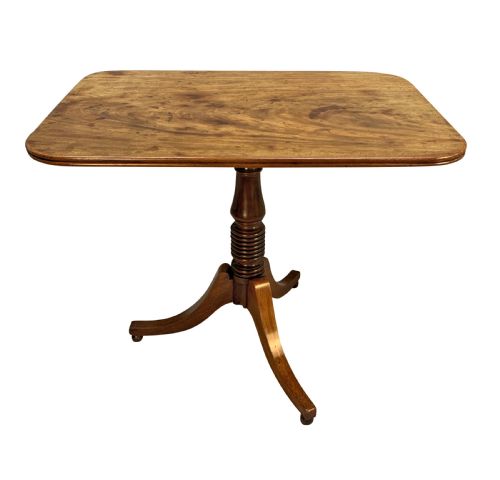
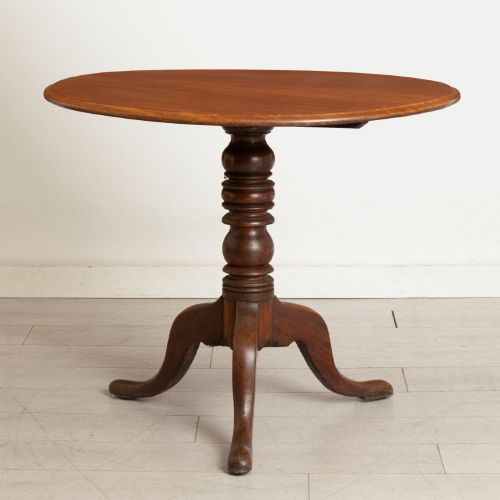
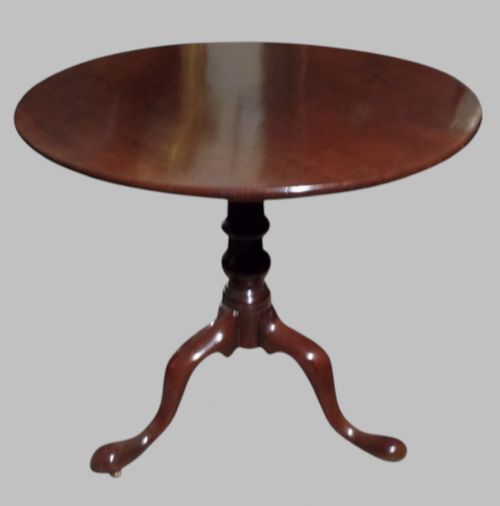
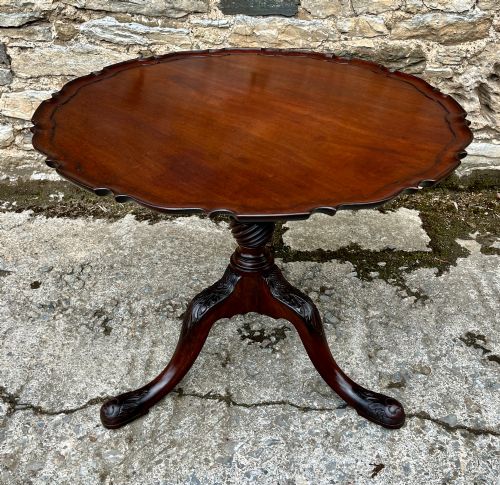
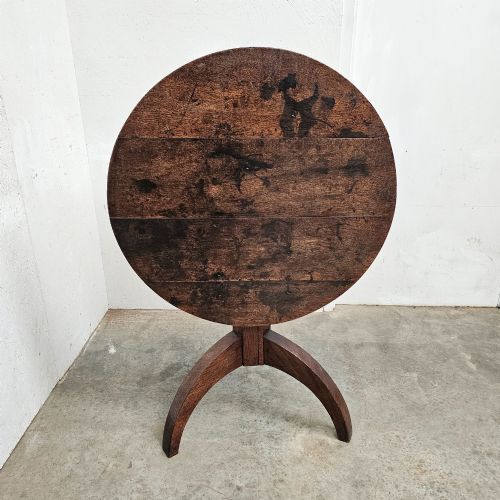
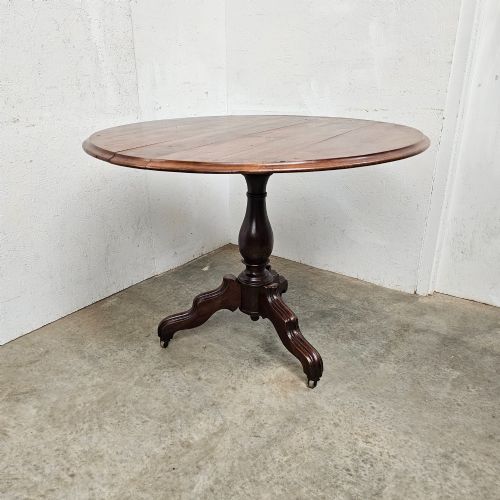
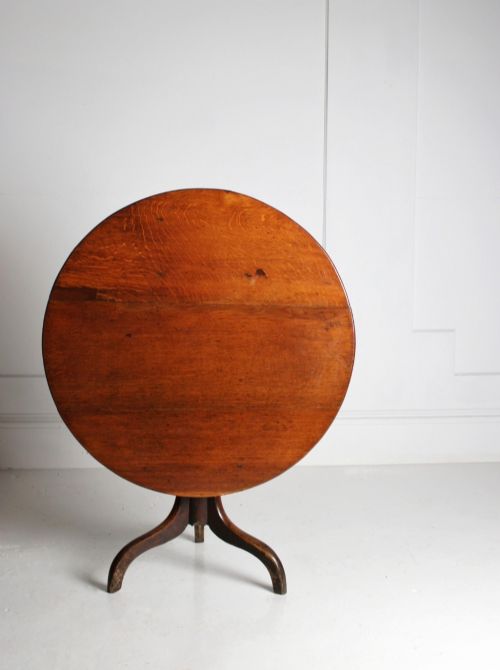
A tilt top supper table brings together centuries of dining furniture history, appearing most frequently in Georgian and Victorian incarnations. You will encounter these circular or occasional tables supported by tripod bases or central pedestals across periods ranging from the 18th century to the Victorian era. The evidence shows forms described variously as side tables, dining tables, breakfast tables, and occasional tables.
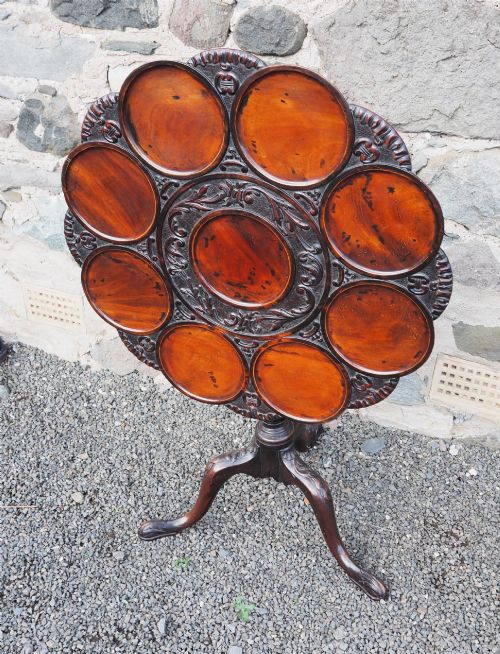
The pieces on this page span the 18th century, Regency, and Victorian periods, with regional examples including Irish workmanship. Timbers such as mahogany and oak dominate the selection, accompanied by occasional use of rosewood, walnut, elm, and papier mache. Styles range from plain country items to carved George II and Chippendale designs.
Materials and Technique
Makers utilised solid timbers and veneers, building tops from mahogany, oak, rosewood, elm, and red walnut, often accented with satinwood or coromandel crossbanding and brass fittings. Structural integrity relied on robust tripod bases and pedestals supporting circular tops.
The tilting mechanism frequently employed a birdcage construction, allowing the top to rotate and pivot cleanly. Surfaces display hand decoration, intricate carving on tripod legs, or pie crust edges shaped directly from the wood.
Retail Price Guide 2026
Typical UK retail prices for tilt top supper table, calculated from the Sellingantiques database of over a million retail prices indexed since 2003. This retail price guide relies exclusively on Sellingantiques data; no external sources or auction records are used, so the figures do not describe the wider market.
Listings feature mahogany, oak, rosewood, elm, and iron, spanning the Georgian, Regency, and Victorian periods.
Judging Quality
The distinction between ordinary and exceptional work rests on the handling of timber and the ambition of the carving. Finely figured mahogany, rich natural patination, and deeply carved tripod legs elevate a piece above simpler country examples made of oak or elm.
Sophisticated mechanisms like a functioning birdcage assembly demonstrate superior cabinet-making. Decorative treatments such as inlaid crossbanding or hand-painted papier mache surfaces separate standard utility items from high-status examples.
The Tilt Top Supper Table Glossary
- Tilt top
- A table top hinged to pivot into a vertical position for storage.
- Tripod base
- A three-legged support providing stability for a central pedestal column.
- Birdcage
- A timber framework beneath the top that allows both rotation and tilting.
- Pie crust edge
- A raised, carved moulding along the perimeter of a circular table top.
- Crossbanding
- A decorative border of veneer laid with the grain running perpendicular to the main surface.
Frequently Asked Questions
What is a tilt top supper table?
A tilt top supper table is a circular table featuring a hinged mechanism that allows the top to pivot upright. This design enabled the furniture to be stored compactly against a wall when the evening meal concluded.
Such pieces functioned primarily for dining or social gatherings before returning to the perimeter of a room. Their dual purpose made them a staple of domestic interiors.
How do I identify a Georgian table?
Georgian tables typically display rich mahogany timbers, tripod bases, and restrained carving reflecting 18th-century design standards. Many incorporate birdcage mechanisms beneath the top.
Later Victorian interpretations often introduce rosewood, papier mache, or more ornate decorative flourishes while retaining the characteristic pivoting function.
How do I live with a tilt top table?
Living with these tables involves appreciating their flexibility as occasional or side surfaces. You can keep them tilted to display the polished timber top or lower them horizontally for daily use.
Care should be taken to place them away from direct heat sources to protect the historic wood and finish.
What woods were used for these tables?
Makers constructed these tables from a variety of hardwoods suited to turning and carving. Mahogany appears most frequently, alongside regional timbers like oak, elm, and red walnut.
More decorative examples incorporate exotic veneers such as rosewood, satinwood, and coromandel.