



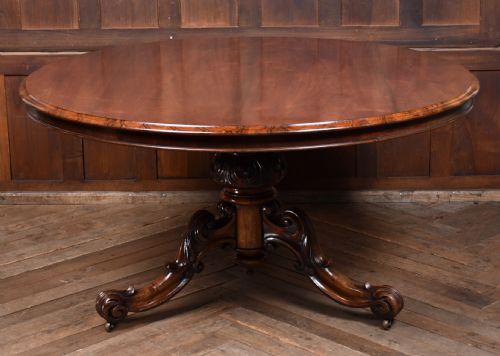
Round Rosewood Breakfast Table
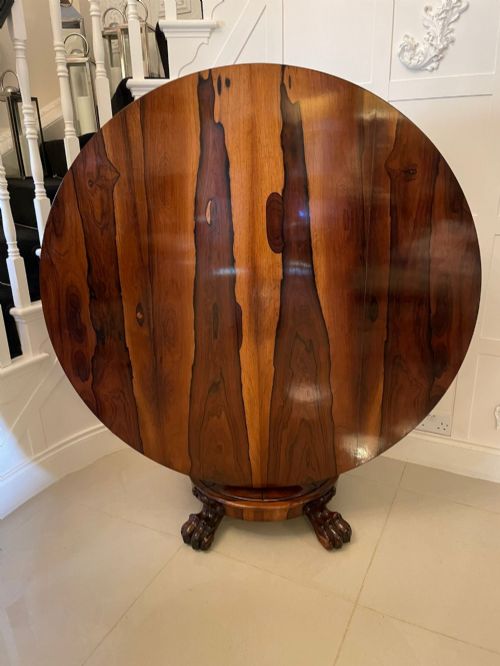
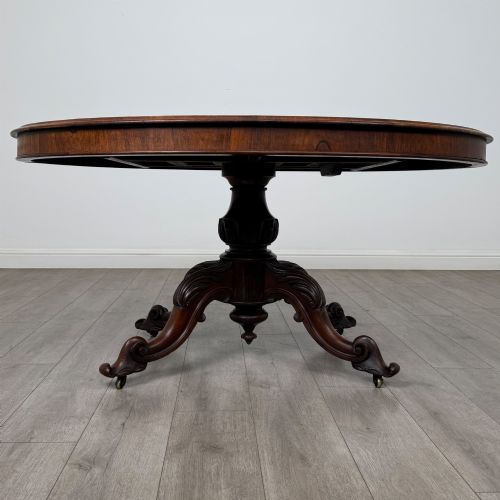
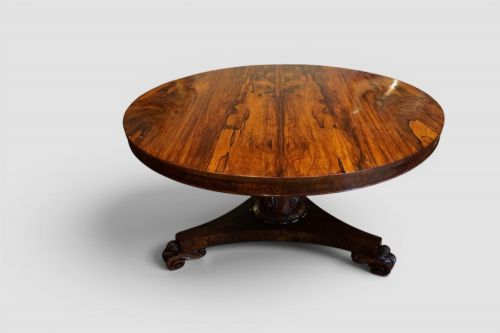
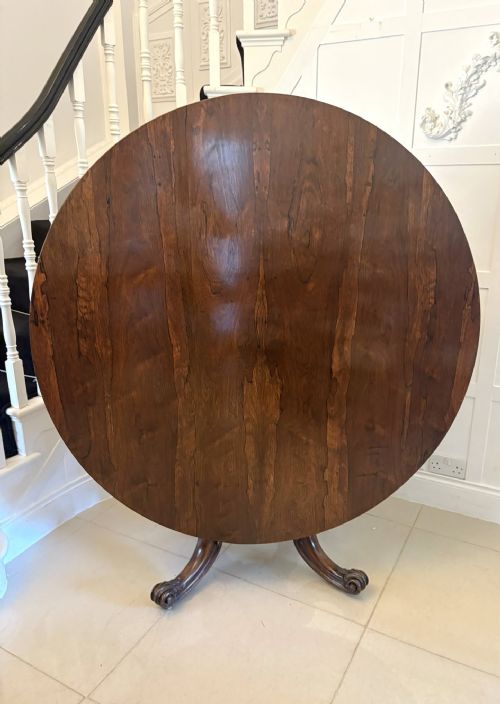
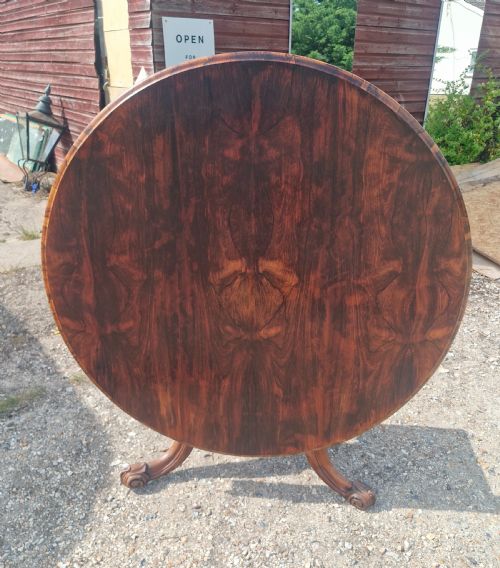
A round rosewood breakfast table brings rich timber grain and a circular top into a room, serving as a versatile dining or centre piece.
Round Rosewood Breakfast Table
When you search for a round rosewood breakfast table, you encounter circular tables designed for dining, supper, or general centre use during the nineteenth century. These pieces appear primarily across Regency, William IV, George IV, and Victorian periods, reflecting the tastes of the nineteenth century.
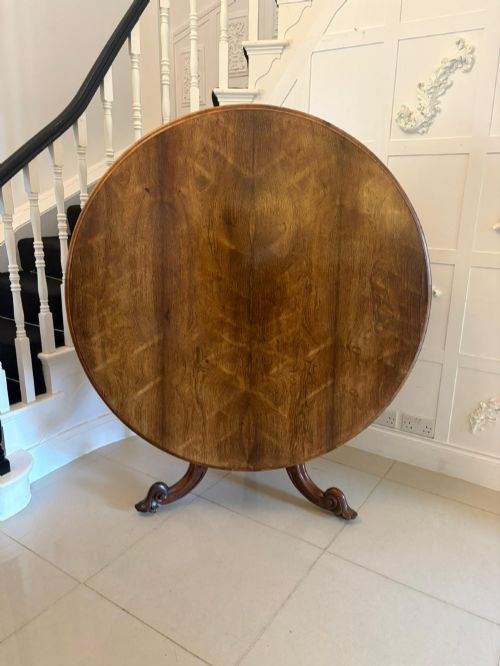
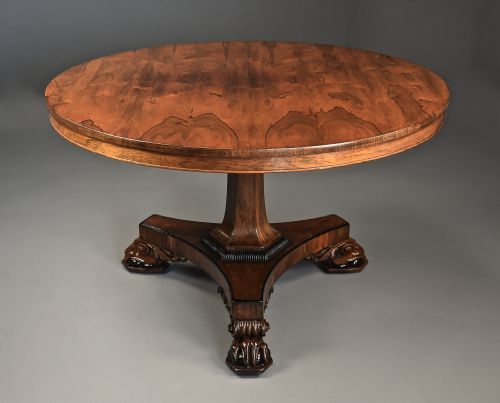
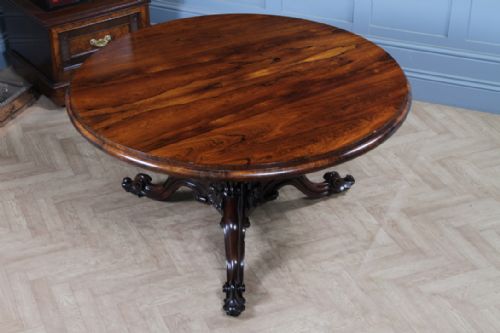
The version you most frequently meet on this page is the tilt-top or snap-top breakfast table, built so the top can be folded vertically when not in use. Many examples also function as centre tables in larger rooms, offering a substantial circular surface supported by a central column and a robust base.
Origins span English and Scottish workshops, with styles ranging from plain Regency lines to heavily carved William IV and Victorian interpretations. They combine functional dining utility with the deep, dark tones characteristic of nineteenth-century timber furniture.
How they were made
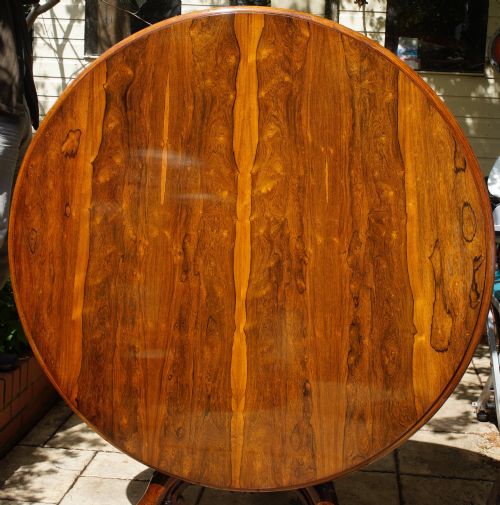
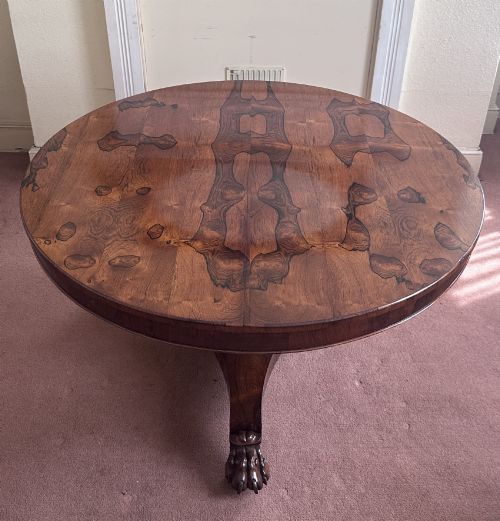
Cabinet makers utilised dense rosewood and rosewood veneer applied over solid timber foundations to construct these circular tops. This choice of material allowed workshops to display striking figured grain patterns across a broad surface.
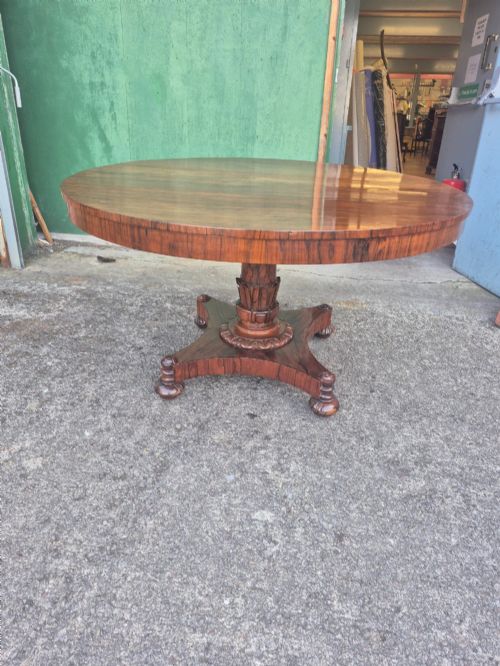
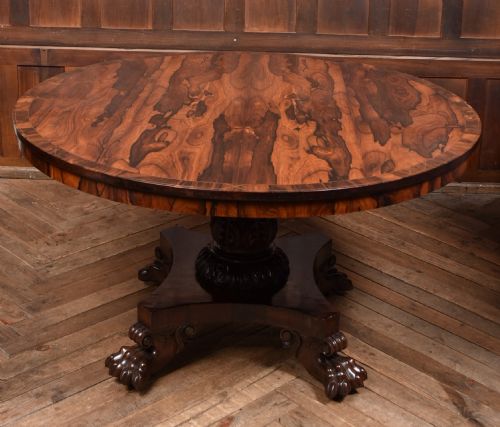
Makers integrated brass inlay and intricate hand carving into the pedestals, friezes, and triform or platform bases. Tilt-top mechanisms required precise engineering using timber hinges and brass catches so the heavy circular top could pivot securely.
Current listings demonstrate that nineteenth-century makers combined solid rosewood, rosewood veneer, mahogany, and brass inlay across breakfast, centre, and tilt-top table forms.
What varies in quality
The depth of figure in the rosewood veneer sets the baseline for visual distinction, with richly figured timber commanding greater attention than plain surfaces. Cabinet makers who selected symmetrical grain patterns achieved a more cohesive appearance across the circular top.
Constructional solidity in the central column and base determines long-term stability, particularly in tilt-top mechanisms that endure repeated pivoting. Refined hand carving on pedestals and precise brass inlay separate standard production from more ambitious workshop output.
James Winter of Wardour Street
The Round Rosewood Breakfast Table Glossary
- Rosewood
- A dense, dark timber featuring contrasting dark brown and black grain patterns. It was favoured by nineteenth-century cabinet makers for high-status dining and centre tables.
- Tilt-top
- A table construction where the circular top pivots on a hinge to rest vertically against the pedestal. This mechanism allowed tables to be stored against walls when not in use.
- Triform base
- A three-sided pedestal support resting on feet or castors. It provides stability for heavy circular tables.
- Centre table
- A freestanding table designed to stand in the middle of a room rather than against a wall. These pieces often share forms with breakfast and dining tables.
- Veneer
- A thin layer of figured rosewood applied over a secondary timber core. This technique displayed decorative grain without requiring solid blocks of scarce wood.
Round Rosewood Breakfast Table: Frequently Asked Questions
Can I use a breakfast table for daily dining?
These tables were originally built for morning meals and informal gatherings in nineteenth-century homes. Their sturdy circular tops and central pillars accommodate daily dining without difficulty.
Ensure chairs fit comfortably beneath the frieze or edge of the top, as some pedestals feature wide base configurations that limit legroom.
What is the difference between a breakfast table and a centre table?
Breakfast tables frequently incorporate tilting mechanisms for convenient storage and morning dining use. Centre tables generally feature fixed tops intended to remain stationary in the middle of a room.
In practice, nineteenth-century makers used these terms interchangeably, and many pieces served both functions.
How do I distinguish William IV pieces from Victorian ones?
William IV examples typically exhibit bold architectural proportions with heavy scrolled pedestals and understated classical details. Victorian pieces often introduce heavier hand carving and varied snap-top configurations.
Examination of the timber figure and base construction helps clarify the specific period of manufacture.
How do I care for rosewood surfaces?
Maintain rosewood by dusting with a soft, dry cloth and avoiding direct sunlight that can fade the timber. Applying appropriate wax polish preserves the sheen of the polished veneer.
Keep these tables away from extreme temperature shifts and moisture to protect the underlying timber and veneer joints.