




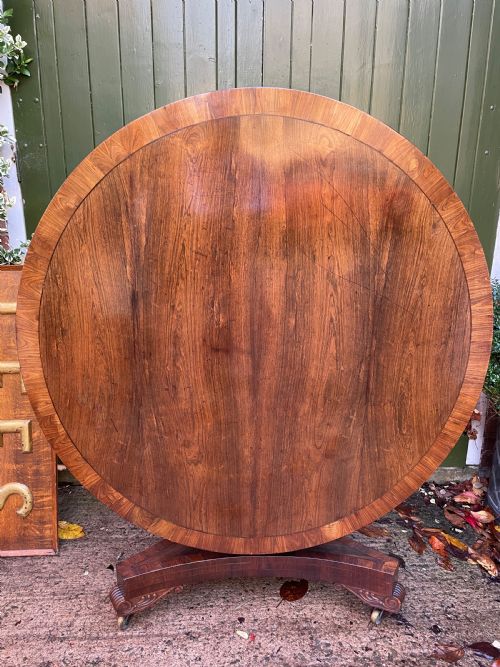

Georgian Rosewood Dining Table
A georgian rosewood dining table brings rich timber grain and architectural stability to a dining room, uniting the Regency and William IV periods in a single centrepiece.
Georgian Rosewood Dining Table
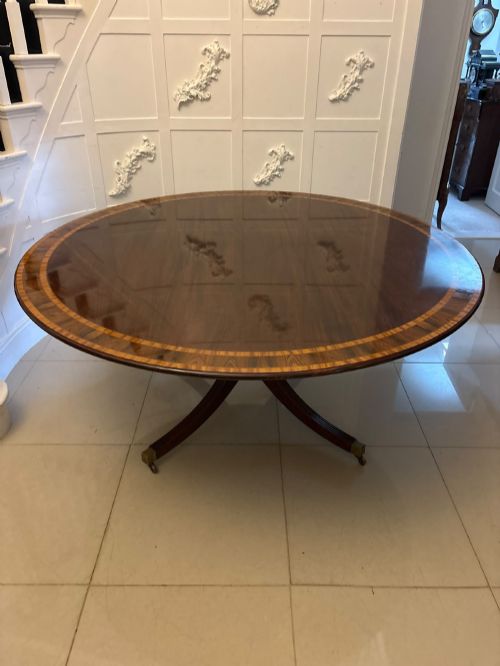
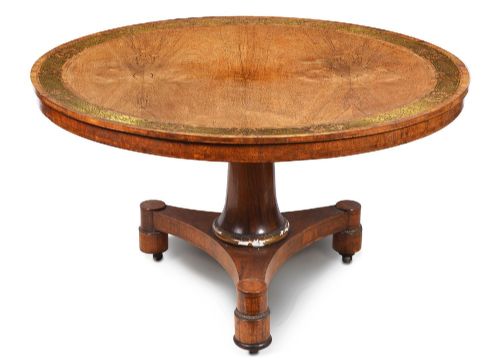
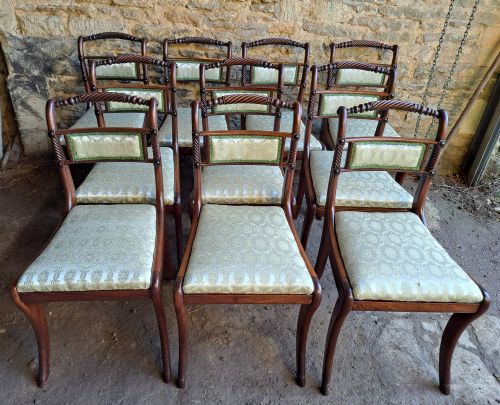
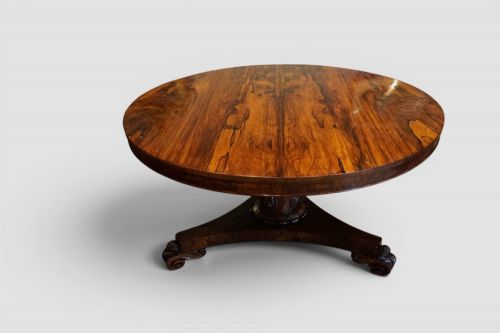
A georgian rosewood dining table encompasses forms made during the Regency, George IV, and William IV eras, alongside pieces dated around eighteen-fifty. The selection spans round tip-top breakfast tables, triform pedestal centre tables, and associated dining chairs designed for formal interiors.
Buyers will most frequently encounter circular breakfast tables and centre tables featuring veneered tops and sturdy pedestals. These forms demonstrate the transition from classical Regency lines to the heavier, grander proportions of the William IV period.
The evidence shows that dining tables in this search frequently overlap with centre tables and breakfast tables, reflecting how rooms were used during the early nineteenth century. Matching chairs also appear to complete the dining arrangement.
How they were made
Cabinet makers utilised wood veneer over solid timber carcases, applying figured rosewood and exotic alternatives such as goncalo alves to achieve striking surface patterns. Selected examples incorporate brass inlay set directly into the timber to frame the tops and bases.
Structural elements often rely on parcel gilt highlights and carved wooden pedestals, sometimes featuring triform bases supported by concealed castors. Joinery techniques accommodated the movement of large timber panels while maintaining rigid support for dining use.
Georgian Rosewood Dining Table Retail Price Guide 2026
Typical asking prices for georgian rosewood dining table among the pieces listed under this phrase on Sellingantiques today, from the lower quarter to the upper quarter. They describe what is for sale here now, not the wider market.
Some tables tilt their tops vertically, proving that nineteenth-century rooms were surprisingly flexible when it came to clearing space for dancing.
What varies in quality
Quality rests in the selection and matching of the rosewood veneer across the primary surface, where balanced grain patterns elevate the visual impact. The crispness of carved details on the pedestal and the precision of any brass inlay distinguish superior workshop production.
Proportion and stability define the structural hierarchy, separating tables with heavy, well-balanced triform bases from simpler constructions. The integration of secondary timbers and the retention of original finish characteristics govern the overall standing of each piece.
The Georgian Rosewood Dining Table Glossary
- Regency
- A stylistic period spanning the early nineteenth century, characterised by classical restraint, architectural motifs, and refined proportions.
- William IV
- A decorative era falling within the nineteenth century, known for heavier furniture forms, bold scrolling supports, and generous use of rosewood.
- Tip-top
- A table construction featuring a hinged mechanism that allows the circular top to fold vertically for storage against a wall.
- Triform base
- A three-sided pedestal support that rests on feet, frequently seen on pedestal tables from the Regency and William IV periods.
- Goncalo alves
- An exotic hardwood with striking contrasting grain patterns, utilised alongside rosewood in certain nineteenth-century tables.
Georgian Rosewood Dining Table: Frequently Asked Questions
What is a georgian rosewood dining table?
A georgian rosewood dining table is a dining or centre table produced during the Regency, George IV, or William IV periods using rosewood veneers.
These pieces typically feature circular tops supported by central pedestals, often with brass inlay or carved wood details.
How do I date a rosewood table?
Dating relies on stylistic clues such as the transition from slender Regency lines to the heavier scrolling supports of the William IV era.
Construction methods, timber choices like goncalo alves, and secondary woods also help place a table within the early nineteenth century.
Were these tables used for dining?
Many examples function as breakfast tables or centre tables, which served multiple purposes in nineteenth-century formal rooms.
Their tilt-top mechanisms and sturdy triform bases made them adaptable for dining and general entertaining.
How do I care for rosewood furniture?
Rosewood surfaces respond best to stable indoor humidity and protection from direct sunlight to prevent timber movement and fading.
Regular dusting with a dry cloth maintains the finish without the need for heavy modern polishes.