
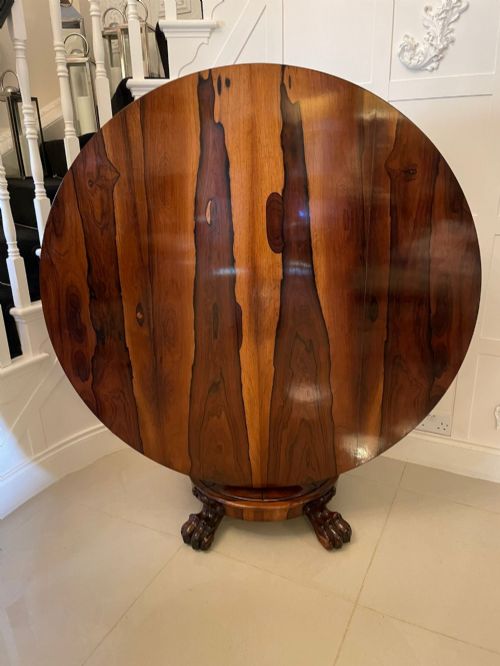

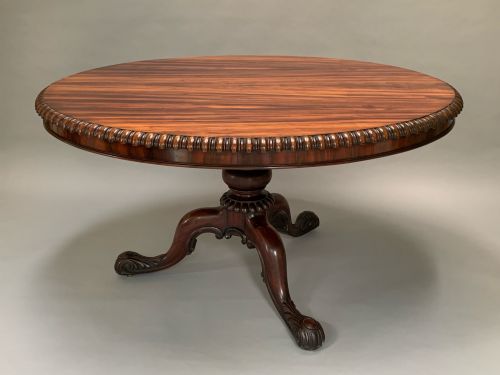
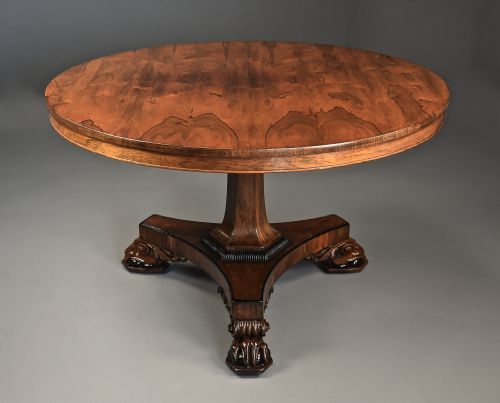
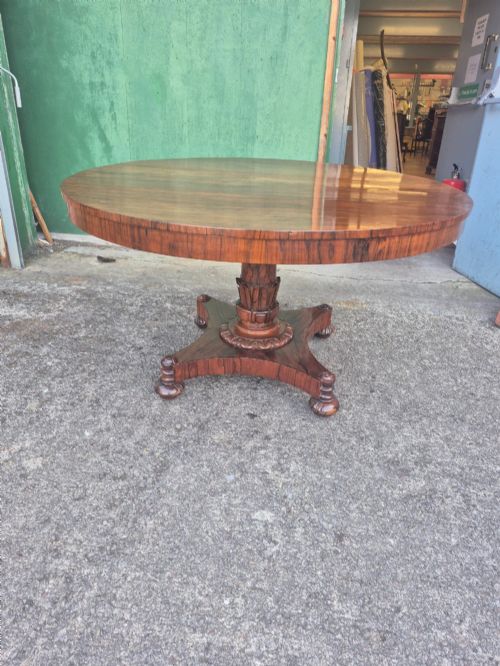
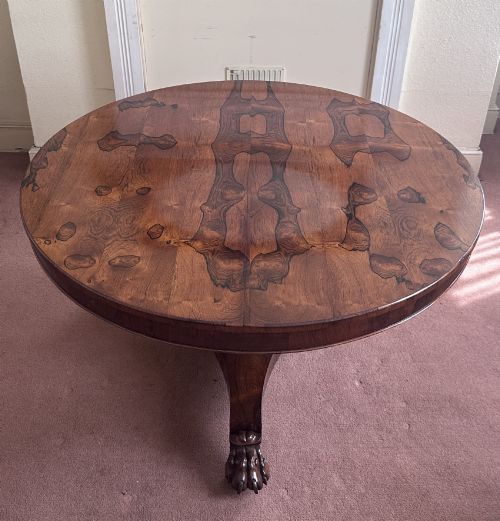
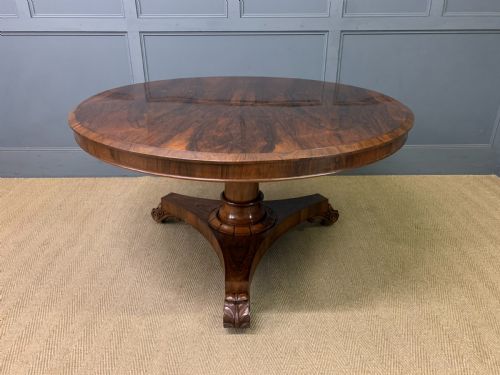
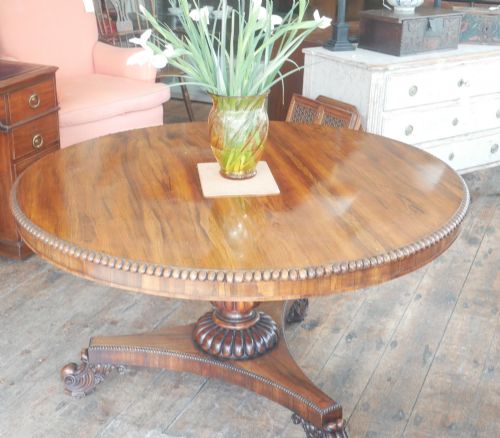


Regency Rosewood Dining Table
A regency rosewood dining table brings rich tropical grain and sculptural pedestals to a room, offering a centrepiece built for grand dining.
What a regency rosewood dining table is
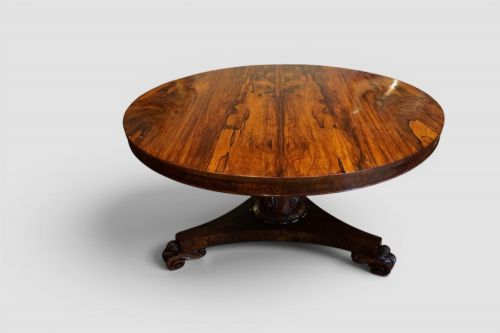
A regency rosewood dining table primarily appears in circular, round, or ovular formats designed to stand as centre or breakfast tables. The evidence shows pieces spanning the 19th century, Regency, and Georgian periods, with William IV and Grand Regency styles frequently represented.
Most examples function flexibly as dining, centre, or breakfast tables, often featuring tilt-top mechanisms or sturdy pedestal bases. These versatile forms reflect the domestic habits of the early 19th century, where furniture needed to adapt to changing room layouts.
Buyers seeking this phrase encounter pieces dating from around 1820 to 1830, constructed with circular tops that seat up to six people. The forms range from simple pedestal bases to elaborate triform supports and brass-inlaid surfaces.
How they were made
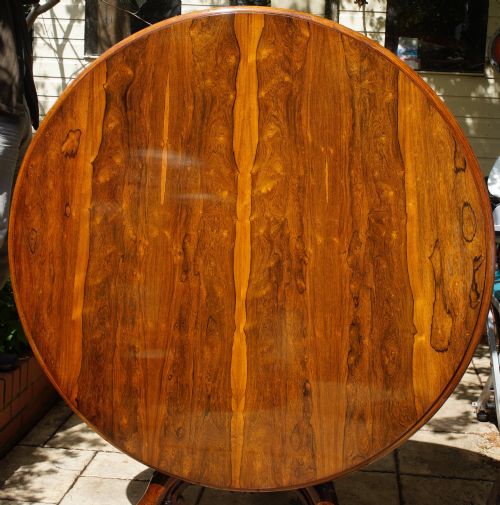
Cabinet makers utilised dense timber foundations surfaced with fine rosewood veneer to achieve rich, figured grain patterns across expansive circular tabletops. This technique allowed workshops to display dramatic timber figuring while maintaining structural stability across large surfaces.
Brass inlay frequently integrates into the timber tops, creating geometric or botanical contrast against the dark rosewood grain. Pedestal and triform bases anchor the heavy tops, sometimes incorporating tilt-top mechanisms for storage or clearing space.
Retail Price Guide 2026
Typical UK retail prices for regency rosewood dining table, calculated from the Sellingantiques database of over a million retail prices indexed since 2003. This retail price guide relies exclusively on Sellingantiques data; no external sources or auction records are used, so the figures do not describe the wider market.
Listings demonstrate forms bridging the 19th century, encompassing Georgian transitions and distinct William IV styling.
What varies in quality
The sophistication of the timber figuring and the precision of any brass inlay distinguish the finer examples from standard production. Richly grained rosewood veneer applied symmetrically across a large round top indicates careful material selection by the maker.
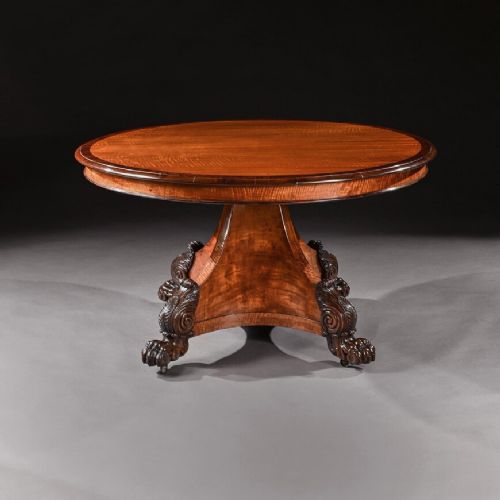
Architectural presence in the pedestal and base structure separates exceptional pieces from simpler utilitarian tables. Solid timber construction, robust triform supports, and well-engineered tilt-top actions elevate the standing of a table within its period.
The Regency Rosewood Dining Table Glossary
- Rosewood
- A dense, heavily figured tropical timber prized for its dark purple-brown colour and contrasting black grain lines. It was sliced into veneer or used in solid form for elite 19th-century furniture.
- Veneer
- A thin layer of superior timber applied to a secondary wood foundation to display decorative grain without structural excess. Cabinet makers used rosewood veneer extensively on large table tops.
- Tilt-top
- A hinged mechanism allowing the tabletop to pivot into a vertical position when not in use. This clever design enabled large round tables to be stored against walls to save floor space.
- Centre table
- A freestanding table designed to be viewed from all sides, placed in the middle of a room rather than against a wall. Many rosewood dining and breakfast tables served this dual purpose.
Frequently Asked Questions
How do I seat six people around a round table?
Circular tables from this period often measure large enough in diameter to accommodate chairs comfortably around the central pedestal without leg obstruction.
The absence of corner legs allows for flexible seating arrangements compared to standard rectangular dining formats.
What is the difference between a breakfast table and a dining table?
Breakfast tables frequently incorporated tilt-top mechanisms for convenient storage in smaller morning rooms or parlours.
Over time, the terms overlap significantly in historical records, with many circular pieces serving both dining and centre table functions.
How do I care for rosewood furniture?
Keep timber surfaces away from direct sunlight and excessive heat sources to prevent the rosewood veneer from drying or splitting.
Regular dusting with a dry cloth maintains the polish without building up unnecessary chemical residues on the antique finish.
How can I tell a Regency table from a William IV table?
Regency pieces often display refined proportions with delicate brass inlay and slender pedestals reflecting classical restraint.
William IV examples tend towards heavier, grander forms with robust triform bases and bold architectural turning.