


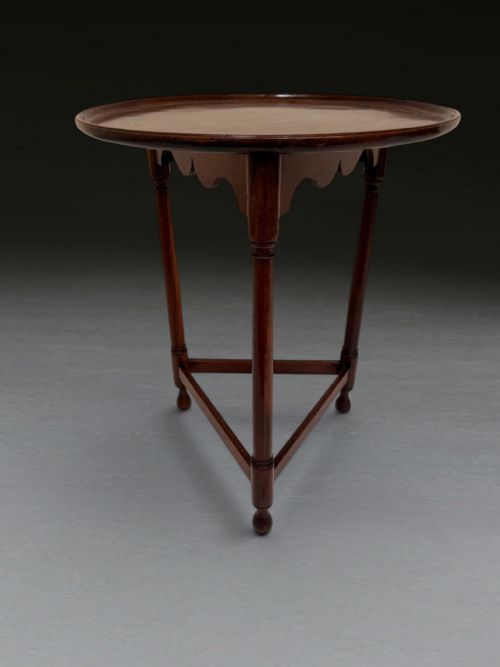

Antique Round Wooden Table
An antique round wooden table anchors a room with organic grain and centuries of craftsmanship.
Antique Round Wooden Table
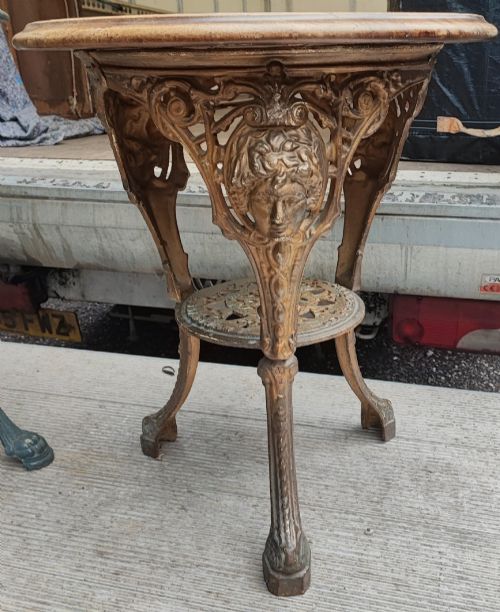
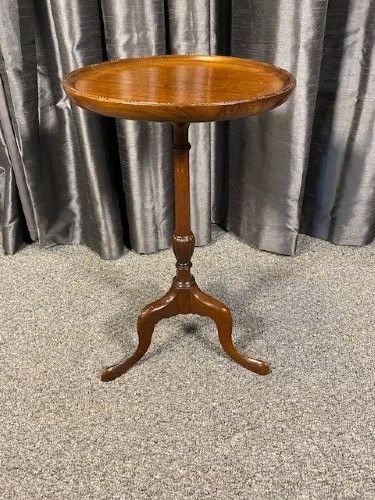
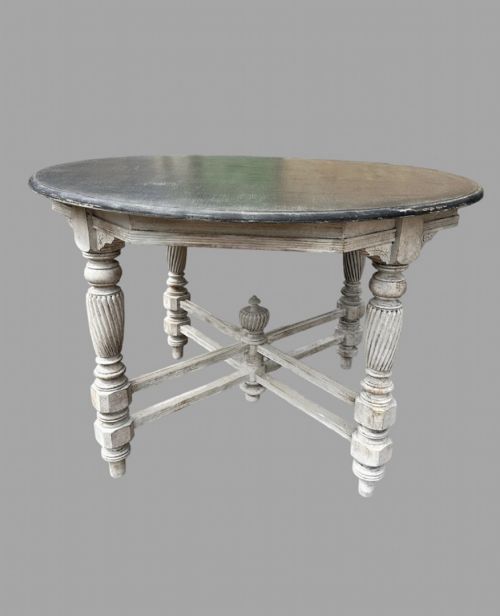
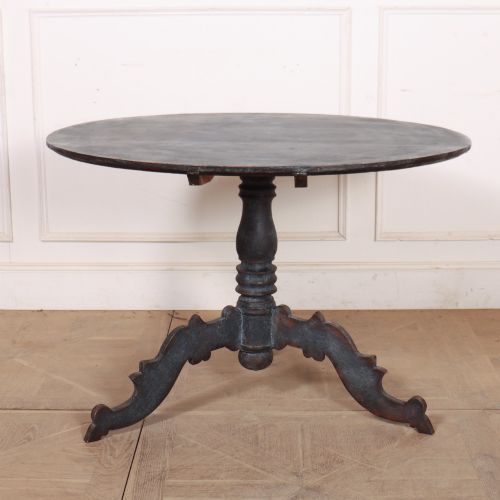
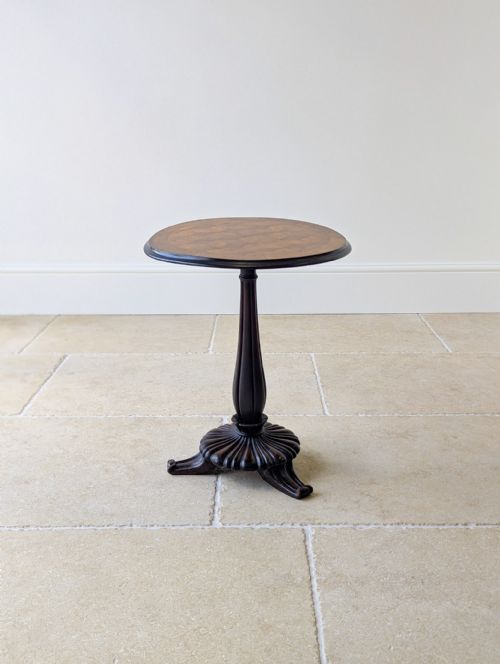
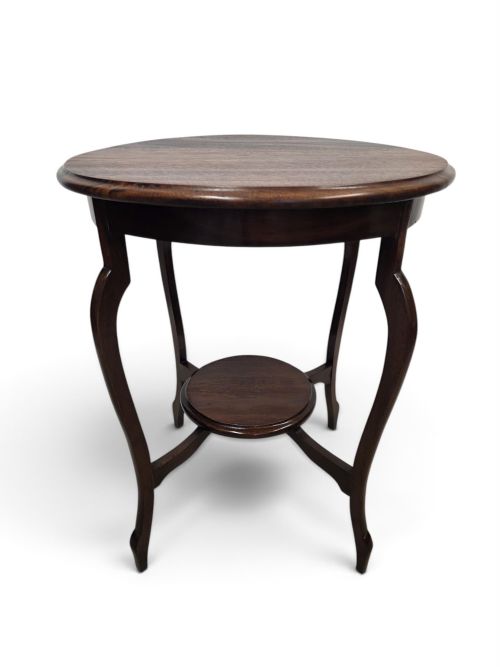
An antique round wooden table spans compact tripod wine tables and large dining pieces created across the eighteenth, nineteenth, and early twentieth centuries. Buyers searching for an antique round wooden table typically encounter sturdy oak cricket tables, tilt-top occasional pieces in mahogany, and heavy walnut or rosewood dining formats.
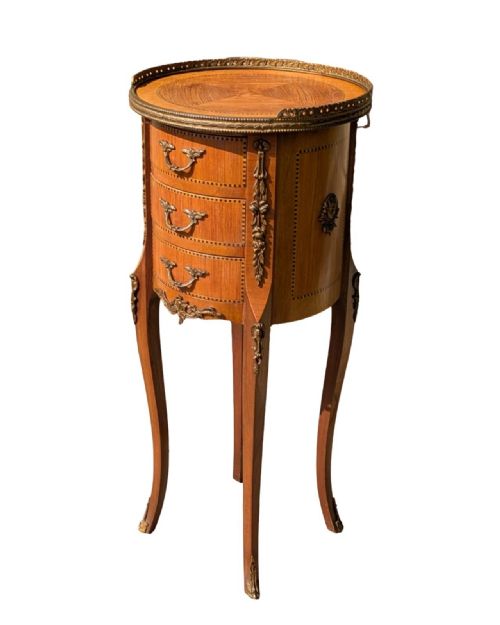
The inventory covers vernacular country designs alongside formal Victorian pedestal tables and painted continental examples. Smaller side, lamp, and occasional formats appear frequently alongside kitchen garden tables and tavern seating.
How they were made
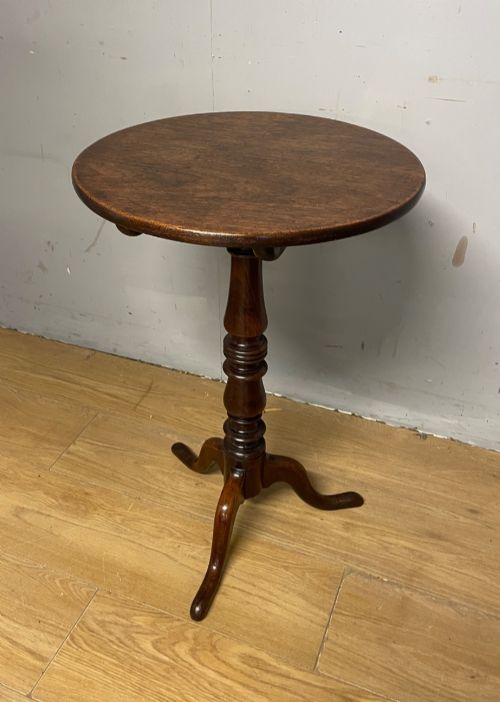
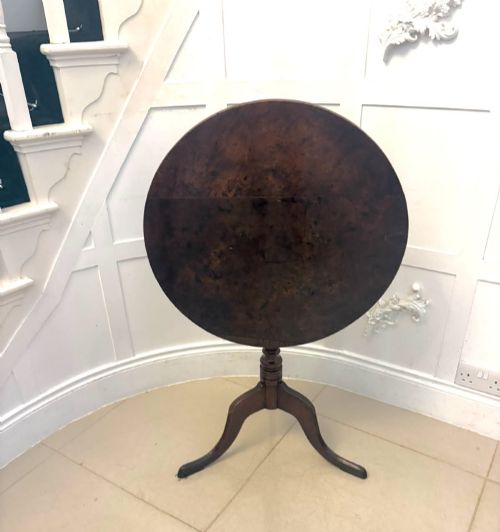
Cabinetmakers utilised solid timbers including mahogany, oak, walnut, elm, and yew, frequently shaping circular tops above central pedestals or three-legged tripod bases. Tilt-top mechanisms incorporated brass catches and iron fittings to allow tops to fold flat when not in use.
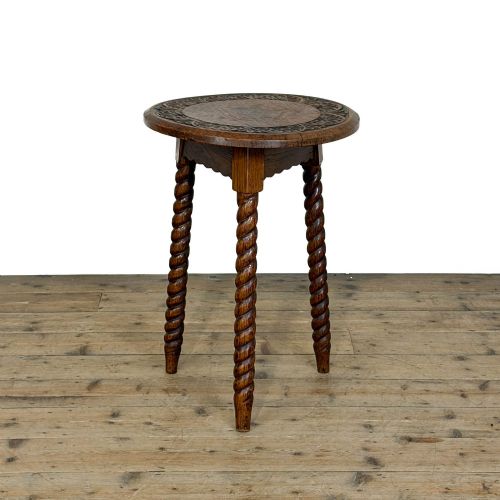
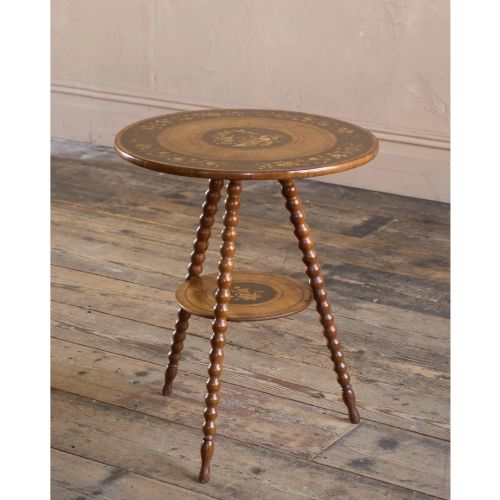
Joinery relied on traditional pegged tenons, dovetails, and turned supports such as barley twists and bobbin legs. Surface finishes range from polished mahogany and burr oak to hand-applied paint on pine and softwood bases.
Listings span the eighteenth, nineteenth, and early twentieth centuries, featuring oak, mahogany, walnut, elm, and painted finishes.
What varies in quality
Quality rests in the selection of timber figures, such as burr oak, pollard oak, or figured walnut, matched against honest structural proportions. Superior examples display crisp hand-carving, well-turned pedestals, and original tilt mechanisms that lock true without excessive play.
The integrity of the timber surface and the harmony of the base dictate distinction, separating utilitarian workshop output from ambitious parlour pieces. Altered heights or replaced tops reduce the integrity of early tripod and cricket forms.
Liberty of London
The Antique Round Wooden Table Glossary
- Cricket table
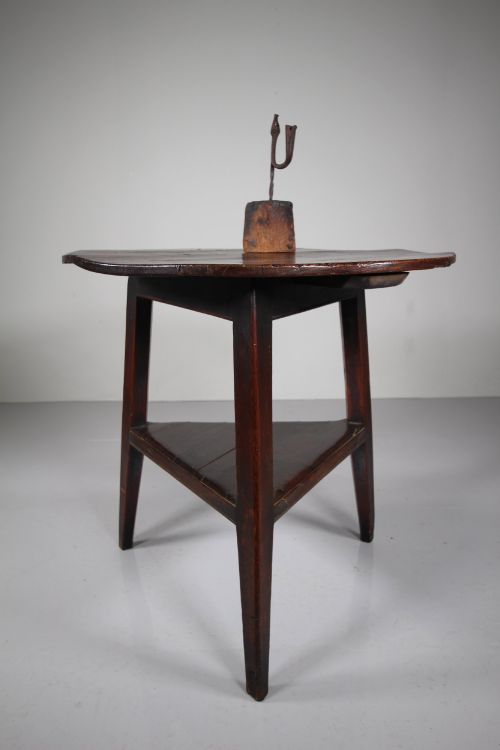
- A small three-legged circular table dating back to the eighteenth century, traditionally built with an oak top and braced legs for stability on uneven floors.
- Tilt-top
- A hinged tabletop mechanism allowing the surface to swivel and store vertically against a wall when space was needed.
- Tripod base
- A pedestal support terminating in three curved legs, commonly found on wine, lamp, and occasional tables from the Georgian period onward.
- Pedestal table
- A single central column supporting a heavy circular top, frequently seen in Victorian dining and centre tables with heavy barley twist or carved supports.
- Inlay
- The insertion of contrasting woods or decorative materials such as kingwood into the primary surface to create geometric patterns or pictorial motifs.
Antique Round Wooden Table: Frequently Asked Questions
How do I identify a cricket table?
Cricket tables feature three splayed legs and a circular wooden top, originally built for stability in domestic cottages and taverns.
Most examples date from the eighteenth and nineteenth centuries, constructed from solid oak or elm with simple pegged construction.
What is a tilt-top table used for?
Tilt-top tables served as versatile occasional furniture that could be folded flat and pushed against a wall when floor space was required.
They functioned primarily as wine tables, lamp stands, or reading surfaces in Georgian and Victorian parlours.
Which woods are most common?
Mahogany, oak, and walnut appear most frequently across the inventory, alongside regional timbers like elm, yew, and pine.
Formal dining and wine tables tend to use dense hardwoods, while rustic country pieces often utilise native oak or elm.
How do I style a round table?
A round table breaks the linear rigidity of rectangular rooms, fitting comfortably into corners, entryways, or centre floor spaces.
Smaller tripod and occasional formats hold table lamps, books, or decorative objects, while larger pedestal designs anchor dining areas.