

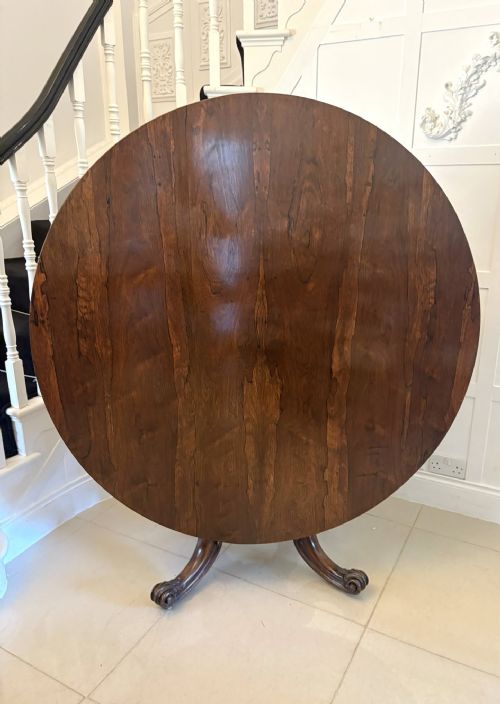
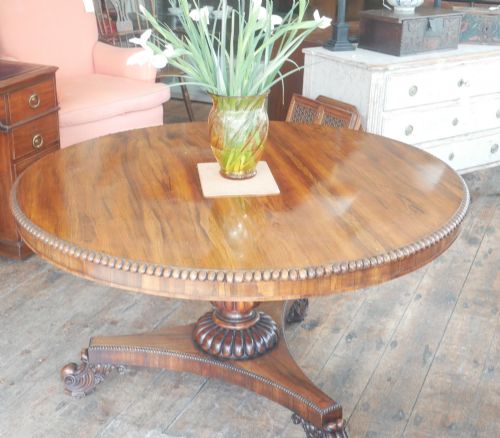
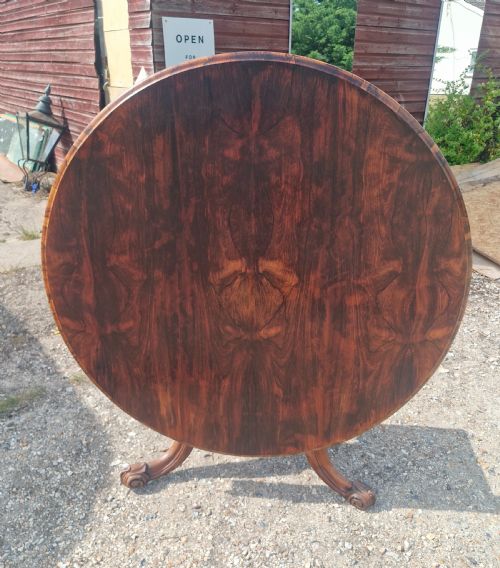
Carved Rosewood Loo Table
A carved rosewood loo table brings warmth and presence to a large room, serving as a versatile gathering centre.
Carved Rosewood Loo Table
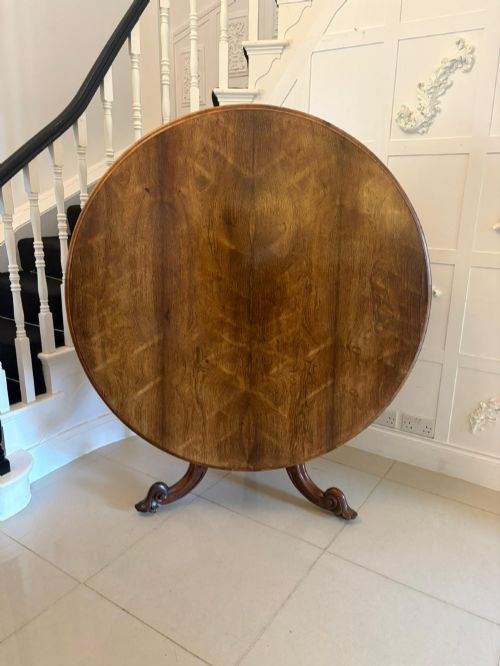
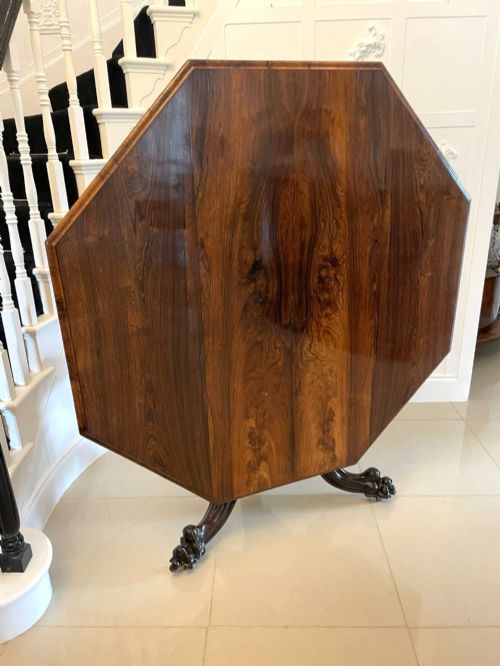
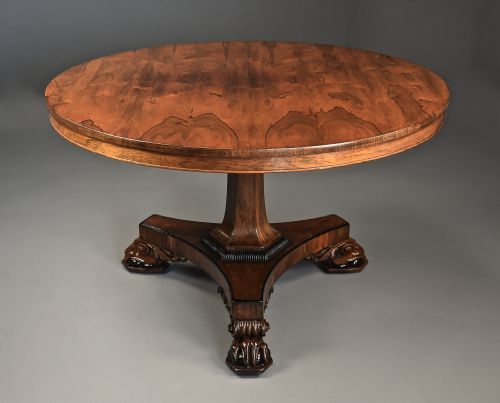
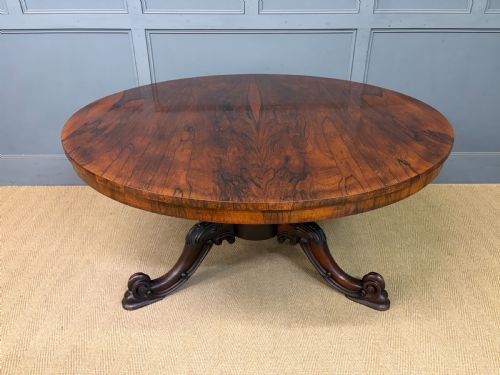
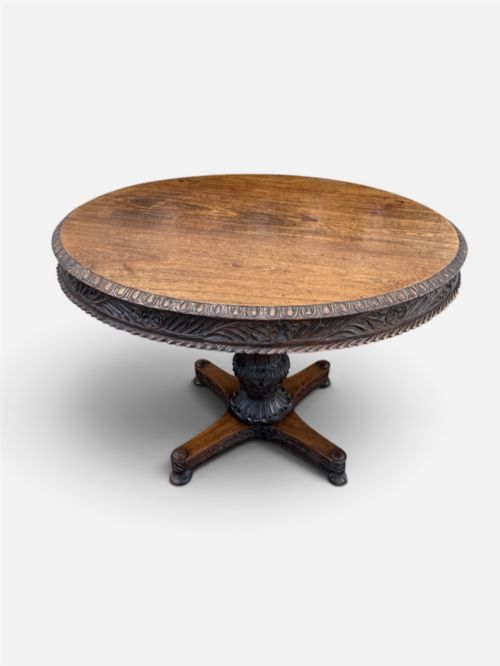
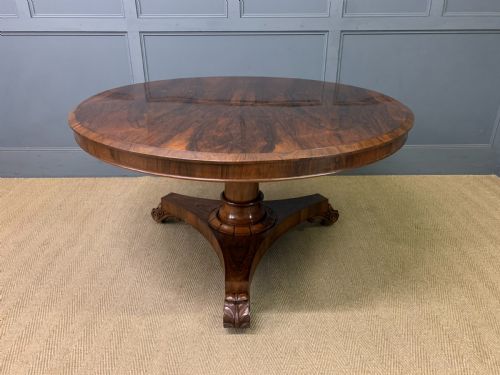
A carved rosewood loo table is a substantial circular or oval piece designed for domestic utility and evening card games, most frequently appearing from the Victorian and William IV periods. These tables typically feature a tilting mechanism that allows the top to be stored vertically against a wall when not in use. You will most often encounter pieces dating from the mid nineteenth century, constructed with rich dark timbers and resting on heavy carved pedestals.
The form bridges the gap between a formal dining table and an occasional centre table, often measuring large enough to accommodate several guests. Makers produced these tables in various configurations, including serpentine, circular, and oval formats with snap-top mechanisms. Their heavy timber construction demands ample floor space to appreciate the scale and proportion properly within an interior.
How they were made
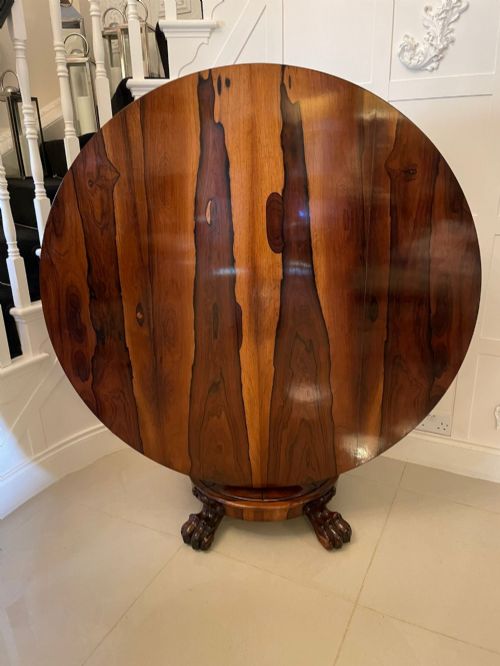
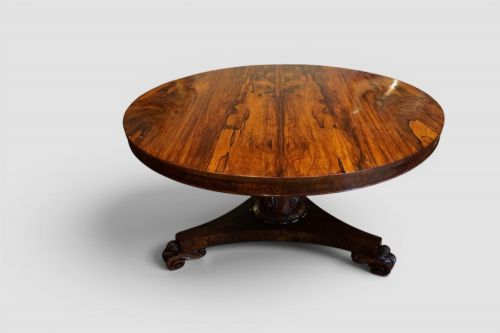
Cabinet makers utilised dense tropical rosewood, sometimes applied as fine veneer over secondary timbers like mahogany or combined with lighter woods such as satinwood and marquetry inlay. The tops frequently display carefully matched timber grain arranged symmetrically to highlight the natural figuration of the material. Brass mechanisms often facilitated the snap-top or tilt function safely and securely.
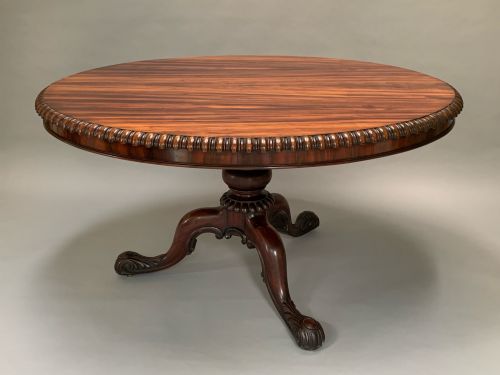
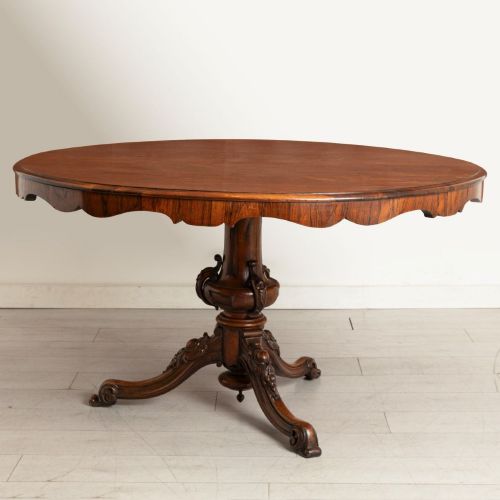
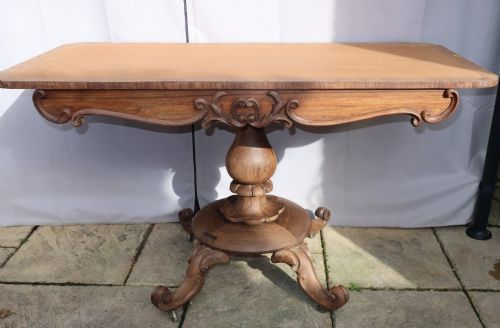
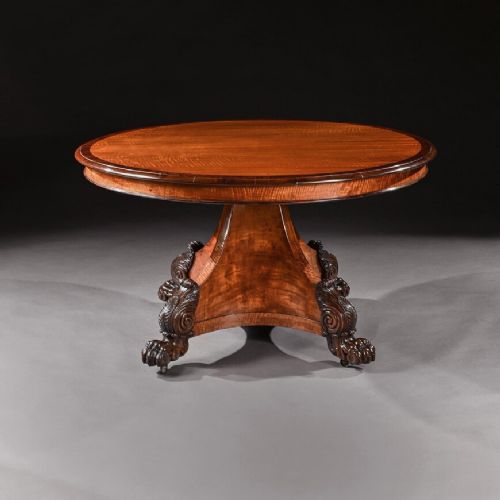
Structural support relied on heavily carved solid rosewood bases, columns, and scrolled feet that anchored the substantial weight of the top. Turning and hand carving defined the central pillars, whilst internal framing provided the rigidity needed for the tilting action.
Carved Rosewood Loo Table Retail Price Guide 2026
Typical asking prices for carved rosewood loo table among the pieces listed under this phrase on Sellingantiques today, from the lower quarter to the upper quarter. They describe what is for sale here now, not the wider market.
Victorian card players needed clever tables that vanished against the wall once the game ended and the evening drinks arrived.
What varies in quality
Quality rests significantly on the depth and crispness of the hand carving on the pedestal and base, alongside the choice and figuring of the rosewood veneers. Tables attributed to notable makers demonstrate superior joinery, heavier proportions, and more refined decorative details such as brass inlays or intricate marquetry.
The integrity of the tilt-top mechanism and the smoothness of the pivot action also separate standard production pieces from finer examples. Grain selection across large circular or oval surfaces dictates visual balance, where well-matched timbers create a unified appearance.
Gillows·Peters of Genoa
The Carved Rosewood Loo Table Glossary
- Loo table
- A large Victorian card table designed for the popular nineteenth century game of loo. These tables feature tilting tops for convenient storage.
- Snap-top table
- A table equipped with a hinged mechanism allowing the top to lock flat for use or tilt upright when stored. This mechanism uses a small brass catch to secure the heavy timber surface.
- Tilt-top table
- A descriptive term for tables whose tops pivot on a central axis. This allows the piece to save space against a perimeter wall.
- Marquetry
- Decorative patterns formed by fitting together thin slices of various coloured woods. It often appears on table tops alongside satinwood and rosewood.
- Albuera wood
- An alternative timber descriptor recorded in nineteenth century cabinet making. It shares dense qualities with other fine furniture woods of the period.
Carved Rosewood Loo Table: Frequently Asked Questions
What is a loo table used for?
A loo table served as a multi-purpose dining and social piece in nineteenth century drawing rooms. Households gathered around the large surface for evening card games, tea, or formal dining.
When the gathering finished, the top tilted vertically on its central pivot so the table could be pushed against the wall to clear the floor space.
How do I distinguish Victorian from William IV?
William IV examples generally display bolder architectural proportions, heavier scrolled pedestals, and rich dark rosewood timbers dating from the early nineteenth century. Victorian pieces often introduce more elaborate floral carvings, shaped serpentine edges, and lighter figured wood grain.
Examining the turning on the central pillar and the style of the base feet helps clarify the transition between these two overlapping eras.
How does the tilt-top mechanism work?
The mechanism relies on a heavy pivoting block beneath the surface secured by a sliding brass or wooden catch. Releasing the catch allows the entire wooden top to swing from horizontal to vertical.
When returned to the flat position, the catch engages automatically to lock the surface securely for daily use.
Where should I place a large centre table?
These large tables require a spacious room with clearance around the perimeter to allow movement and proper appreciation of the pedestal base. Placing one in the middle of a drawing room or large hallway lets the circular or oval top function as a natural focal point.
Ensure the floor can support the substantial weight of the solid rosewood and timber construction.