

Victorian Rosewood Breakfast Table
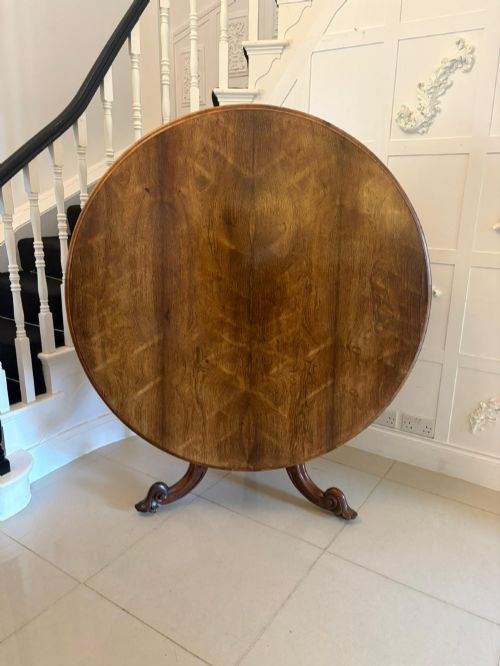
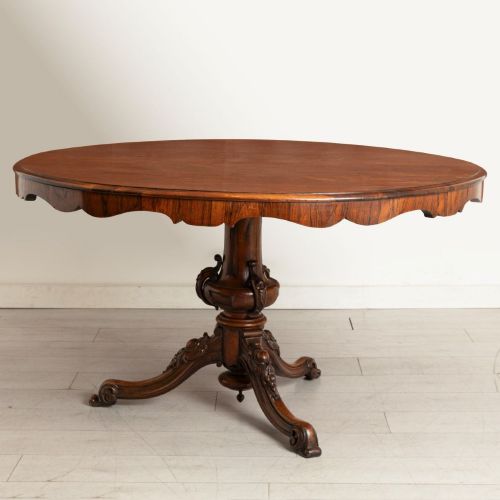
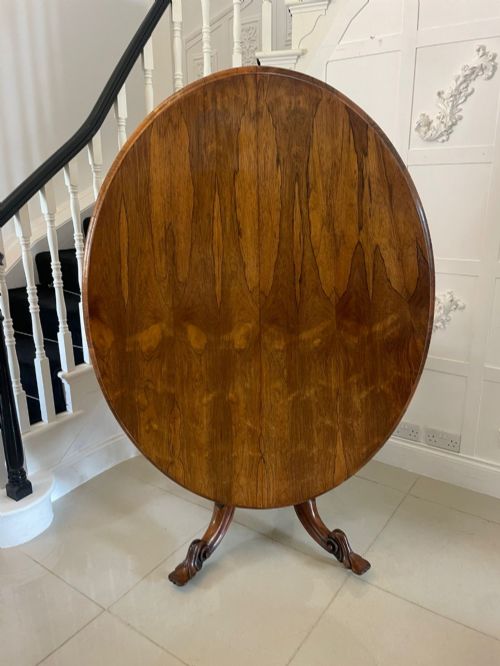
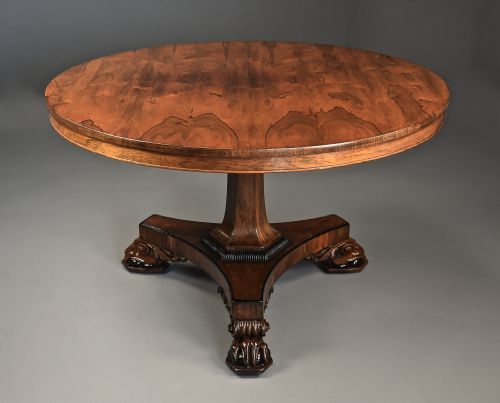
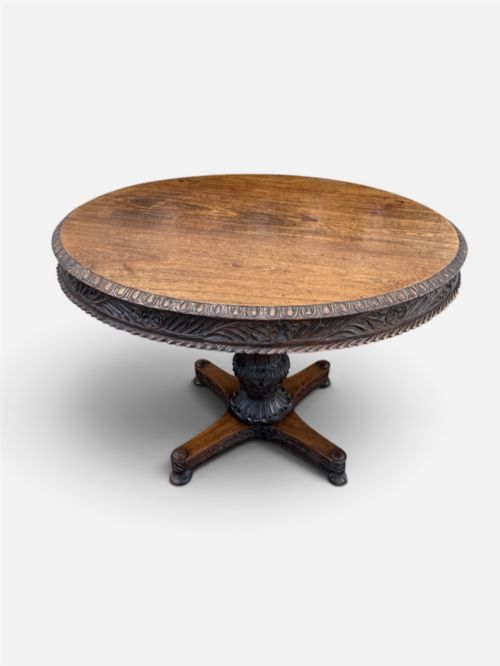
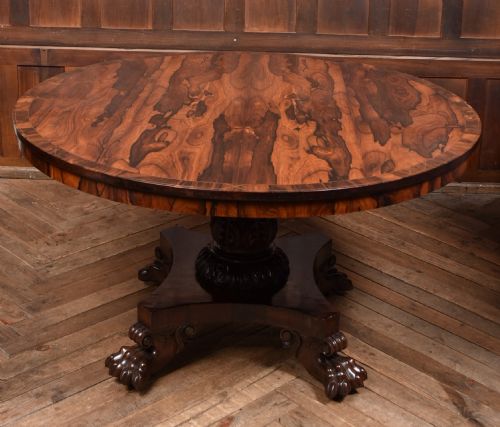
A victorian rosewood breakfast table is a substantial circular or oval dining piece designed for domestic utility and social display.
Victorian Rosewood Breakfast Table
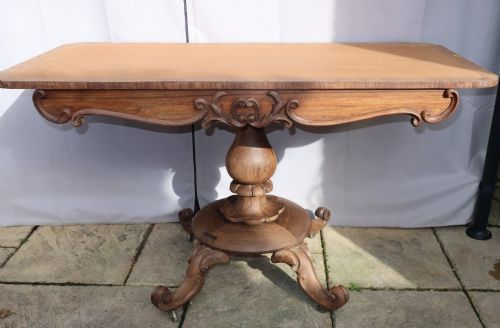
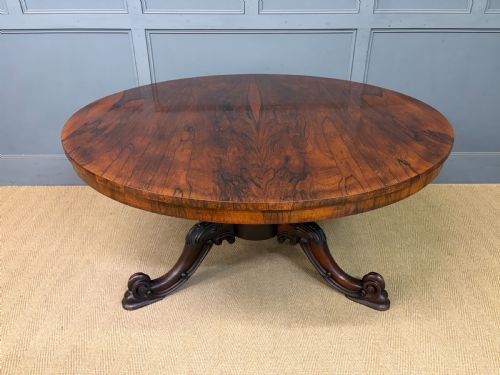
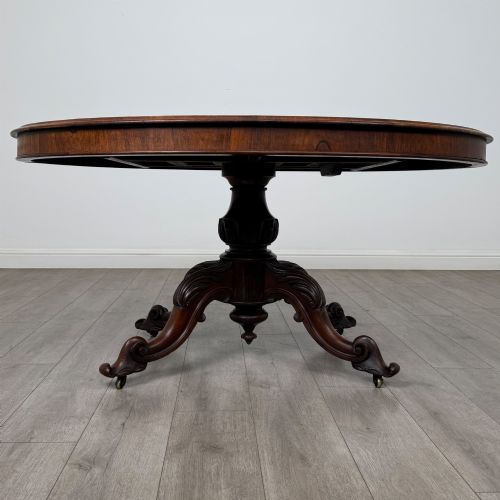
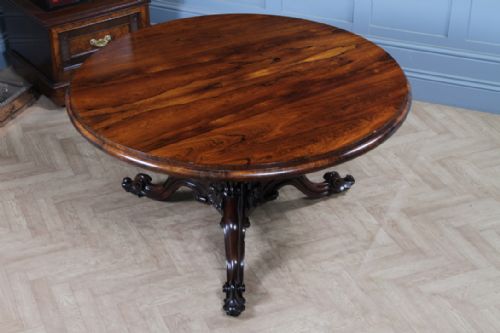
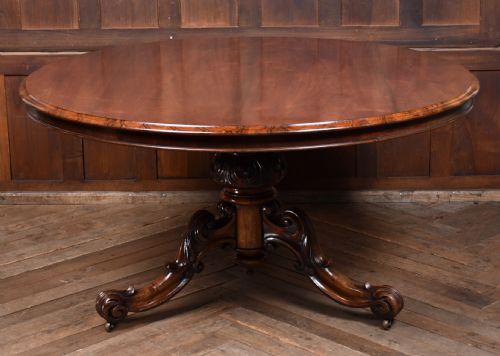
A victorian rosewood breakfast table is typically encountered as a circular, oval, or serpentine top resting on a central column and solid base, often functioning interchangeably as a centre, dining, or loo table.
The material record spans the 19th century, drawing heavily on William IV, early Victorian, and mid-Victorian periods, with occasional Anglo-Indian examples appearing in the listings.
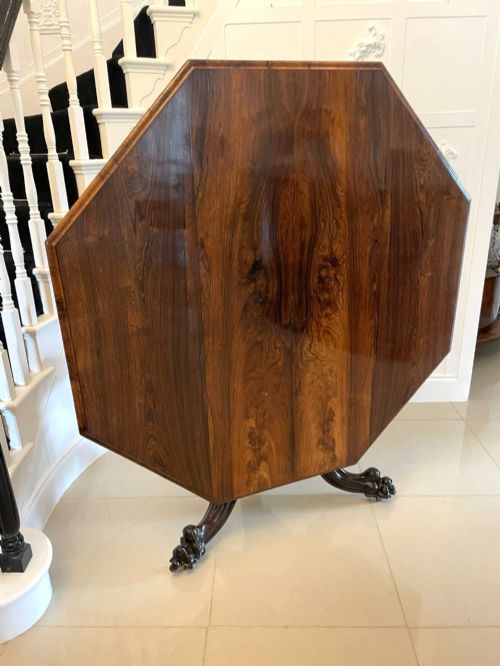
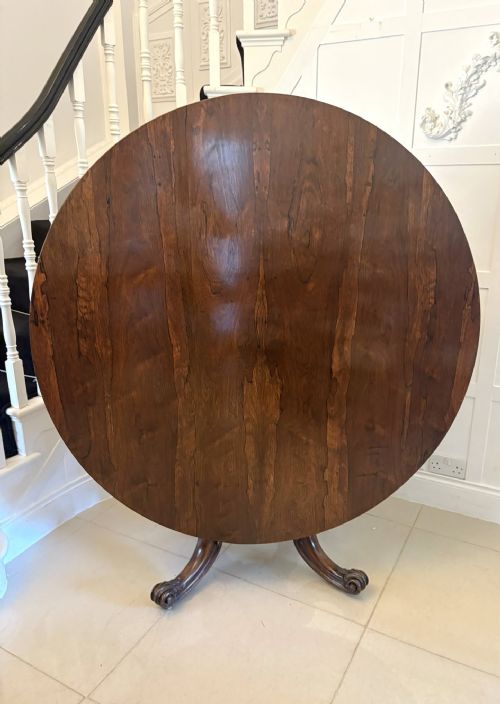
Buyers seeking this form will find pieces designed with tilt-top or snap-top mechanisms, allowing the heavy timber surface to pivot upright when not in daily use.
What varies in quality
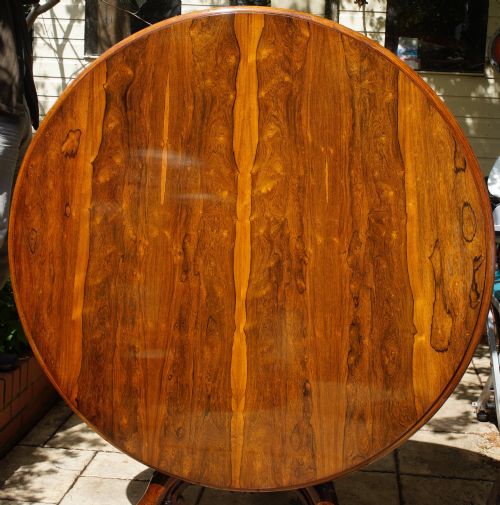
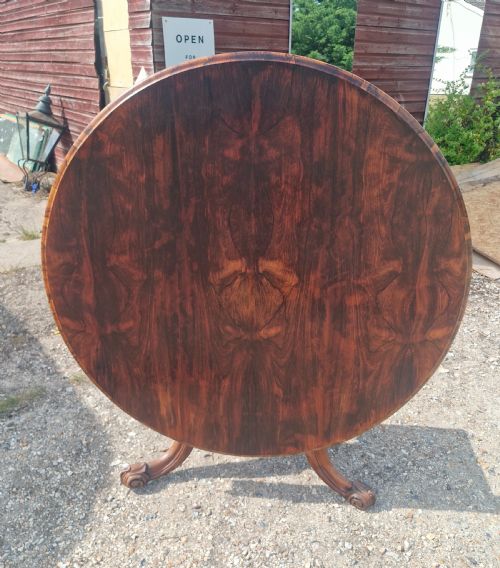
The division between standard workshop production and superior cabinet making rests upon the choice of figured veneers, the crispness of hand-carved foliage on the central pillar, and the structural stability of the tilt mechanism.
Subtleties in proportion, the integration of marquetry or floral inlay, and the weight of the timber base distinguish ordinary circular tables from works bearing known workshop attributions.
Victorian Rosewood Breakfast Table Retail Price Guide 2026
Typical asking prices for victorian rosewood breakfast table among the pieces listed under this phrase on Sellingantiques today, from the lower quarter to the upper quarter. They describe what is for sale here now, not the wider market.
Tables snap upright with a satisfying mechanical clunk, proving that Victorian furniture designers understood the eternal struggle of small living spaces.
Gillows·James Winter of Wardour Street
The Victorian Rosewood Breakfast Table Glossary
- Tilt-top
- A hinged table top that pivots to a vertical position. This mechanism saved valuable floor space in nineteenth-century interiors.
- Snap-top
- A spring-loaded catch variant of the pivoting table top. It locks the surface securely in the horizontal position during dining.
- Loo table
- A large round or oval card and social table intended for evening games. These share identical structural forms with breakfast tables.
- Figured rosewood
- Timber cut to reveal wavy or mottled natural patterns within the grain. Cabinet makers reserved these choice sections for prominent upper surfaces.
- Marquetry
- Decorative patterns formed by fitted pieces of coloured wood veneer. Floral motifs frequently adorn the borders of mid-century tops.
Victorian Rosewood Breakfast Table: Frequently Asked Questions
What is a breakfast table?
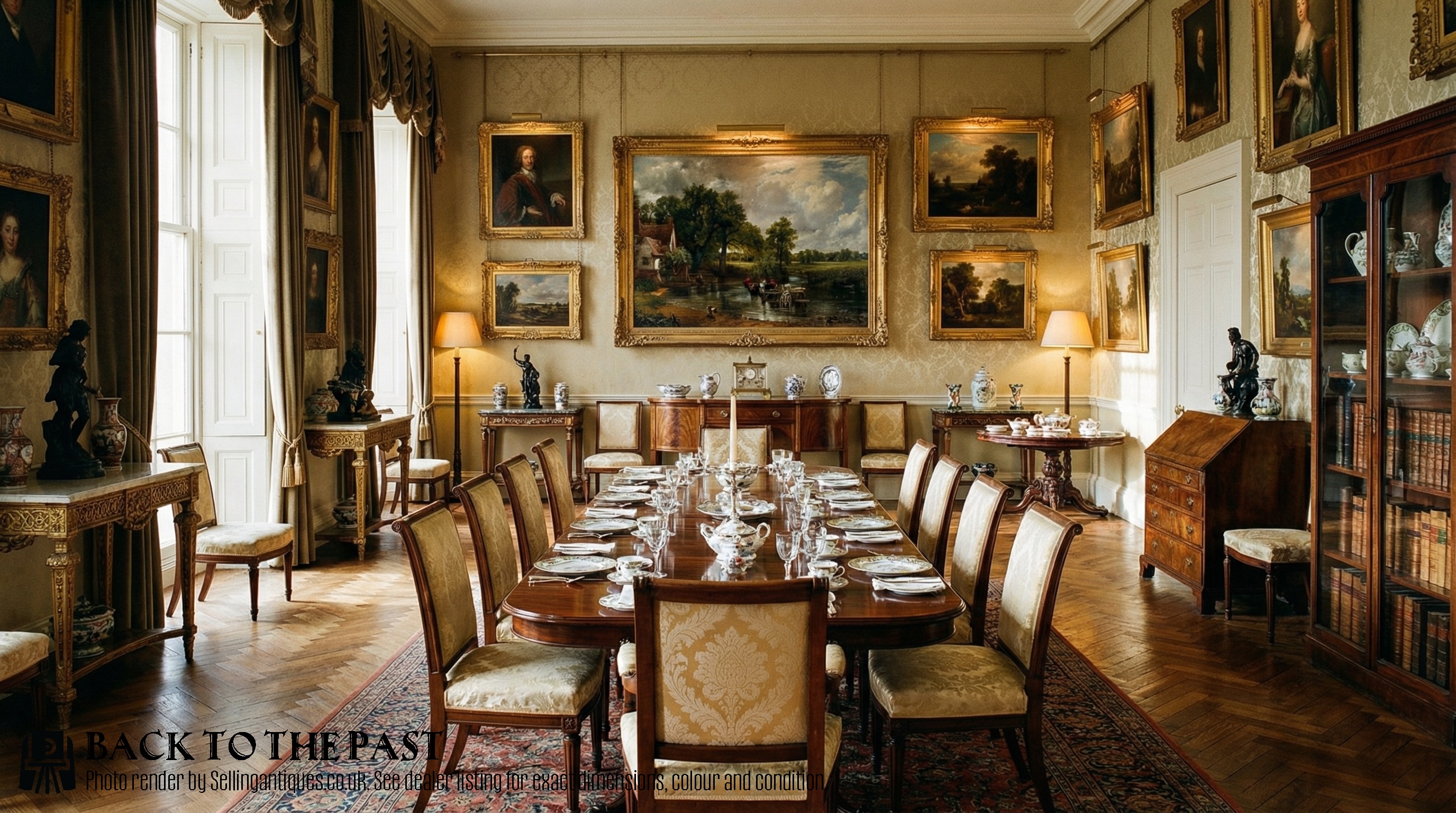
A breakfast table is a freestanding dining piece designed for morning meals in private rooms or smaller dining spaces before larger formal dinners became customary.
Over the nineteenth century, these versatile circular tables transitioned easily into central library or drawing-room furnishings.
How do I use a tilt top?
The pivoting mechanism allows the heavy wooden top to swing from horizontal to vertical, making it simple to store against a wall when the room requires open floor space.
A brass or wooden catch beneath the top secures the surface firmly when lowered for daily dining.
Are these tables for dining?
These tables provide ample seating for everyday family dining or informal gatherings, frequently accommodating between four and six guests comfortably around the central pillar.
The absence of corner legs ensures that diners enjoy unrestricted legroom beneath the generous circular top.
How do I date a table?
Dating relies upon observing stylistic shifts, moving from the heavy scrolled bases typical of the William IV era toward the sleeker, carved cabriole supports of the mid-Victorian period.
Subtle details in veneer thickness and the complexity of base carvings help narrow the decade of manufacture within the nineteenth century.