







Serpentine Tilt Top Table
These serpentine tilt top table pieces are Victorian timber folding tables built for practical domestic use and display.
Serpentine Tilt Top Table
A serpentine tilt top table is typically encountered as a Victorian piece from the nineteenth century, spanning decades such as the eighteen fifties, sixties, seventies, and eighties. These examples function as centre tables, occasional tables, loo tables, breakfast tables, and dining tables.
How they were made
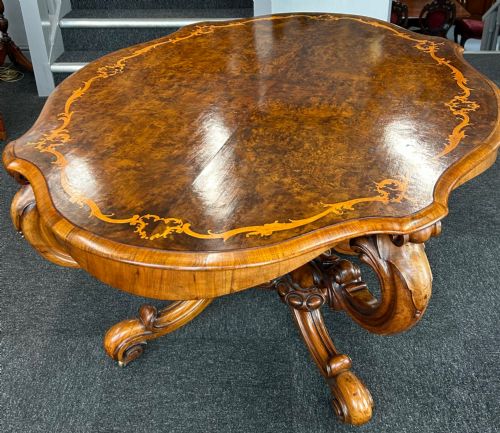
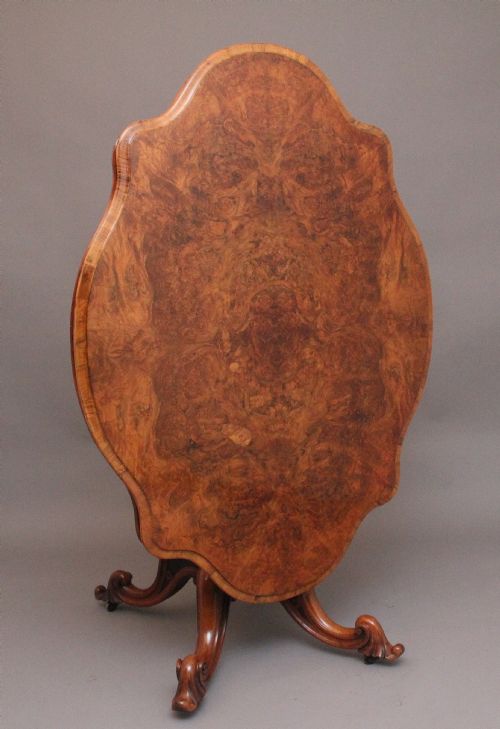
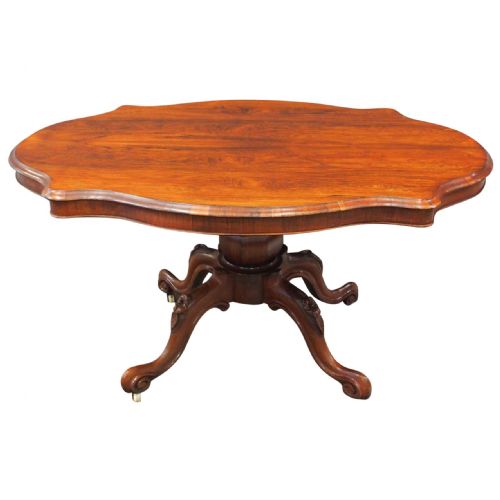
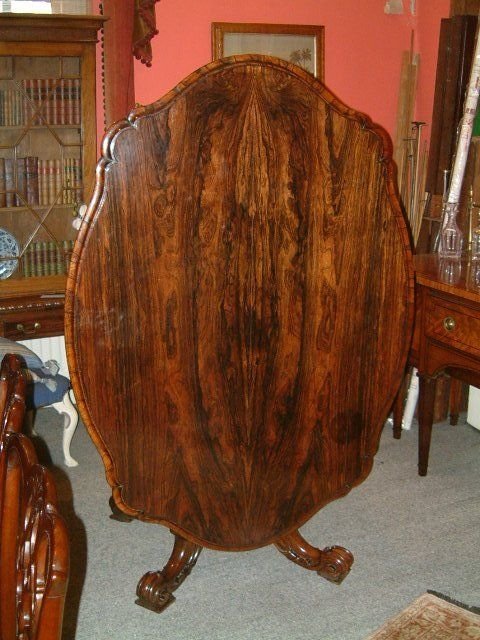
Cabinet makers constructed these tables using dense hardwoods like mahogany and rosewood, or applied decorative veneers of burr walnut and amboyna over solid timber carcases. Brass components frequently reinforced the pivoting mechanisms and pedestal mountings.
Makers shaped the timber edges into distinctive serpentine outlines using hand saws and chisels, pairing the tops with robust central pedestals and multi-part wooden feet.
Tables tilt upright so the household could reclaim its floor space after tea, proving the Victorians invented the original folding furniture.
What varies in quality
The distinction between standard examples and the finest works rests on the choice of timber veneer and the complexity of the fruitwood inlay or secondary wood mounts. Finer pieces demonstrate superior figure in the burr walnut or rosewood, alongside more intricate shaping of the pedestal base.
Attribution to documented workshops or specific makers elevates the standing of a table, as seen in pieces bearing the hallmarks of established cabinet makers from the period.
Gillows·Edwards & Roberts
The Serpentine Tilt Top Table Glossary
- Serpentine
- A curved edge profile that undulates with convex and concave lines. This shape demands careful hand shaping by the cabinet maker.
- Tilt-top
- A mechanism allowing the tabletop to pivot from horizontal to vertical. This design enabled the table to stand flat against a wall when space was needed.
- Loo table
- A large nineteenth-century round or serpentine table used for card games and social gatherings. The tilting top was a standard feature of this form.
- Ebonised
- Timber treated with a finish to imitate ebony. This dark staining technique was common on Victorian decorative woodwork.
Serpentine Tilt Top Table: Frequently Asked Questions
What is a serpentine tilt top table used for?
These tables served primarily as centrepieces in Victorian reception rooms, functioning both as dining or breakfast surfaces and as display areas for lamps and ornaments. The tilting mechanism allowed the top to fold flat so the piece could be pushed out of the way against a wall.
In daily domestic life, they adapted easily from formal entertaining to general household use, providing a sturdy surface that could be cleared away quickly when floor space was required.
How do I identify a Victorian table?
Victorian tables from the nineteenth century typically rely on dense timbers like mahogany, rosewood, and burr walnut, often featuring robust central pedestals with carved or moulded details. The presence of a serpentine edge and a tilting mechanism points directly to mid-to-late nineteenth-century production.
Construction methods of the era included hand-cut joinery and heavy timber carcases, which give these pieces a substantial weight and distinct structural character compared to later reproductions.
How should I care for a wood tilt top table?
Maintain these tables by keeping them away from direct sunlight and steady heat sources to prevent the veneers and solid timbers from drying out or splitting. Dust them regularly with a soft, dry cloth and avoid harsh chemical polishes that can damage the antique finish.
When operating the tilt mechanism, support the weight of the top securely to protect the brass pivot and wooden catch from sudden strain or impact.