


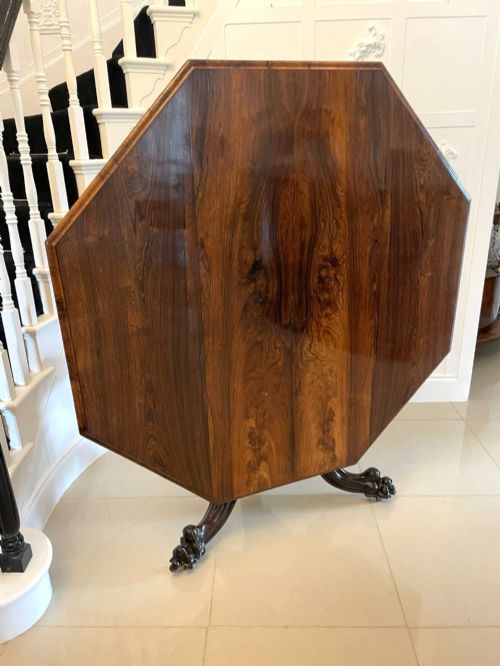
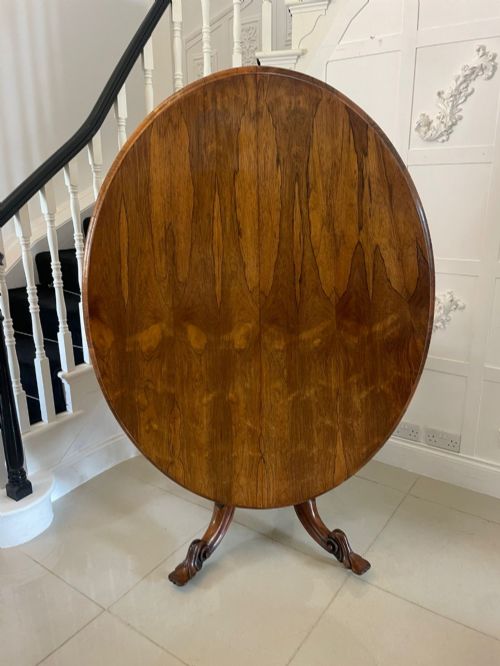
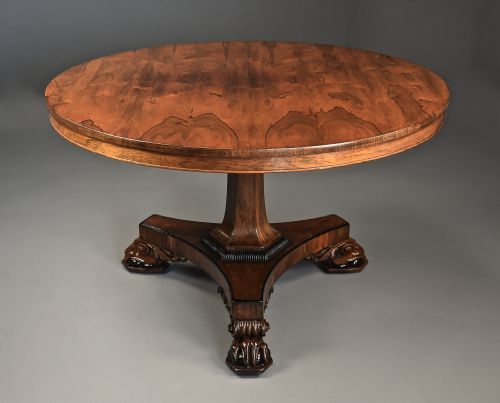
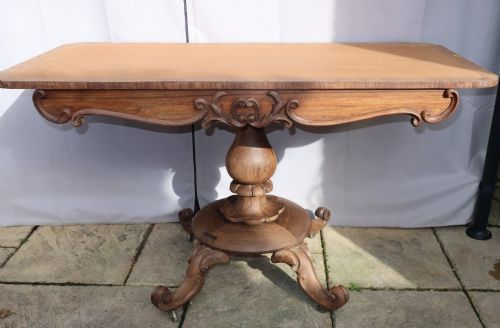
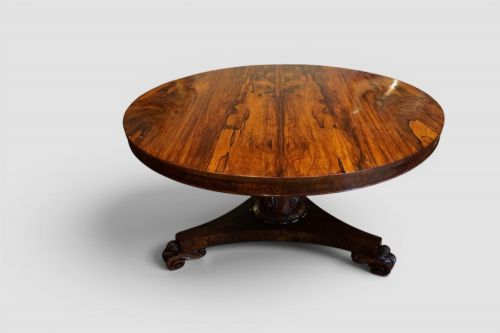
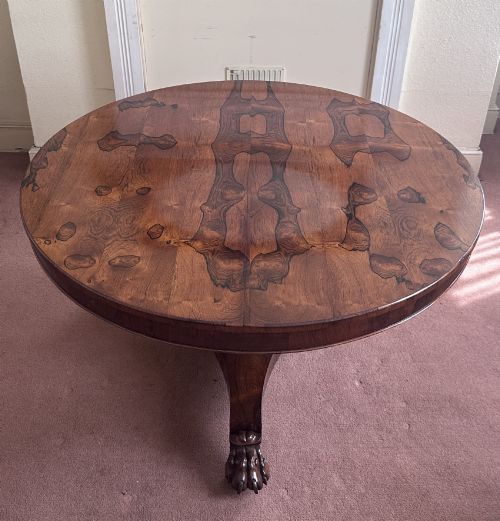
Carved Rosewood Breakfast Table
These nineteenth-century carved rosewood breakfast table examples provide a solid surface for morning meals while anchoring a grand room.
Carved Rosewood Breakfast Table
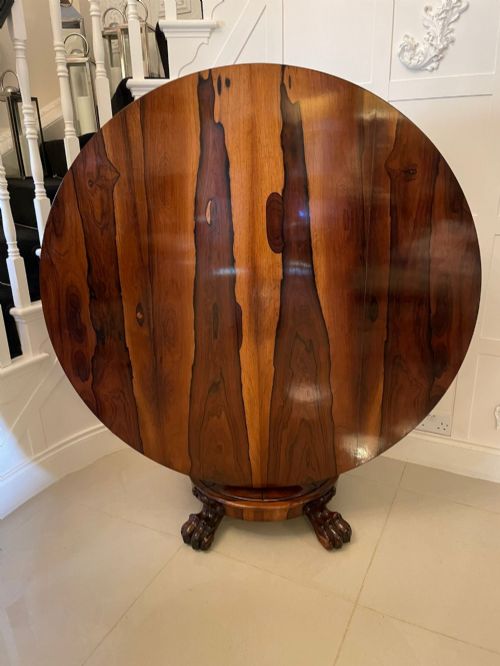
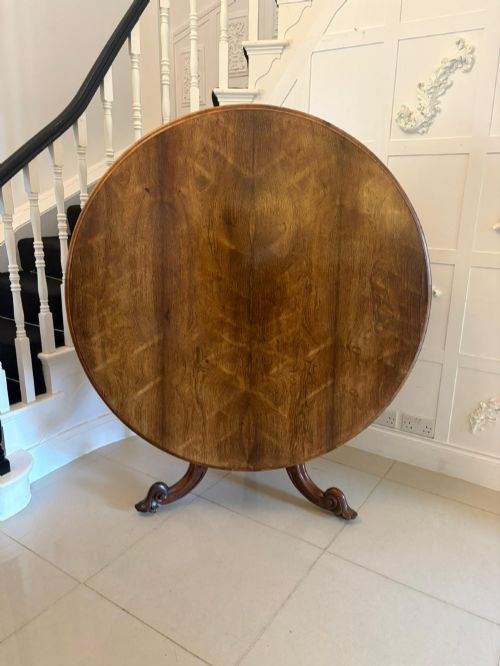
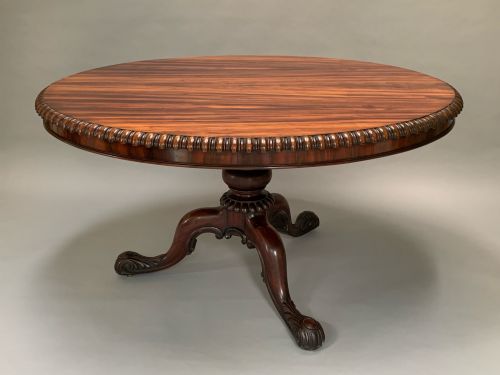
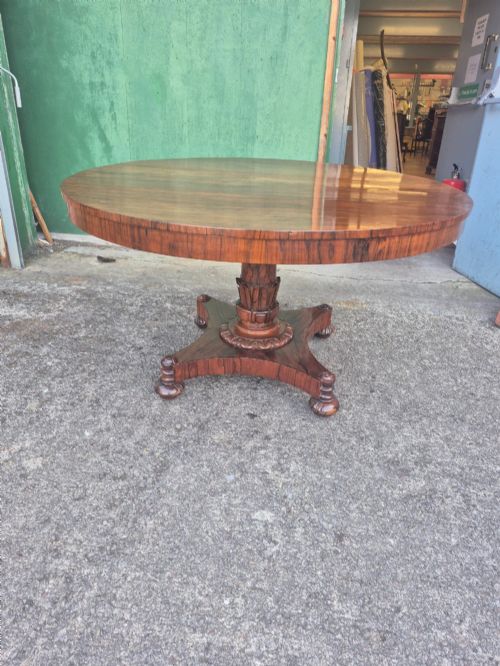
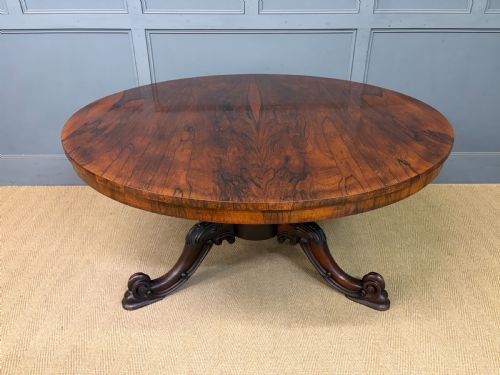
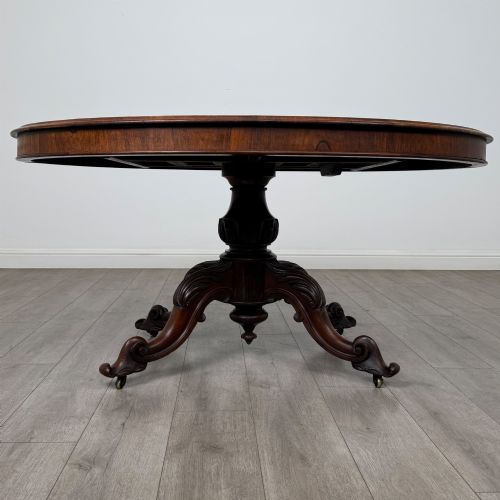
A carved rosewood breakfast table is a heavy, circular or oval piece designed for domestic dining and general reception use during the nineteenth century. These tables frequently appear in William IV, early Victorian, and Regency styles with substantial pedestal supports.
Buyers meet circular tilt-top and snap-top variants most often on this page, alongside larger centre tables that share the same pedestal configuration. The timber ranges from solid rosewood to figured rosewood veneer over secondary timbers.
How they were made
Cabinetmakers constructed these tables using dense tropical rosewood, frequently applying finely figured rosewood veneer over timber carcases to display dramatic grain patterns. Brass castors often conceal beneath heavy triform or carved pillar bases.
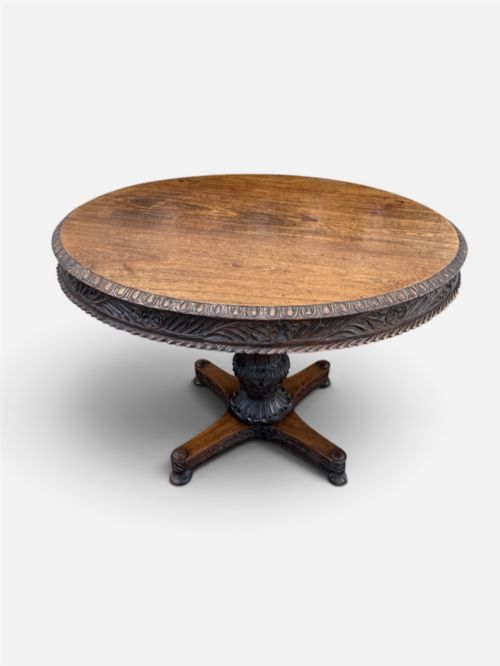
Carvers shaped solid rosewood and giltwood details by hand, applying turned motifs and deep relief work to pedestals and friezes. Tilt-top and snap-top mechanisms utilise metal catches to secure the heavy circular tops in horizontal positions.
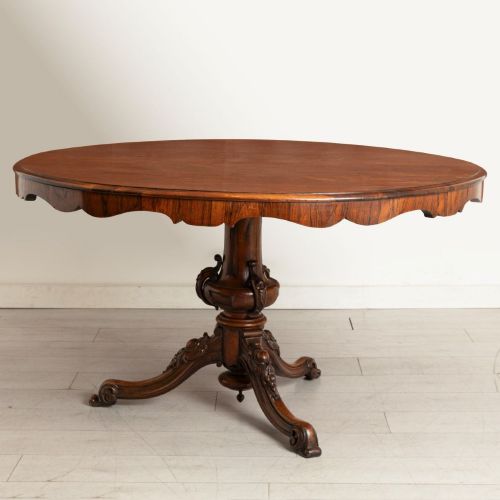
Listings feature circular, oval, and serpentine formats across Georgian, Regency, William IV, and Victorian periods.
What varies in quality
Depth and crispness of hand-carved ornamentation separate standard workshop production from exceptional cabinet work on pedestals and friezes. The grain selection in rosewood veneer determines the visual impact of the top surface.
Structural stability in the tilt-top mechanism and the triform base dictates how firmly the large circular top rests during daily use.
Gillows
The Carved Rosewood Breakfast Table Glossary
- Rosewood
- A dense, heavily figured tropical timber prized for its dark grain and polished finish. It served as the primary surface material for formal nineteenth-century tables.
- Tilt-top
- A hinged tabletop mechanism that allows the surface to pivot vertically for storage against a wall when not in use.
- Triform base
- A three-sided pedestal foundation that provides stable support for heavy central pillars.
- Centre table
- A freestanding table designed to be viewed from all sides, placed in the middle of a room rather than against a wall.
- Loo table
- A large Victorian round table originally intended for the card game loo, functioning similarly to a breakfast table.
Carved Rosewood Breakfast Table: Frequently Asked Questions
Can I use a breakfast table for daily dining?
These tables served formal morning meals and drawing-room gatherings in nineteenth-century homes. Their sturdy pedestals easily accommodate regular daily use.
Buyers should ensure the diameter matches their dining chairs and seating requirements.
What is the difference between a breakfast table and a loo table?
Breakfast tables and loo tables share similar circular forms and pedestal bases from the Victorian and William IV periods. Loo tables frequently feature tilting mechanisms designed for card playing.
Both types function interchangeably as central dining or display surfaces today.
How do I distinguish William IV tables from Victorian ones?
William IV examples often display bold architectural carving, scroll feet, and heavier triform bases dating from the 1830s. Victorian pieces from the 1850s and 1860s introduce serpentine edges and more slender turned pillars.
Both styles utilise heavily figured rosewood veneer over substantial timber carcases.