


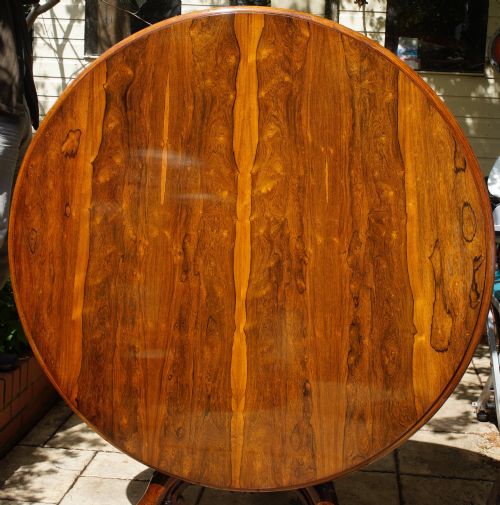
Rosewood Pedestal Dining Table
A rosewood pedestal dining table brings warmth, rich grain, and stately proportions to a room, spanning Regency, William IV, and Victorian periods.
Rosewood Pedestal Dining Table
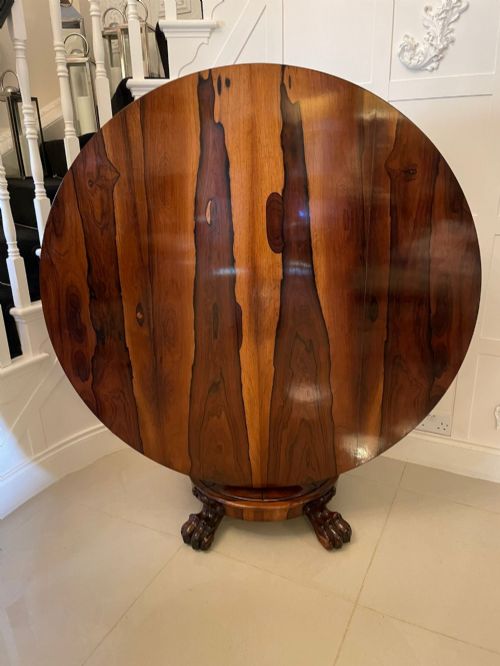
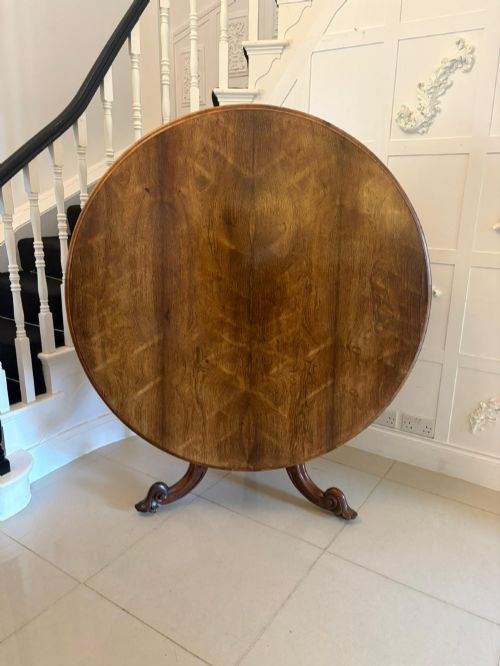
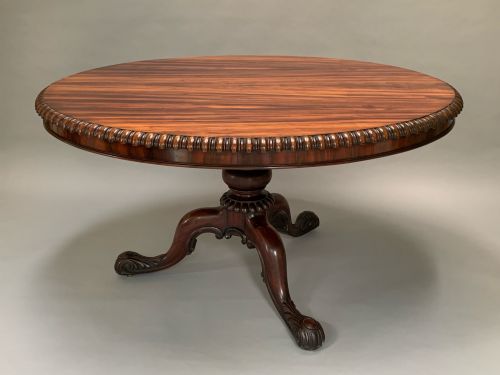
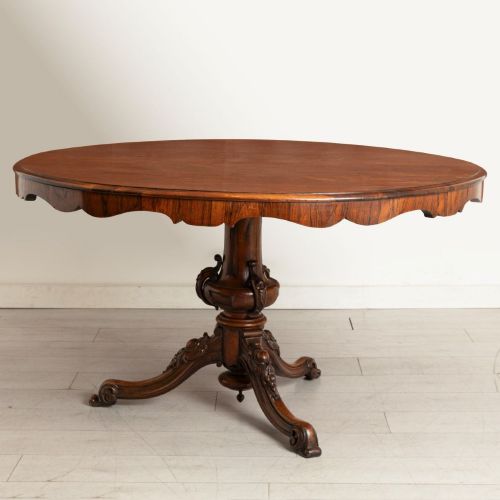
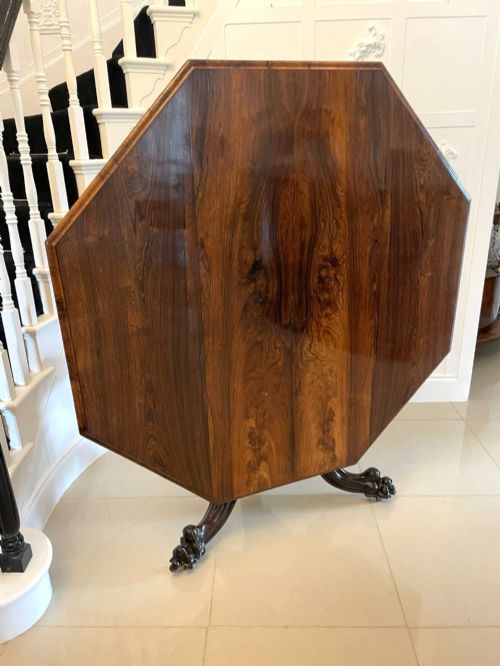
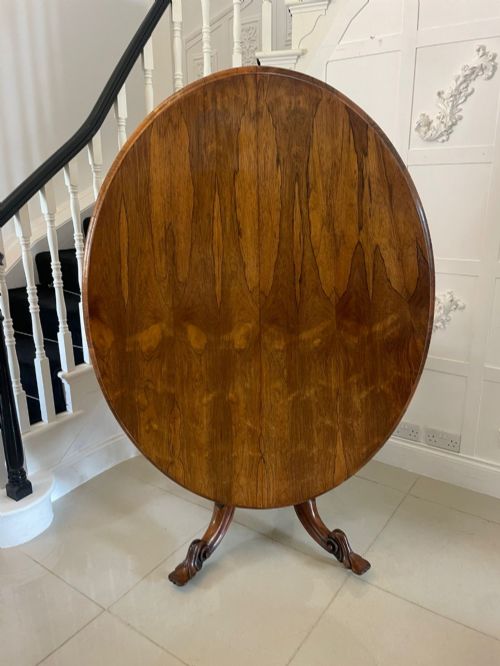
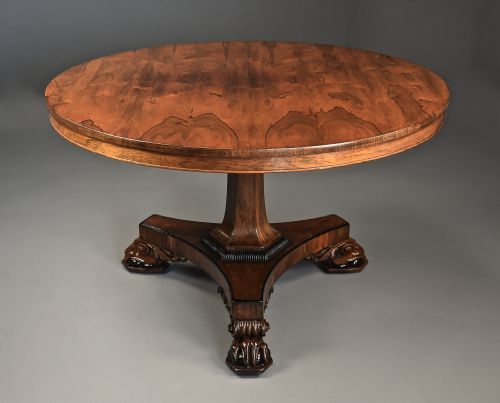
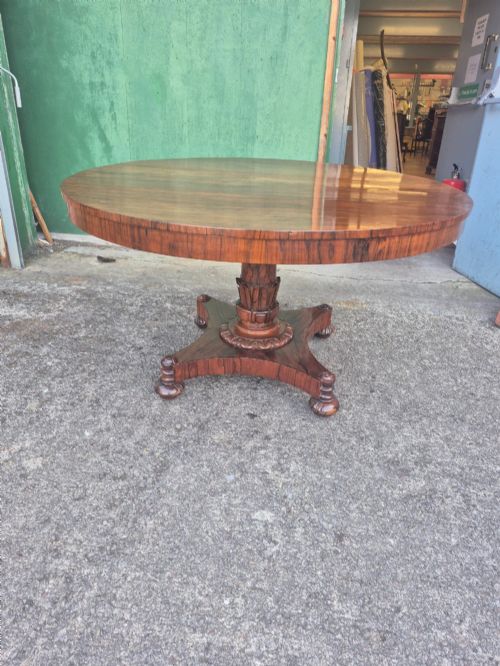
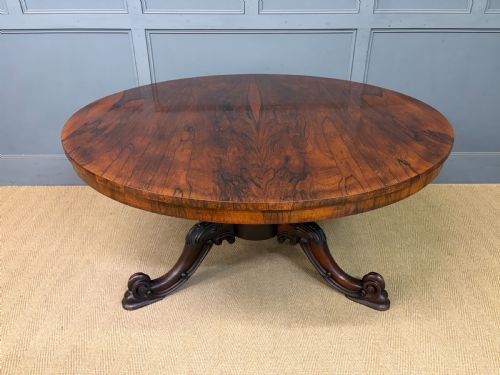
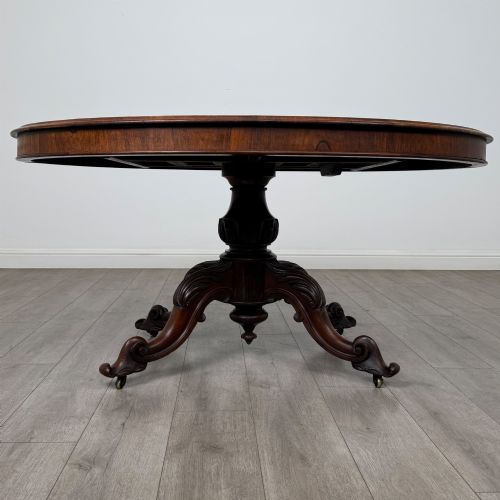
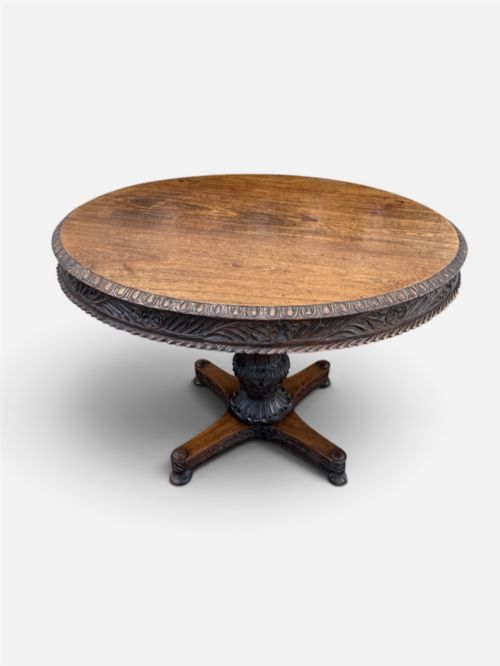
A rosewood pedestal dining table is a heavy timber piece designed around a central column support, encompassing forms described in listings as breakfast tables, centre tables, and tilt-top tables. You will most frequently encounter circular or oval top formats dating from the nineteenth century, particularly the Regency, William IV, and Victorian eras.
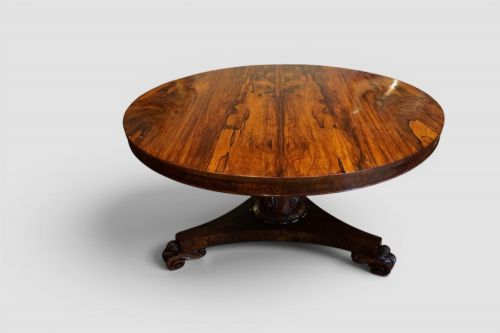
These tables serve both formal dining and central display functions in larger rooms, often utilising a tilt mechanism or a sturdy triform or platform base. The category bridges domestic dining and grand entertaining, reflecting the shifting interior fashions of the nineteenth century alongside later French Art Deco interpretations.
How they were made
Cabinet makers built these pieces using solid timber frames combined with finely figured rosewood veneer applied to table tops to display rich natural grain patterns. Structural elements frequently incorporate supporting woods like mahogany beneath the show veneers, whilst specialised variations include brass inlays and parcel gilt highlights.
Pedestal supports often feature turned and carved solid rosewood columns rising from tripartite or platform bases, sometimes fitted with heavy metal castor hardware. Tilt-top mechanisms utilised robust wooden blocks and brass latches to allow the table top to pivot vertically when not in use.
Object forms span circular breakfast tables, tilt-top variants, loo tables, and writing tables supported by central pedestals.
What varies in quality
Quality rests significantly on the selection of the rosewood veneer, where symmetrical grain alignment and deep natural figure elevate the visual impact of the top. The ambition of the carving on the central pedestal and the stability of the structural joinery also distinguish standard production from exceptional cabinet work.
Maker attribution plays a role in distinction, with pieces originating from recognised workshops demonstrating superior proportion, heavier gauge timber, and refined execution in turned and carved elements.
Gillows·Peters of Genoa
The Rosewood Pedestal Dining Table Glossary
- Rosewood
- A dense, heavy tropical timber prized for its dark coloration and pronounced grain patterns. It takes a high polish and was extensively used for high-status nineteenth-century furniture.
- Pedestal
- A central columnar support replacing traditional four-corner legs. This architectural base allows greater seating freedom around the perimeter of the table.
- Tilt-Top
- A functional table construction allowing the top to pivot upright on a hinge. This clever mechanism saved valuable floor space in period domestic interiors.
- Triform Base
- A three-sided supporting platform resting beneath the central pedestal column. It provides structural stability while offering sculptural weight to the lower portion of the table.
- Veneer
- A thin layer of highly figured wood applied over a secondary timber substrate. This technique permitted the display of decorative grain patterns without wasting solid stock.
Rosewood Pedestal Dining Table: Frequently Asked Questions
How do I date a rosewood table?
Dating relies on stylistic markers found in the pedestal base and the configuration of the top, moving from restrained Regency lines to heavier William IV carvings and Victorian proportions. Regency examples often display classical pedestal columns and brass inlays, whereas William IV pieces favour robust triform bases and bold foliate carving.
Secondary woods, construction methods, and the presence of maker attribution stamps provide further chronological clues. Examining the depth of the skirt and the profile of the central column helps narrow the era of production.
Can I use a breakfast table for dining?
Breakfast tables from the nineteenth century were originally built for flexible domestic use, including morning meals, reading, and informal gatherings. Their sturdy central pedestal construction provides ample legroom, making them well-suited for modern dining.
When selecting one for daily dining, consider the overall diameter and the height of the apron underneath. Many period examples offer generous proportions that comfortably seat four to six diners.
Why is rosewood used?
Rosewood was selected by period cabinet makers for its exceptional density, durability, and striking natural contrast. The dark reddish-brown timber accepts a high polish, making it ideal for showcasing elaborate grain figures on large table tops.
Its structural strength allowed makers to fashion slender turned columns and substantial pedestals capable of supporting heavy loads. The material signified high status in nineteenth-century interiors.