
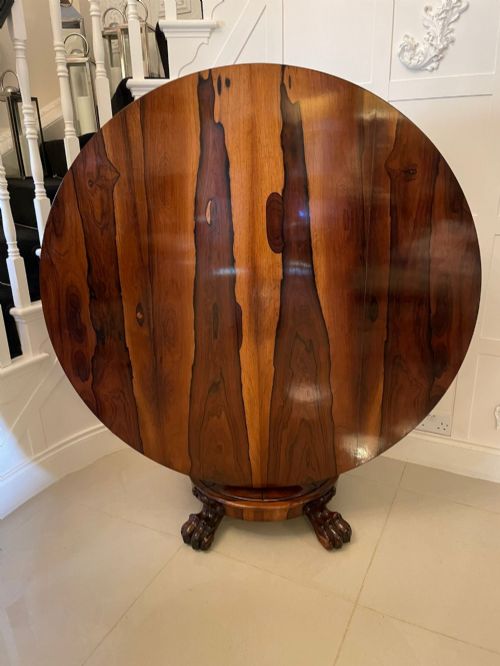


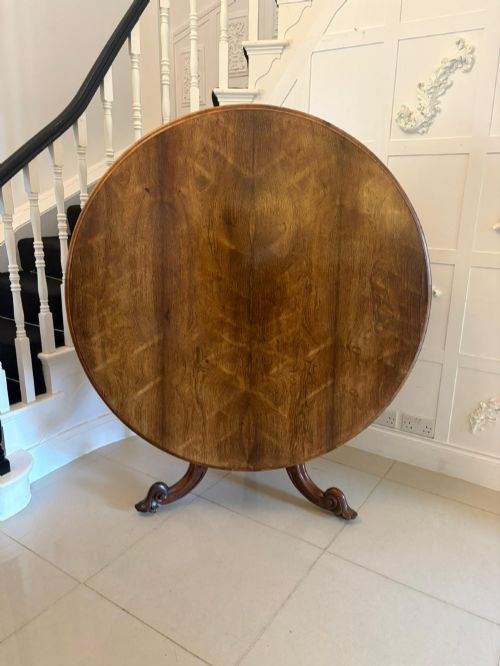
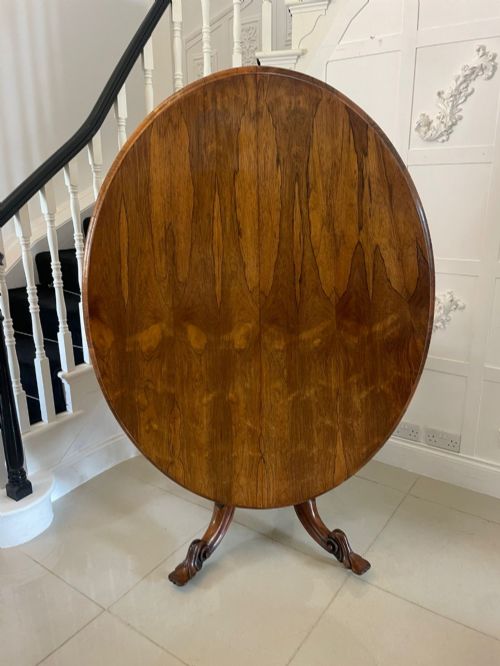
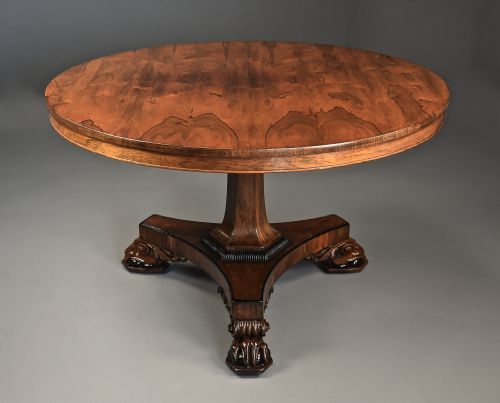
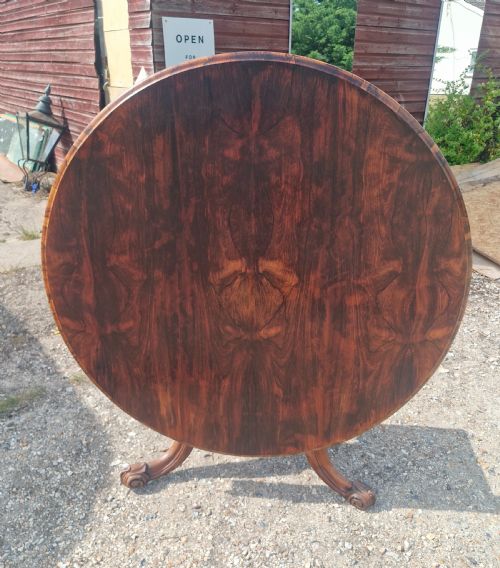
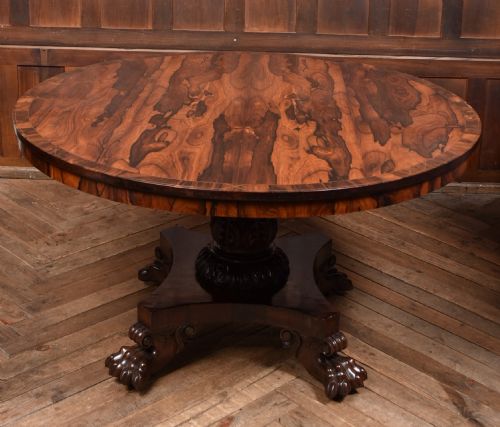
Circular Rosewood Breakfast Table
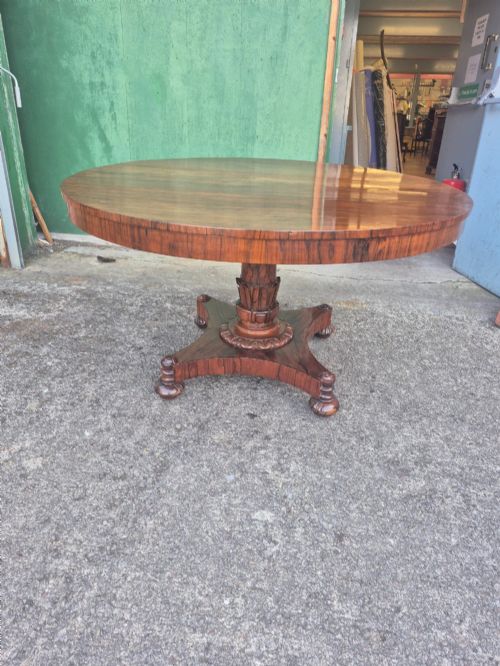
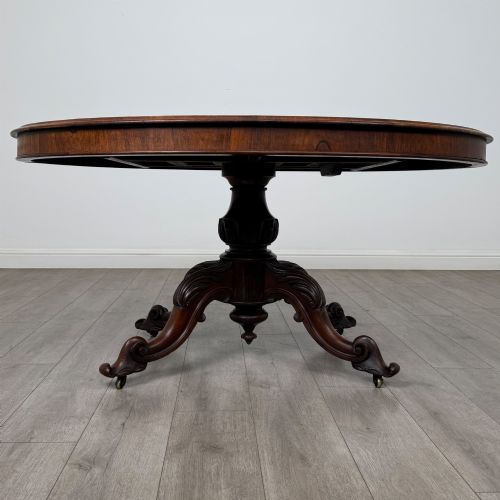
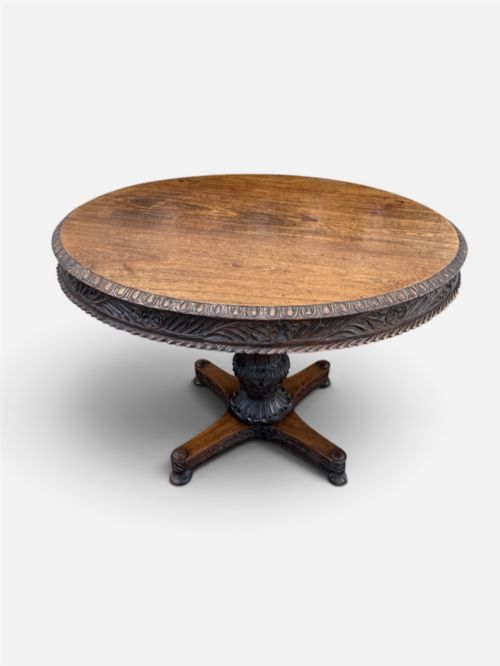
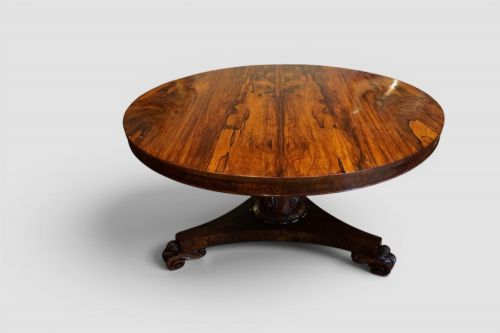
A circular rosewood breakfast table combines deep timber grain with a practical pedestal base designed for morning dining or central hall placement.
Circular Rosewood Breakfast Table
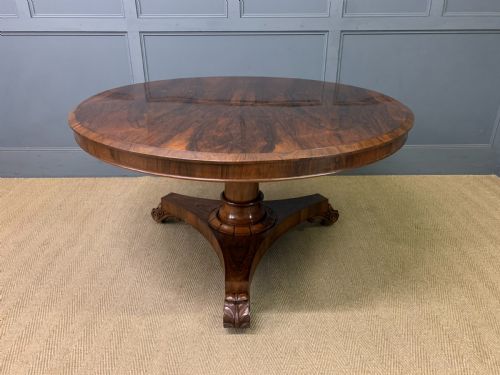
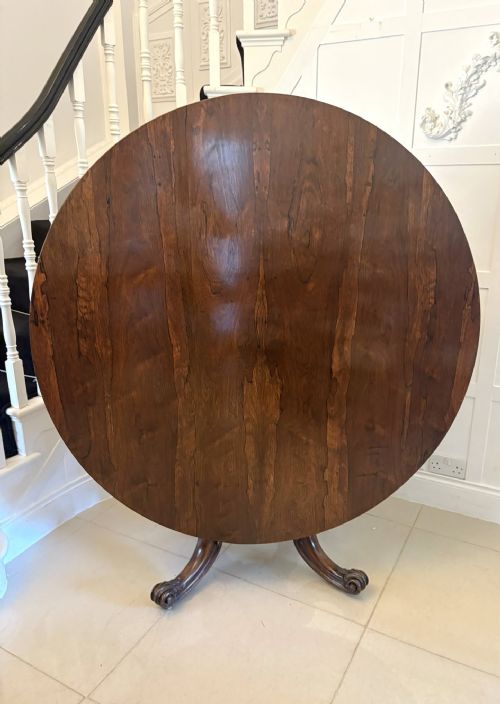
A circular rosewood breakfast table serves as a versatile piece originating predominantly from the 19th century, spanning Regency, William IV, and Victorian periods. These tables typically stand on a central pedestal, often supported by a triform or platform base.
Makers designed these forms to function as breakfast tables, dining tables, or centre tables within country houses and town residences. Buyers encounter examples featuring fixed tops alongside tilting mechanisms.
The selection on this page centres on circular formats executed in rosewood, wood veneer, and mahogany timber, reflecting the dominant cabinet-making styles of the Georgian and Victorian eras.
How They Were Made
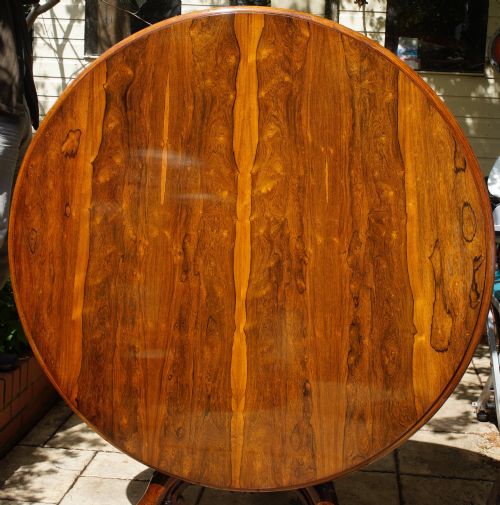
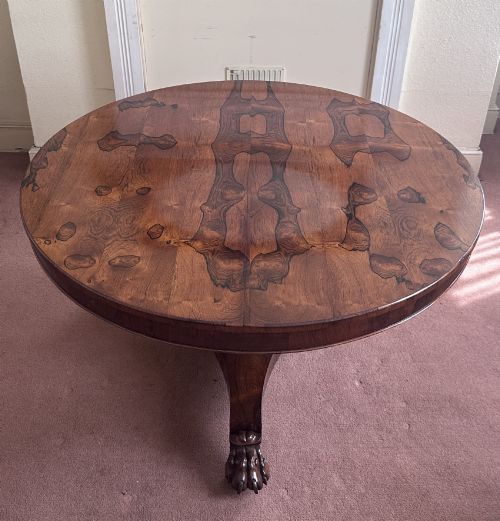
Cabinet makers constructed these tables using solid timber frames paired with decorative rosewood veneer applied over secondary woods. Master craftsmen selected figured grain patterns to create symmetrical displays across the circular tops.
Structural support relied upon heavy central pedestals, occasionally accented with brass inlay, parcel giltwood, or carved wooden details. Tilt-top mechanisms utilised iron latches and blocks to secure the top in a vertical position when not in use.
Listings feature 19th-century periods including Regency, William IV, and Victorian alongside Anglo-Indian and Irish regional variations.
What Varies in Quality
Quality rests in the selection of the timber veneer and the precision of the joinery connecting the circular top to the pedestal base. Highly figured rosewood displays rich contrast and depth across the entire surface.
Carved ornamentations, whether executed in solid rosewood or giltwood, show varying degrees of depth and definition that distinguish standard production from exceptional workshop output.
James Winter of Wardour Street
The Circular Rosewood Breakfast Table Glossary
- Tilt-top
- A hinged tabletop mechanism allowing the surface to fold vertically for storage or room clearance. This function appeared frequently on 19th-century centre tables.
- Triform base
- A three-sided pedestal foot configuration common on Regency and William IV tables. It provides stability beneath heavy timber columns.
- Veneer
- A thin layer of figured rosewood applied over a stable timber foundation to maximise visual grain patterns. Cabinet makers utilised this technique extensively during the Victorian period.
- Centre table
- A freestanding piece finished on all sides designed to stand in the middle of a room rather than against a wall. These often share dimensions with breakfast tables.
- Giltwood
- Wood decorated with gold leaf or metallic paint applied to carved architectural details. Regency makers incorporated this finish into elite tables.
Circular Rosewood Breakfast Table: Frequently Asked Questions
How do I use a tilt top?
The tipping mechanism relies on a brass catch or wooden wedge beneath the top. Releasing this latch allows the surface to pivot upright.
Securing the catch lowers the top back to the horizontal position for dining or display.
Can these seat six people?
Larger circular examples measuring four feet or greater accommodate multiple chairs around the pedestal. The absence of corner legs allows diners to sit comfortably without obstruction.
Placement of the triform base underneath requires checking to ensure adequate foot room for seating.
What is a loo table?
A loo table refers to a 19th-century circular form originally utilised for the card game lou. These pieces share identical construction methods with standard breakfast tables.
Many examples feature tilt-top capabilities to save space when card games concluded.
How do I date these tables?
Dating relies on stylistic markers associated with specific periods like Regency, William IV, or Victorian. Heavy scroll feet and bold pedestal designs typically point to the 1830s.
Subtle differences in carved rosewood motifs and base configurations help separate early 19th-century work from later Victorian production.