


Tekke Chuval Bag
A tekke chuval bag is a Central Asian tribal storage textile woven for household use, prized for its intricate geometric patterning.
Tekke Chuval Bag
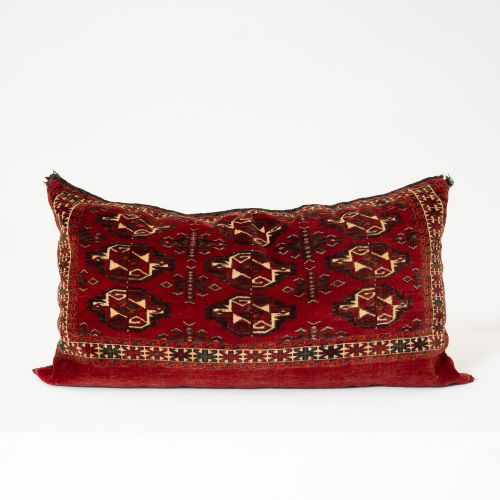
A tekke chuval bag represents a traditional Central Asian tribal weaving format created for domestic storage within nomadic households. These large utility pieces functioned primarily as bedding bags inside yurts, designed to hold blankets and clothing.
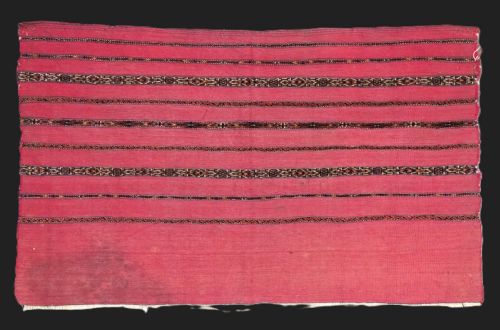
Most examples encountered on this page survive as chuval faces separated from their original plain weave backs, though complete specimens with backs and hanging loops also appear. The format is defined by repeating primary gul motifs arranged across the field in structured rows.
How They Were Made
These textiles employ wool foundations combined with natural dyes to achieve deep red grounds and contrasting geometric details. The knotting technique yields a dense, durable pile that secured the structural integrity required for daily nomadic life.
Weavers utilised supplementary flat woven details alongside piled areas to create textural variation across the storage face. Natural dyestuffs produced the characteristic palette seen throughout the mid nineteenth to early twentieth century period.
Some bags retain their original hanging loops, ready to resume duty after a mere century or two of rest.
What Varies in Quality
Quality rests in the density of the weave and the precision of the geometric drawing within the primary and secondary guls. Finer knot counts allow for sharper definition in complex motifs such as turreted or aynâ designs.
The sophistication of the secondary ornaments and the depth of the natural dye palette separate standard pieces from finer examples. Completeness also influences character, particularly where original plain weave backs and hanging systems survive intact.
The Tekke Chuval Bag Glossary
- Chuval
- A large tribal storage bag used by Central Asian nomads for domestic bedding and household goods. These pieces are typically wider than they are tall.
- Gul
- A repeating medallion motif used in Turkmen tribal weaving to identify specific tribal groups and lineages. These primary octagonal forms anchor the central field design.
- Torba
- A smaller nomadic storage bag format produced by Turkmen tribes, generally squarer in proportion than a chuval. They served similar household storage functions within the tent.
- Ayna
- A mirror-related motif incorporated into tribal textile designs as a protective talisman. This scarcer pattern adds significant interest for collectors.
- Kizil
- A term denoting the predominant red colour ground characteristic of traditional Turkmen weaving. These madder-dyed fields provide the visual base for the dark guls.
Tekke Chuval Bag: Frequently Asked Questions
What is a tekke chuval bag?
A tekke chuval bag is a traditional Central Asian tribal storage textile woven by nomadic weavers. They were created to hold bedding and household belongings inside traditional dwellings.
Most surviving examples date from the nineteenth and early twentieth centuries. They are collected today for their striking geometric patterns and rich natural dye colours.
How were chuval bags used originally?
These large bags functioned as portable storage units within nomadic tent camps. They kept blankets, clothing, and textiles organised and protected from dust on the ground.
When loaded, they were stacked inside the yurt or hung using attached loops. Their construction balanced decorative tribal identity with heavy practical utility.
How do I tell chuval faces apart?
Chuval faces are distinguished by the number and type of primary guls, such as Salor-style guls or rarer aynâ motifs. The presence of turreted outlines or specific secondary ornaments also marks different tribal workshops.
Weave fineness and colour saturation further help differentiate individual pieces. Many survive as cut faces, while others retain their original plain weave wool backs.
How can I live with a tribal bag?
These textiles adapt well to interior display when mounted securely on a wall or placed on low-traffic surfaces. Their rich red grounds and geometric designs complement both modern and traditional spaces.
Protected from direct sunlight and heavy foot traffic, wool and natural dye textiles remain durable. Complete pieces with backs can also function as low cushions or decorative accents.