




Oriental Rug Pillow
An oriental rug pillow brings the rich geometry of tribal weaving into daily interiors, offering durable charm through repurposed antique textiles.
Oriental Rug Pillow
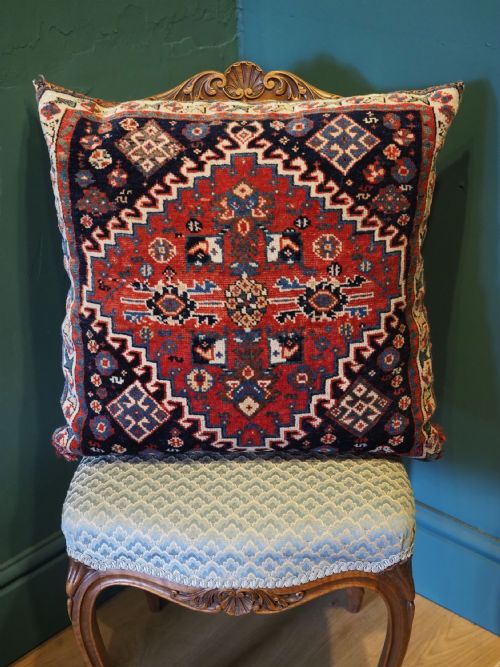
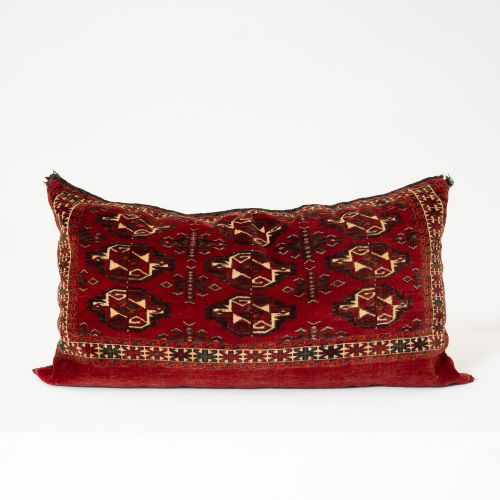
When you search for an oriental rug pillow, you find items fashioned from authentic nomadic and tribal textiles, principally sourced from bag faces, saddle bags, torbas, and kilims. These functional cushions repurpose heavy-duty utilitarian pieces woven by groups such as the Turkmen, Shahsevan, Baluch, Kurdish, and Qashqai.
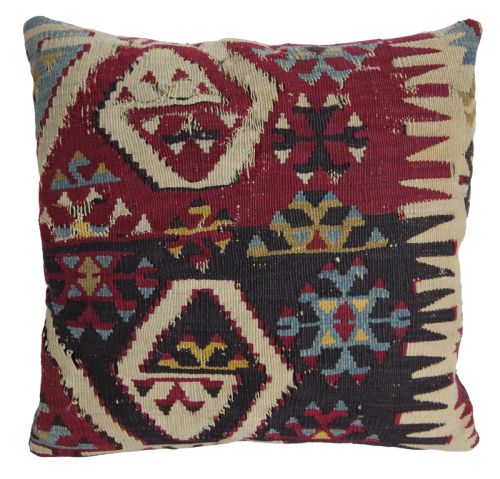
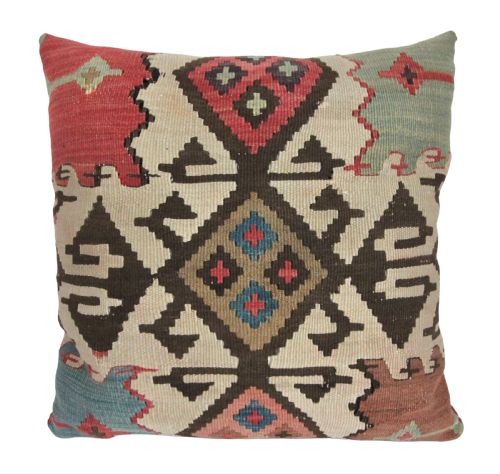
The most common versions on this page are antique kilim cushions and bag face cushions spanning the mid-nineteenth century to the early twentieth century. Each piece retains the dense construction and native motifs of its original nomadic context, adapted into a soft furnishing for modern rooms.
How they were made
These textiles rely on hand-spun wool and cotton foundations, worked into flatweave kilim or pile-woven structures that withstand heavy daily use. Weavers utilised natural dyes to achieve deep, lasting tones across intricate tribal patterns.
Nomadic makers constructed storage bags, saddle bags, and torbas for practical camp life, which later makers or collectors converted into cushions by adding supportive backs and stuffings. The integrity of the original hand-woven face remains central to each piece.
Materials across these listings consist of wool, cotton, natural dyes, and hand-spun wool.
What varies in quality
Quality rests upon the fineness of the wool, the clarity and complexity of the tribal design, and the overall integrity of the weaving. Pieces featuring crisp geometric motifs like the kepse gul or Herati patterns demonstrate superior execution by skilled nomadic weavers.
Condition and originality also set items apart, particularly when evaluating whether a cushion utilises an untouched antique bag face or a standard kilim fragment. The depth of natural dye colours and the tightness of the weave determine the endurance and visual weight of the cushion.
The Oriental Rug Pillow Glossary
- Bag face
- The decorative front panel of a nomadic storage sack, commonly repurposed into a cushion. These panels display the finest weaving and primary motifs of the piece.
- Kilim
- A flatwoven textile made without a pile, produced by tightly interlocking warp and weft threads. Antique kilim cushions offer a firm, durable texture.
- Torba
- A small Turkmen storage bag traditionally used inside a yurt. Surviving examples feature characteristic tribal guls and make compact, highly patterned cushions.
- Gul
- A medallion or repeated octagonal motif used by tribal groups to identify specific clans and lineages. These designs anchor the visual symmetry of the weaving.
Oriental Rug Pillow: Frequently Asked Questions
What is an oriental rug pillow made from?
These cushions are constructed from repurposed antique tribal textiles, including bag faces, saddle bags, and flatwoven kilims. The materials consist primarily of hand-spun wool and cotton.
Weavers relied on natural dyes to colour the dense wool, creating robust fabrics originally meant for nomadic storage and transport.
How old are these cushions?
The pieces seen here date from the mid-nineteenth century through the early twentieth century. This era encompasses traditional tribal weaving before mass-produced synthetic dyes became widespread.
Each cushion bears the stylistic markers of its specific period, reflecting traditional nineteenth and early twentieth-century nomadic aesthetics.
How do I care for an antique rug pillow?
Maintain these textiles through gentle vacuuming without a beater bar and professional cleaning when necessary. Keep them out of direct sunlight to protect the natural dyes from fading.
Because they utilise historic wool, treating them with care preserves the integrity of the hand-woven structure.
Where do these tribal designs originate?
The designs originate from various nomadic and tribal groups across Anatolia, Persia, the Caucasus, and Central Asia. Groups such as the Turkmen, Shahsevan, Baluch, and Qashqai produced the original storage bags and kilims.
Each regional group utilised distinct motifs, colour palettes, and weaving structures that identify the origin of the textile.