


Nomadic Textile Cushion
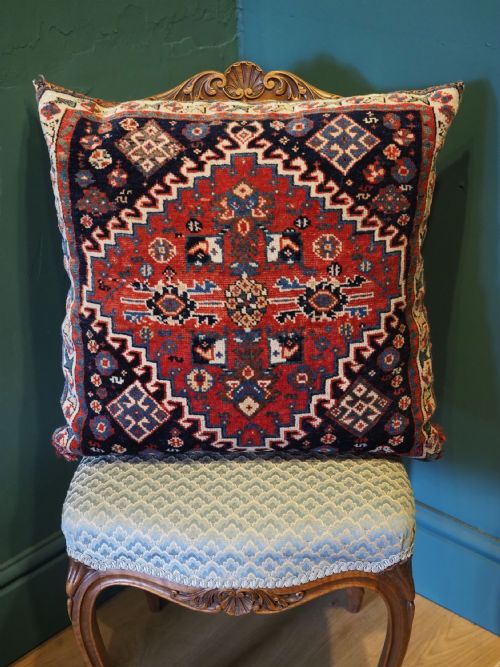
When you search for a nomadic textile cushion, you find transformed tribal bags and storage sacks crafted by pastoral weavers across Persia and Central Asia.
Nomadic Textile Cushion
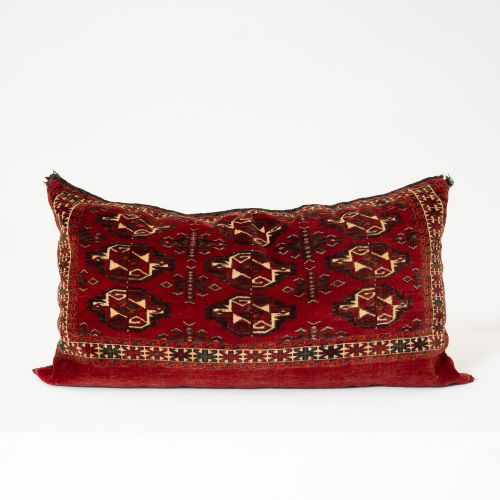
A nomadic textile cushion typically begins life as a utilitarian object such as a saddle bag, grain sack, or storage pouch woven by tribal groups like the Qashqai, Shahsevan, and various Turkmen tribes during the nineteenth and early twentieth centuries. These dense pile or flatwoven faces and complete bags are later adapted into soft furnishings while retaining their original tribal iconography and structural integrity.
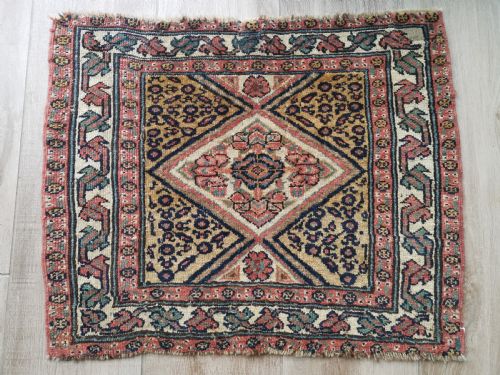
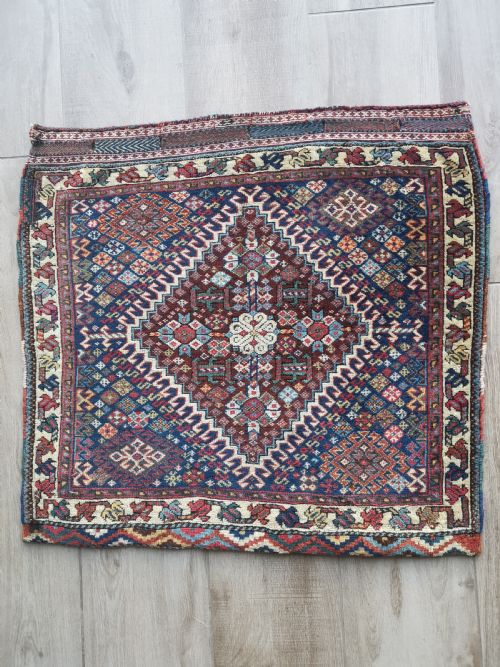
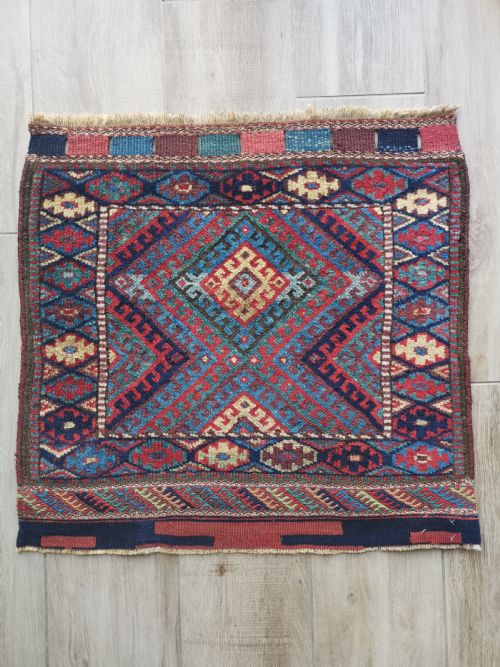
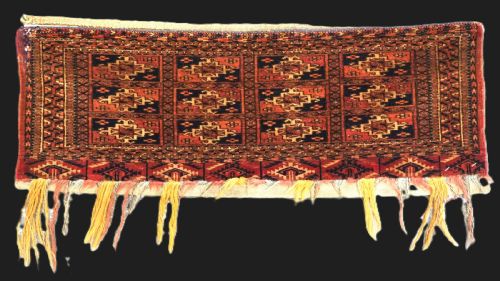
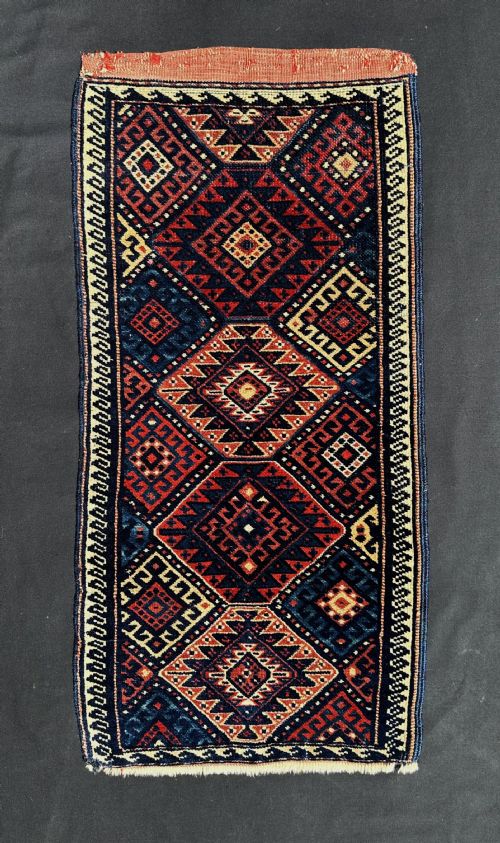
The assortment on this page concentrates on authentic regional formats including Turkmen chuvals and torbas, Persian saddle bag faces, and woven wheat sacks known as tachehs. Buyers encounter both single bag faces mounted with fabric backs and complete double saddle bags divided and stuffed to form functional cushions.
Originating from regions spanning the Caucasus, Western and Southern Persia, and the Trans-Caspian steppes, these textiles reflect the distinct aesthetic traditions of specific confederations and tribal groups. Each piece carries structural evidence of its nomadic genesis, from remaining side cords to integrated flatweave backs.
Markers of quality and execution
Quality in these nomadic textiles rests primarily on the handle and lustre of the wool, where high lanolin content gives the surface a vibrant, luminous quality. Master weavers selected finer grades of fleece and packed the knots or wefts densely, producing a supple, resilient handle rather than a stiff or brittle board.
The precision and clarity of the drawing within tribal motifs - such as gul octagons, boteh elements, or geometric lattice work - differentiate superior pieces from standard output. Expert execution ensures that proportions remain balanced and colour transitions appear harmonious across the field.
The preservation of original structural elements, including side cords, tassels, and complete plain weave backs, elevates the historical integrity of the piece beyond trimmed fragments.
The inventory records tribal origins across Persian and Central Asian groups, including Qashqai, Turkmen, Shahsevan, and Baluch weavers.
The Nomadic Textile Cushion Glossary
- Bagface
- The decorative front of a utilitarian tribal storage pouch or saddle bag, usually woven in pile technique while the back is plain weave. These are the sections most frequently preserved and converted into decorative cushions.
- Chuval
- A large tent storage bag traditionally used by Turkmen nomads for bedding and household goods. Their rectangular formats lend themselves well to modern cushion adaptation.
- Torba
- A smaller horizontal storage bag produced by Turkmen and other Central Asian tribes, often hung within the yurt to hold small possessions. They feature distinctive banded designs or primary guls.
- Soumac
- A wrapping technique where pattern wefts are wound around warp threads in a continuous movement, producing a textured, durable fabric resembling embroidery. It provides strong structural definition without a knotted pile.
- Boteh
- An ancient Persian motif resembling a stylised almond, pear, or curved pine cone. It appears frequently in tribal weaving symbolising life and eternity.
- Gul
- A repeated primary medallion or octagonal gabled motif characteristic of Turkmen and Central Asian tribal carpets and bags. Tribal weavers used distinct gul variations to identify specific clans and lineages.
Nomadic Textile Cushion: Frequently Asked Questions
Are these cushions made from authentic antique bags?
The pieces listed here originate from genuine nineteenth and early twentieth-century nomadic storage bags, saddle bags, and grain sacks. Artisans and dealers adapt these authentic tribal textiles into cushions while preserving the original hand-woven face.
Each item retains the historical materials, natural dyes, and tribal patterns created by pastoral weavers decades ago.
How do I care for a antique wool cushion?
Maintain these textiles by gentle surface vacuuming with low suction, avoiding rotating brush heads that can catch hand-spun wool fibres. Professional textile cleaning is recommended for deeper maintenance.
Keep the cushions out of direct, prolonged sunlight to protect the natural dyes from fading over time.
What is the difference between a torba and a chuval?
A chuval is a large tent storage bag traditionally used by Turkmen nomads for holding heavy items like bedding and blankets. Their generous rectangular proportions make them ideal for larger floor cushions.
By contrast, a torba is smaller and more horizontally proportioned, designed to hang on tent walls for smaller possessions.
How can I tell which tribe made a textile?
Tribal attribution relies on specific structural characteristics, colour palettes, and repeating geometric motifs unique to each group. For instance, Turkmen groups utilise distinct octagonal guls, while Qashqai weavers favour stepped medallions and saturated madder reds.
Examining the weave density and wool characteristics also helps locate the origin within regions like Fars or Khorassan.