
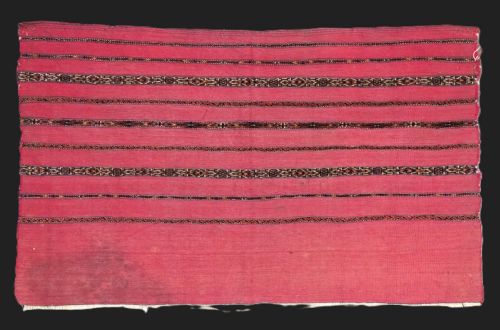


Tekke Chuval Bag Face
These antique tekke chuval bag face examples are tribal weavings rich in wool and natural dyes, prized by collectors for their complex guls and historic Central Asian artistry.
Tekke Chuval Bag Face
When you search for a tekke chuval bag face, you are looking at the front panel of a large storage sack made by Turkmen tribal weavers in Central Asia. These items date from the mid nineteenth century through to nineteen hundred, displaying traditional formats designed to hold household possessions.
You will most commonly meet chuval faces displaying repeating patterns of guls, often incorporating six, nine, twelve, or thirty major motifs. Certain pieces show specific design variants such as the kizil, ak, or aina patterns, alongside rarer torba faces and hanging loops attached for domestic display.
The regional attribution centres on Turkmen tribal groups, specifically the Tekke weavers who frequently incorporated Salor guls or turreted variations into their compositions. These textiles represent the utilitarian art of nomadic households, surviving as decorative wall hangings and collector pieces.
Assessing Quality and Execution
Quality in these tribal weavings rests upon knot density, handle suppleness, and the precision of the gul drawing. Very fine weaves require greater labour and skill from the weaver, producing a sharper definition in complex geometric arrangements.
The vibrancy and depth of the natural dyes separate standard examples from superior pieces, particularly where secondary shades highlight the main guls. The presence of scarce design elements like the aina motif or multiple turreted Salor guls elevates the visual impact of the composition.
Some nineteenth century bags still wear their original hanging loops, ready for nomadic housekeeping long before ending up on a modern wall.
The Tekke Chuval Bag Face Glossary
- Chuval
- A large tent storage bag used by nomadic tribes for household goods. The face represents the decorative front panel preserved after the utilitarian back wore away.
- Gul
- A repeating primary medallion or octagonal motif central to Turkmen tribal rug design. Different tribes and sub-groups utilised distinct gul patterns to signal identity.
- Torba
- A smaller storage bag format produced by Turkmen weavers. These pieces share similar wool and natural dye palettes with larger chuvals but differ in overall proportions.
- Kizil
- A red-ground colorway or design grouping associated with Turkmen tribal weaving. The term describes textiles dominated by rich madder red tones.
- Ak
- A white or light-ground variant within Turkmen bag faces. These examples provide a visual contrast to the more common deep red fields.
Tekke Chuval Bag Face: Frequently Asked Questions
What is a chuval face?
A chuval face is the decorative front panel of a nomadic storage sack originally used in Central Asian tents. These sturdy textiles were sheared from their utilitarian cotton and wool backs to be preserved as flat wall hangings.
Over decades, collectors valued the intricate repeating patterns and natural dyes, removing the functional sacks from daily tribal use to display them as textile art.
How old are these bag faces?
The pieces available date from the mid nineteenth century up to nineteen hundred. Many examples originate around eighteen eighty, with earlier specimens stretching back towards eighteen fifty.
Exact dating relies on structural analysis, wool quality, and the specific palette of natural dyes employed by the tribal weaver.
What do the different guls mean?
Guls are primary octagonal medallions that identify the weaving tribe and sub-group. Tekke weavers frequently incorporated Salor guls or turreted variations into their chuval compositions.
These motifs served as visual markers of clan identity while demonstrating the technical skill of the individual weaver through precise symmetry and scale.
How do I display a textile?
These pieces function well as wall hangings due to their flat, woven structure and occasional surviving hanging loops. Support should be distributed evenly across the top edge using a sleeve or padded bar.
Direct sunlight should be avoided to protect the natural dyes from fading over time, preserving the contrast of the wool fibres.