
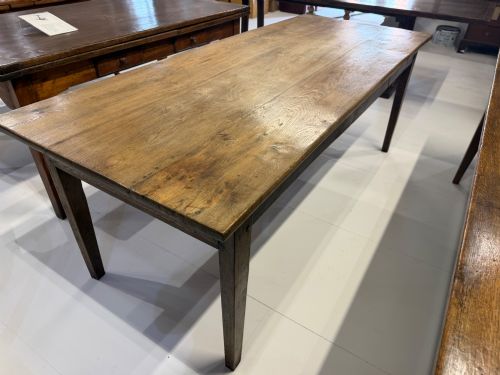
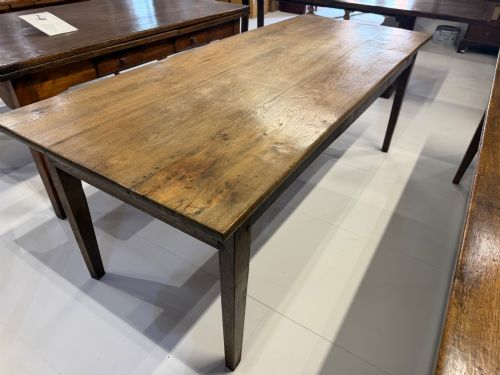
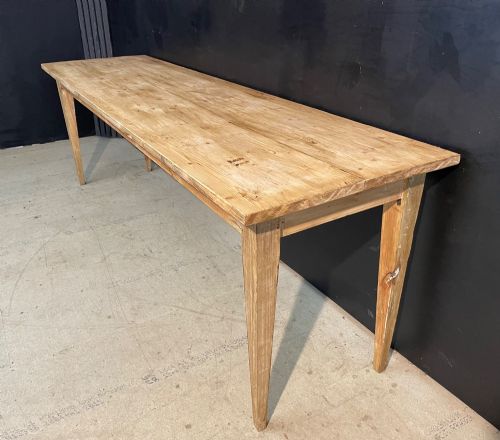
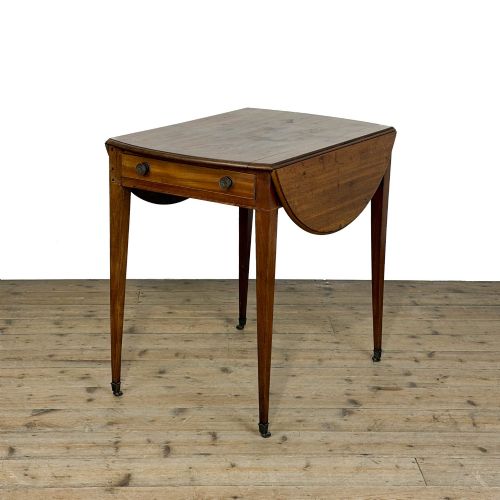

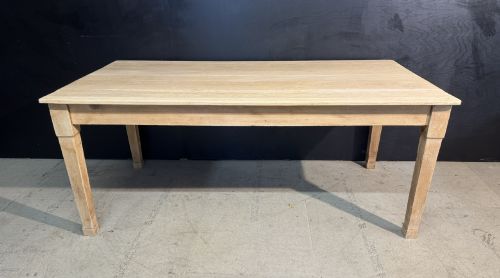
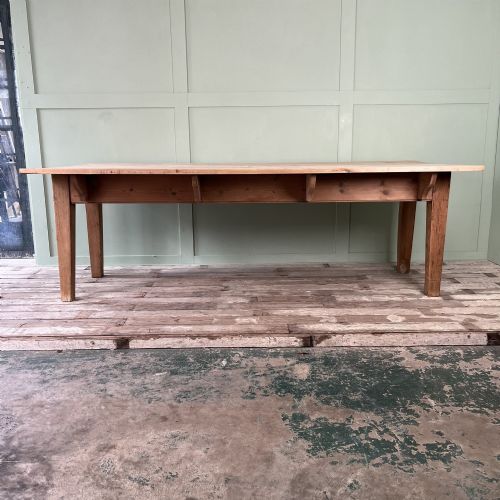
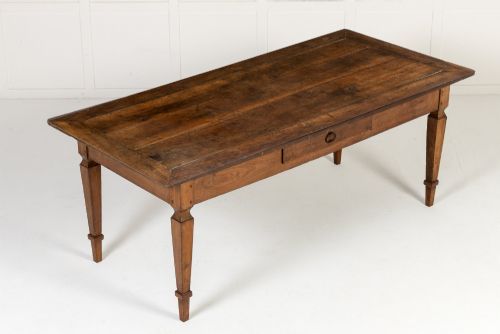
Tapered Leg Wooden Table
These tapered leg wooden tables span centuries of domestic utility, offering solid timbers and refined linear supports that suit both kitchen and parlour.
Tapered Leg Wooden Table
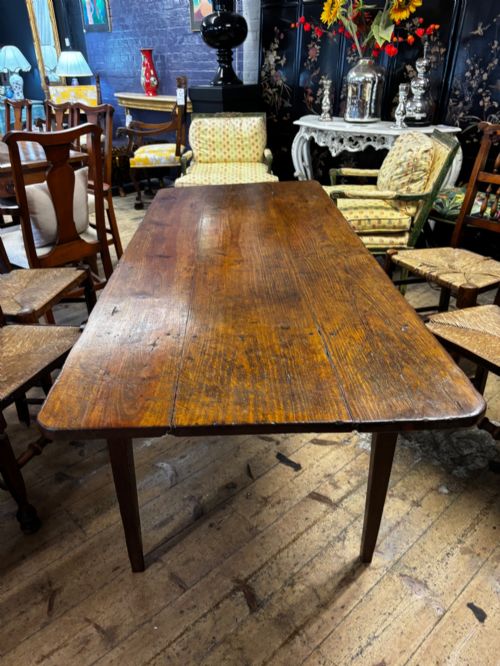
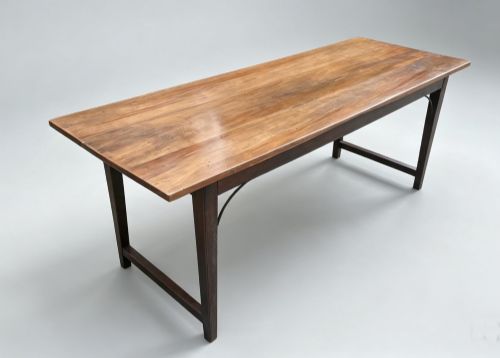
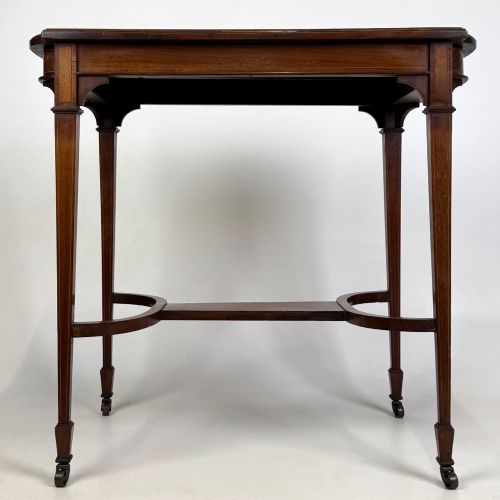
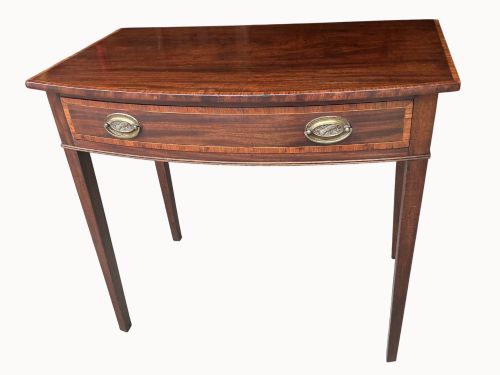
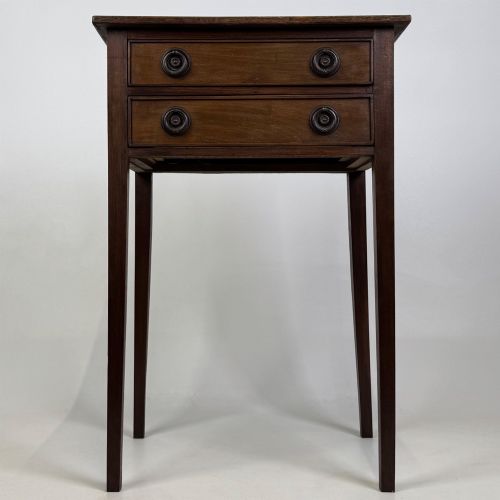
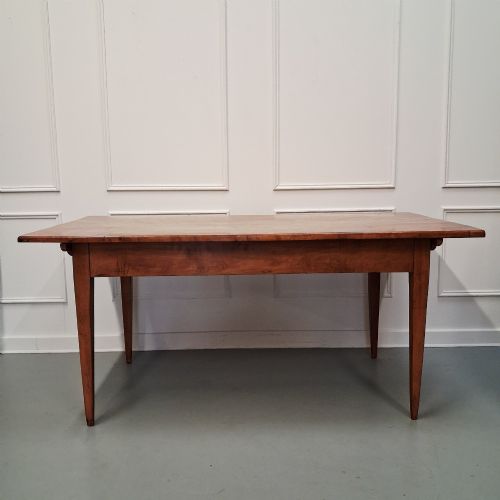
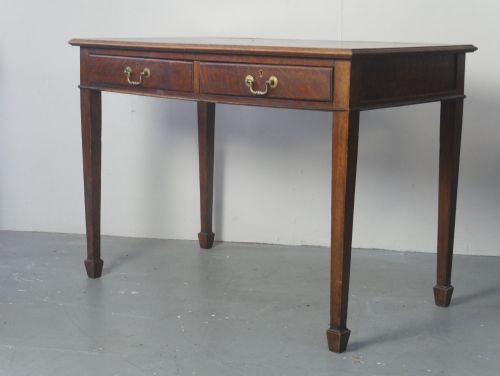
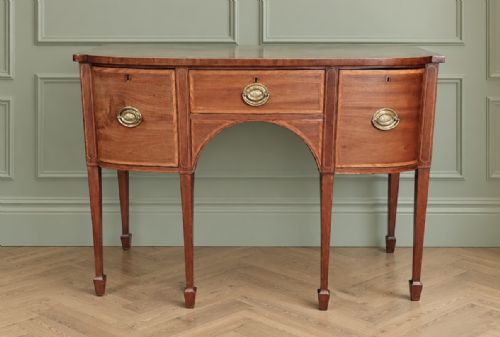
A tapered leg wooden table brings together a mix of everyday domestic forms and refined period designs built upon slender supports. Buyers searching for a tapered leg wooden table encounter various configurations ranging from rustic kitchen boards to polished parlour side tables.
The selection here draws heavily from the 18th century, the Georgian era, and the Edwardian period, incorporating pine, oak, and mahogany. Farmhouse and dining variations dominate the larger formats, whilst pembroke and side tables supply the smaller proportions.
Regional diversity appears across French provincial styles alongside English cabinet work, revealing how makers adapted simple taper supports to diverse regional timber stocks. Pine and fruitwood serve the rustic end, whereas mahogany and satinwood dominate the formal pieces.
How they were made
Cabinet makers and rural joiners utilised solid hardwoods and softwoods including oak, mahogany, pine, and fruitwood, often selecting timber for both structural strength and visual figure. Surfaces received careful smoothing, whilst boxwood inlay and satinwood crossbanding embellished finer Sheraton and Edwardian items.
Joinery techniques relied on pegged mortise and tenon joints for heavy farmhouse frames, whilst delicate Pembroke and side tables employed sophisticated drawer framing and stable leg tapering. Brass hardware and drop handles completed functional compartments on writing desks and sideboards.
Even humble kitchen boards retain the distinct notch marks of past culinary endeavours.
What varies in quality
Quality rests upon the selection of timber figure, such as highly grained Honduras mahogany or well-matched cherrywood, set against plain utility planks. Refined Sheraton and Georgian examples display precise inlay work and balanced proportions, whereas provincial farmhouse boards prioritise robust, honest construction.
The execution of the taper itself defines the aesthetic success of the leg, moving from simple hand-planed chamfers to sophisticated spade feet with crisp geometric lines. Timber thickness, original hardware survival, and the integrity of glued joints separate standard utility furniture from pieces of finer cabinet making.
The Tapered Leg Wooden Table Glossary
- Pembroke table
- A small table with hinged drop leaves on either side, frequently featuring a single drawer and slender tapered legs.
- Crossbanding
- A strip of veneer applied to the border of a table top or drawer front so that the grain runs at right angles to the central panel.
- Refectory table
- A long dining table traditionally utilised for communal meals, constructed with sturdy timber legs and often longitudinal stretchers.
- Marquetry
- Decorative veneer work forming pictures or geometric patterns using various coloured woods, brass, or shell inserted into the surface.
- Demi lune
- A half-moon shape common in console and side tables designed to stand flat against a wall in smaller spaces.
Tapered Leg Wooden Table: Frequently Asked Questions
How do I identify a Georgian tapered leg table?
Georgian tables typically feature dense timbers such as mahogany or oak combined with restrained proportions and precise linear tapering. Closer inspection often reveals hand-cut joinery and traditional drawer linings.
Finer versions incorporate subtle stringing or brass fittings which mark them out from plainer provincial pieces produced in later decades.
Where should I place a pembroke table?
A pembroke table suits smaller sitting rooms or hallways because the drop leaves fold down to save floor space. Raising the flaps creates an immediate surface for writing or serving tea.
They sit comfortably beside armchairs or against blank walls when not in full use.
Are pine farmhouse tables durable for daily dining?
Pine farmhouse tables provide sturdy surfaces built to handle heavy everyday use in kitchens and family dining spaces. The soft timber absorbs marks and patinates over generations of domestic life.
Regular cleaning with mild soap preserves the surface without removing the accumulated character of the wood.
What is the difference between a side table and a console?
Side tables generally stand on four independent legs and function across various rooms for storage or display. Console tables often feature semicircular or demi lune shapes intended to anchor directly against walls.
Both types utilise tapered wooden legs to maintain a light visual presence in domestic interiors.