
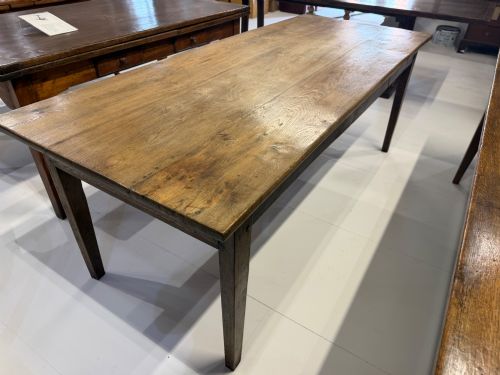
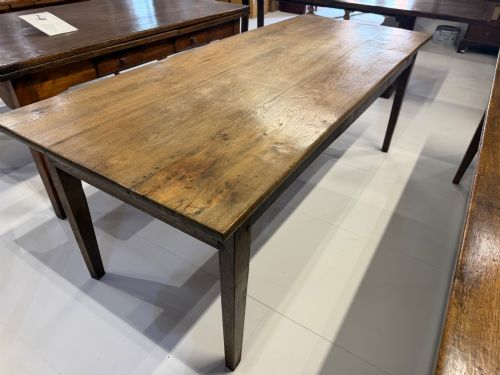
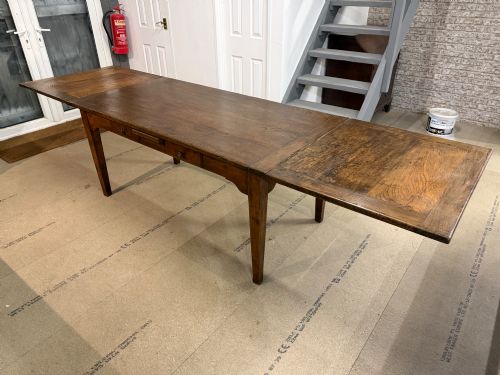
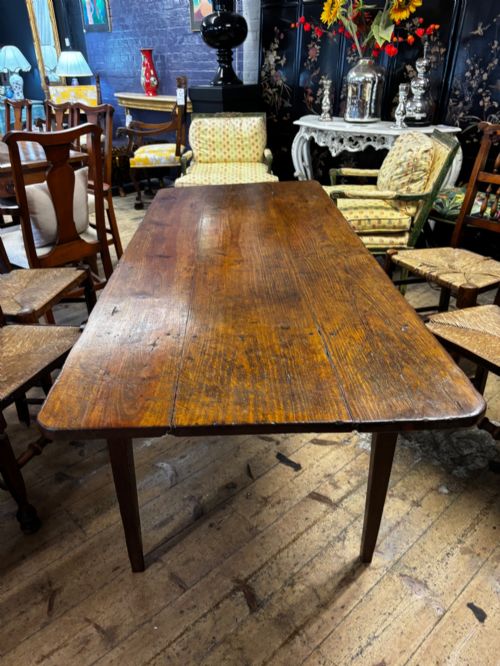
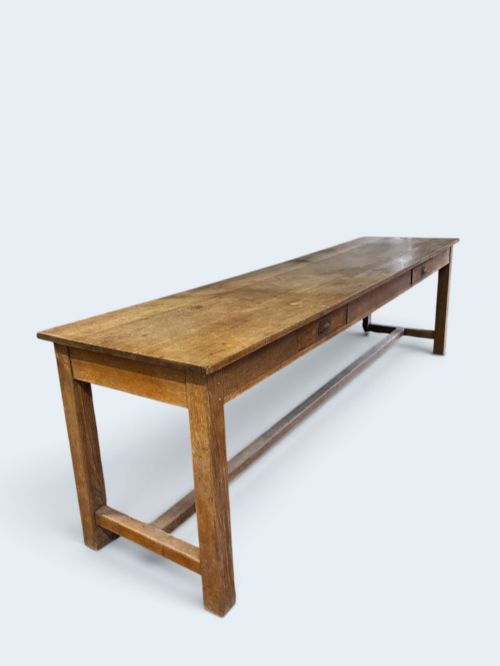
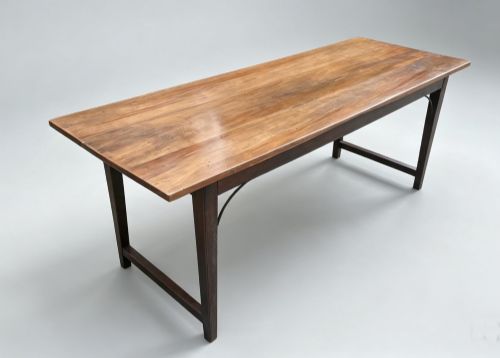


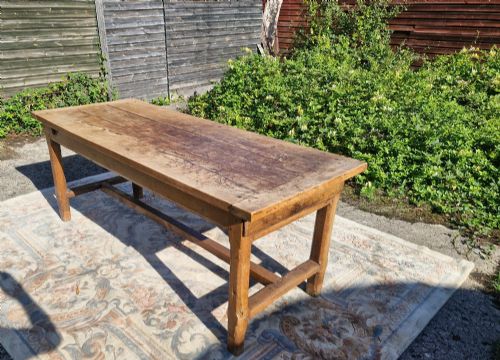
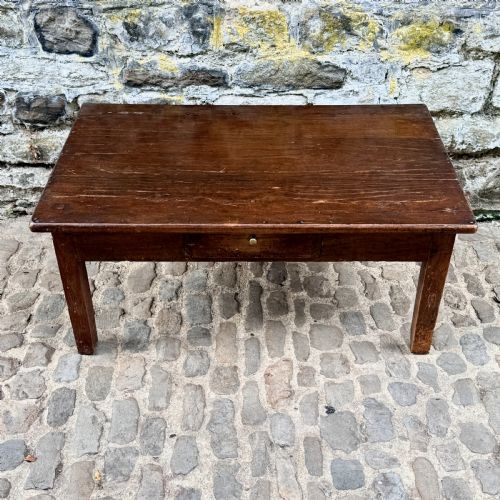
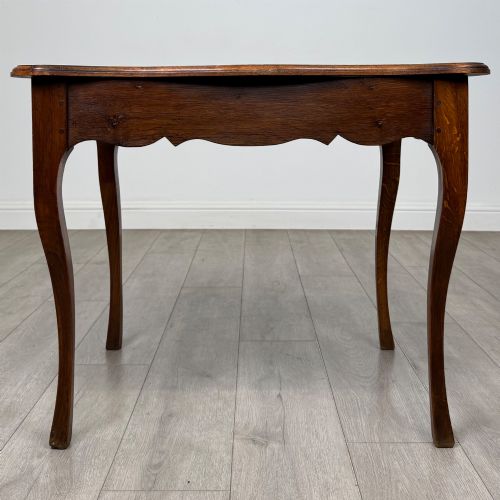
Rustic French Country Table
A rustic french country table brings honest utility and vernacular character into a room, formed from timber shaped by generations of practical use.
Rustic French Country Table
A rustic french country table encompasses large dining boards, refectory surfaces, and smaller kitchen items designed for daily domestic service. Buyers searching this phrase look for solid timbers and unpretentious lines that reflect rural life.
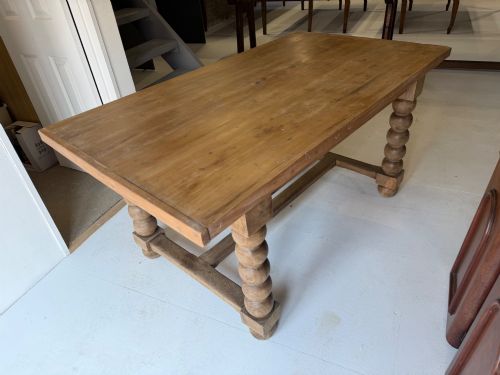
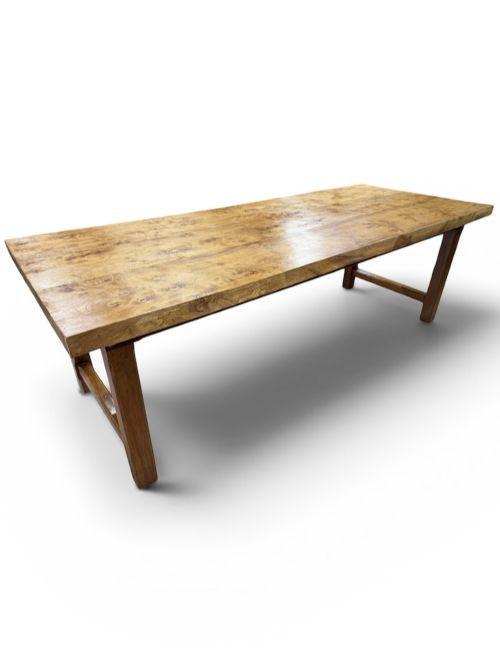
The most common examples on this page are dining tables and refectory forms dating from the nineteenth century. These pieces often feature stretcher bases, thick plank tops, and straightforward joinery developed for hard work.
What varies in quality
The integrity of the timber structure and the thickness of the top boards determine the standard of a piece. Tables retaining their original legs, unaltered stretchers, and unplaned surfaces hold greater integrity than those heavily restored.
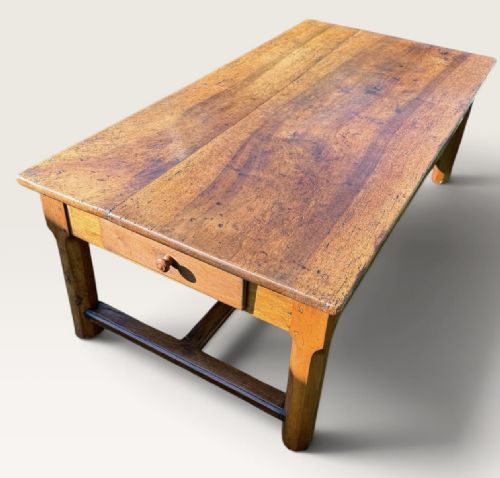
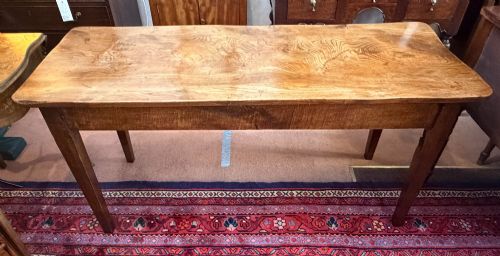
Proportion and timber selection set better examples apart from standard utility items. Selection of fine grain fruitwood or dense figured oak elevates a piece above basic pine kitchen boards.
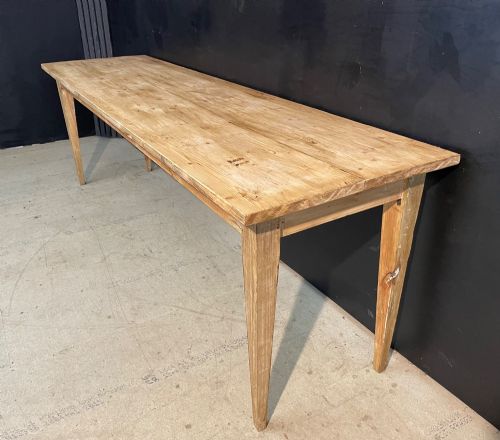
The listings span the eighteenth, nineteenth, and early twentieth centuries, featuring oak, fruitwood, elm, and pine constructed in regional vernacular styles.
The Rustic French Country Table Glossary
- Refectory table
- A long narrow dining table traditionally used in communal dining halls and large farmhouses. These forms feature long stretcher rails connecting the legs for stability.
- Fruitwood
- A collective term for timber harvested from fruit-bearing trees such as pear or cherry. Cabinet makers valued these woods for their fine grain and warm tone.
- Drapers table
- A long counter-height table originally used in textile shops for folding cloth. They frequently include lower shelves or drawers for storage.
- Turned legs
- Table supports shaped on a lathe to create decorative rings, bobbin shapes, or tapering profiles. This technique adds ornamental detail to otherwise utilitarian frames.
Rustic French Country Table: Frequently Asked Questions
How do I clean an antique wood table?
Wipe surfaces using a slightly damp cloth and dry them immediately to protect the historic grain. Avoid harsh chemical cleaners that strip natural oils from the timber.
Feed the wood periodically with traditional beeswax to maintain the finish. This protects the historic surface without creating an artificial gloss.
Can I use a farmhouse table outdoors?
Most antique tables listed here were built for interior domestic use and lack weather-resistant treatments. Exposure to rain and frost causes timber to warp and split.
Keep these pieces inside climate-controlled rooms to preserve the structure. Only items explicitly designated as garden furniture are suitable for outdoor placement.
What is the difference between oak and fruitwood?
Oak provides a dense, heavy structure with prominent grain patterns and high durability. It forms the backbone of heavy refectory and dining tables.
Fruitwood offers a smoother texture with subtle figuring and a warm red-brown tone. Makers utilised it for smaller tables and refined kitchen furniture.
How do I date an antique wooden table?
Examine the underside and joinery for hand-sawn tool marks and pegged construction methods. Machine-cut boards and modern screws indicate later manufacturing dates.
Assess the wear patterns around the edges and feet to understand the age of the piece. Natural patination builds slowly over decades of continuous household use.