




Sugar Sifter Spoon
When you handle a sugar sifter spoon, you hold a piece of dining history designed to dust loose sugar over fruit or desserts.
Sugar Sifter Spoon
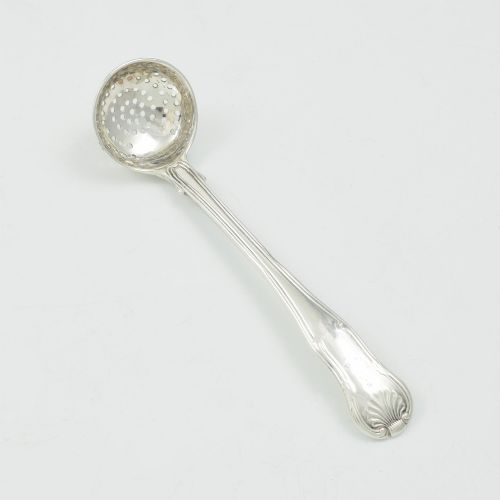
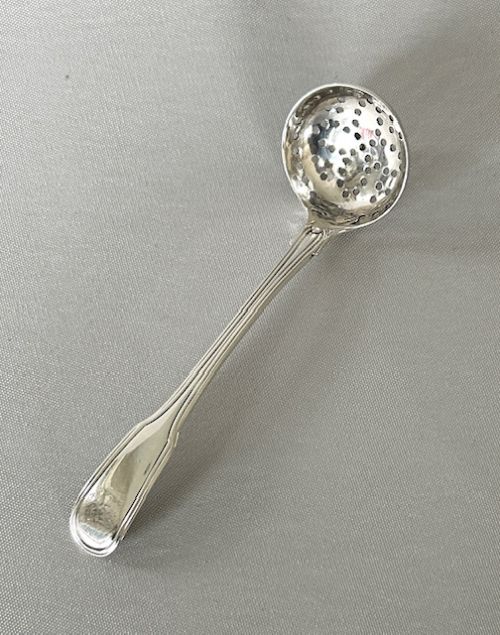
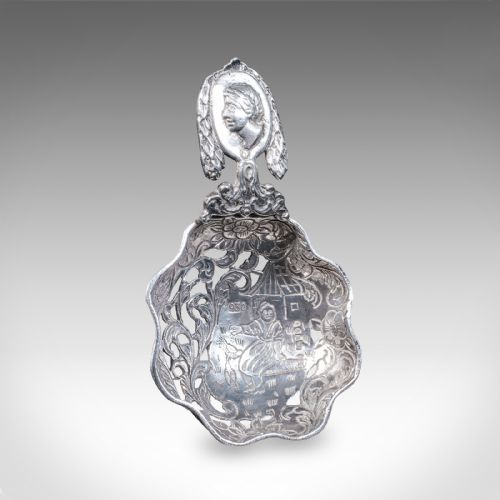
A sugar sifter spoon is a specialised piece of serving cutlery featuring a pierced bowl intended to sprinkle powdered or castor sugar evenly.
The versions met most frequently range from the restrained silver forms of the Georgian period through to the heavier, ornamented styles of the Victorian era.
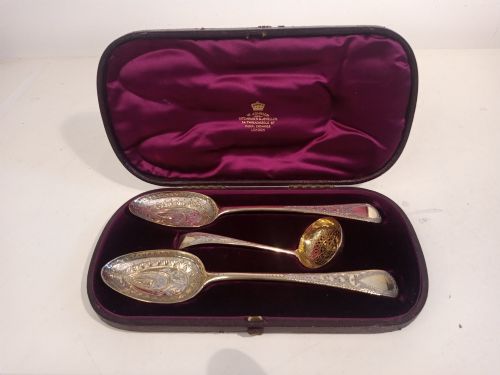
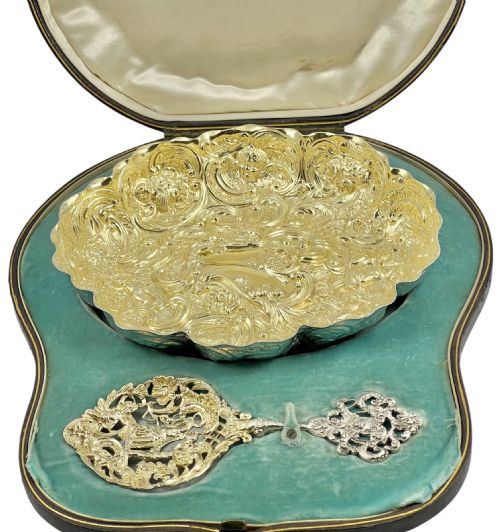
These implements often appear alongside matching sugar bowls or within fitted cased sets incorporating cranberry glass or velvet linings.
Materials and construction methods
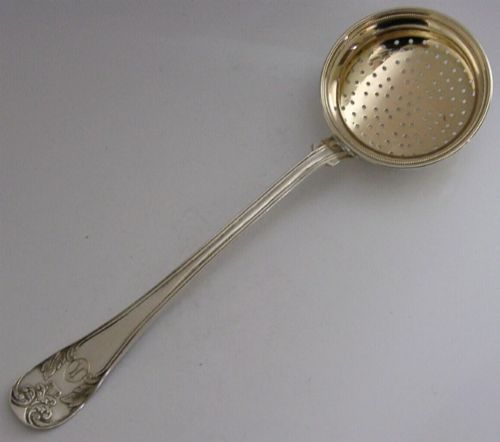
Makers primarily utilised sterling silver, silver plate, and occasionally silver gilt to shape the bowls and handles.
Piercing techniques created intricate geometric, floral, or scroll patterns across the bowl to allow the sugar to pass through cleanly.
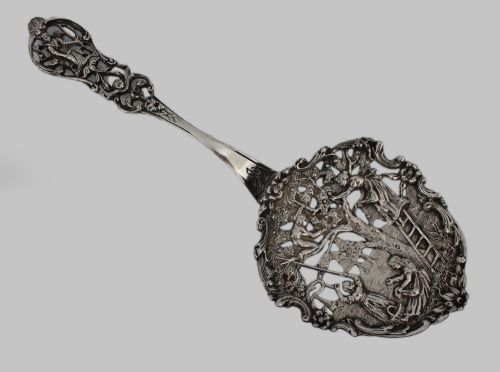
Many examples incorporate cast terminals, applied crests, or hand-engraved detailing reflecting prevailing styles such as Rococo revival or Arts and Crafts.
Listings demonstrate a prevalence of sterling silver and silver gilt forms originating across the Georgian, Victorian, and Edwardian periods.
Distinguishing quality in silver sifting implements
The distinction between standard production and superior work rests on the crispness of the bowl's piercing and the weight of the metal utilised.
Pieces featuring cast figural terminals or hand-engraved family crests demonstrate a higher degree of artisan involvement than plain stamped equivalents.
The integrity of the hallmarks and the preservation of original gilding or fitted presentation cases further influence the standing of an individual piece.
John Lambe·Bateman·Francis Higgins·Taylor and Perry·Chawner and Co·Martin Hall and Co
The Sugar Sifter Spoon Glossary
- Piercing
- The technique of cutting decorative holes through the metal of the spoon bowl. This process allowed fine sugar to pass while retaining larger granules.
- Terminal
- The decorative end of a spoon handle. Makers often shaped these into flowers, crests, or figural representations.
- Silver Gilt
- Silver covered with a thin layer of gold on the surface. This finish provided a warm tone and protected the underlying metal from tarnishing.
- Hallmark
- An official stamp applied to precious metals indicating standard of purity, place of assay, and date of manufacture. These marks guide the identification of period items.
Sugar Sifter Spoon: Frequently Asked Questions
What is a sugar sifter spoon used for?
These spoons were utilised at the dining table to dispense powdered or loose sugar over fruit, pastries, and desserts. The pierced bowl acted as a sieve to ensure an even distribution.
They gained popularity during the Georgian and Victorian periods when refined sugar became a prominent feature of formal dining and tea service.
How do I date a silver sifter spoon?
Dating relies primarily upon the official hallmarks stamped into the metal, which indicate the assay office and the active year of the maker. Stylistic clues such as handle shape and piercing patterns also provide broad chronological markers.
Items paired with original fitted cases often carry dates corresponding to the interior velvet or silk lining labels.
Were these spoons sold in sets?
Many examples were originally produced as part of larger matched services, often accompanying sugar baskets, bowls, or berry spoons. Fitted presentation cases frequently house a bowl alongside the sifter.
Single pieces also exist independently, having been produced as standalone serving utensils for domestic households.