
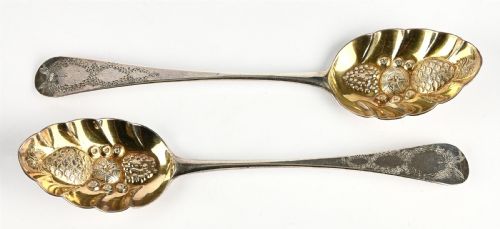


Gilded Sterling Spoon
A gilded sterling spoon brings tactile weight and a rich golden gleam to the table, uniting solid silver craft with luminous gilt finishes.
Gilded Sterling Spoon
When you search for a gilded sterling spoon, you are looking at items shaped from sterling silver and finished with a layer of gold wash or silver-gilt. These pieces range from solitary caddy spoons and sifter spoons to matched pairs of berry or dessert serving spoons.
The versions you are most likely to meet on this page span the Georgian and Victorian eras, alongside later Arts and Crafts, Art Nouveau, and Art Deco designs. Many of these implements arrive in fitted boxes, accompanied by sugar bowls or tongs.
How they were made
Silversmiths formed these objects from solid sterling silver, employing hammering, casting, and piercing techniques to create bowls, stems, and handles. Naturalistic leaf motifs and decorative berry fruit engraving appear across the styles.
Makers then applied a gold wash, silver-gilt, or gold gilt coating over the silver base, creating a lustrous two-tone contrast between the white metal body and the rich golden surface.
Several items on this page sleep securely inside velvet and silk lined presentation cases.
What varies in quality
The distinction between standard items and superior examples rests on the crispness of the chasing, the depth of the gilding, and the integrity of any paired sets. Finer pieces retain their original gold wash across the bowl interior and high-relief details.
Maker marks and clear hallmarking contribute significantly to the standing of a piece, as do original fitted presentation cases that protect the fragile gilt surfaces from wear over the centuries.
peter & Anne Bateman·Sebastian Crespell
The Gilded Sterling Spoon Glossary
- Sterling silver
- An alloy of silver containing 92.5 percent pure silver and 7.5 percent other metals, usually copper. This standard ensures structural durability for domestic tableware.
- Silver-gilt
- Sterling silver that has been coated with a thin layer of gold. It is also referred to as gilt silver or vermeil.
- Caddy spoon
- A short-handled spoon specifically designed for measuring tea leaves from a caddy. These often feature shell or floral bowls.
- Sifter spoon
- A spoon with a pierced or perforated bowl used for dusting sugar over fruit or desserts. They frequently appear alongside matching sugar bowls.
- Berry spoon
- A large serving spoon with an embossed and chased bowl depicting fruit, often produced during the Georgian period and later re-worked by Victorian silversmiths.
Gilded Sterling Spoon: Frequently Asked Questions
What is a gilded sterling spoon used for?
These implements served specialised dining and tea-service functions, from transferring loose tea leaves and sifting sugar to serving berries and desserts.
The gold wash protected the silver from being tarnished by acidic foods like fruit and added a decorative accent to the table.
How do I care for silver-gilt cutlery?
Silver-gilt requires gentle handling to preserve the delicate gold layer over the sterling silver base. Avoid abrasive polishes that can strip away the gilding over time.
Wash them by hand in warm soapy water and dry them thoroughly with a soft cloth before storing them in lined boxes.
How do I tell Georgian and Victorian spoons apart?
Georgian pieces often display cleaner classical lines or early fruit repoussé work, while Victorian examples lean toward heavy naturalistic leaf motifs and elaborate boxed sets.
Examining the hallmarks and stylistic flourishes helps confirm whether a piece belongs to the eighteenth century or the later nineteenth century.
Why are some spoons sold in fitted boxes?
Presentation cases protected delicate serving pieces, coffee spoons, and sugar sets from dust, moisture, and accidental surface scratching.
These velvet-lined or silk-fitted boxes indicate items intended for gifting or special household use rather than everyday dining.