


Gold Gilt Spoon
A gold gilt spoon brings heavy silver and bright wash to the table, offering a tactile piece of past dining rituals.
Gold Gilt Spoon
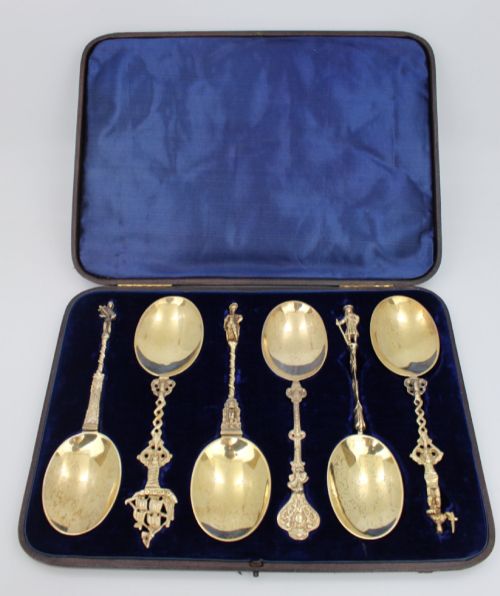
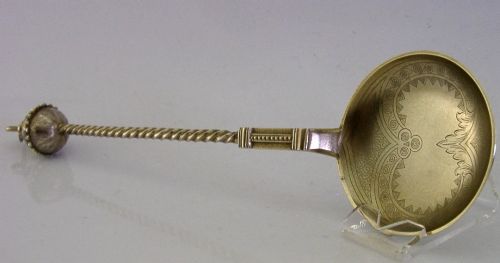
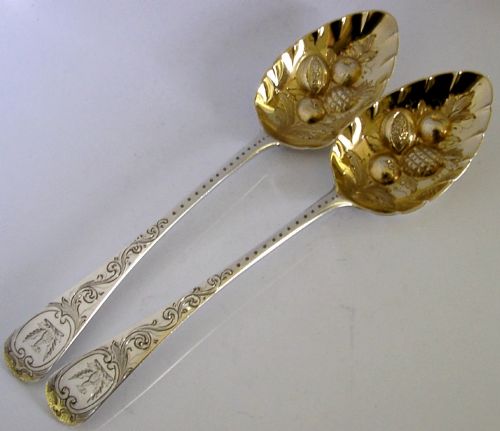
A gold gilt spoon combines a base metal foundation with a rich layer of gold wash, creating striking contrast across various forms. When handling a gold gilt spoon, collectors encounter diverse configurations ranging from Georgian berry serving pieces to small enamel teaspoons.
The selections span distinct periods including the Georgian era, Victorian epoch, Edwardian years, and Mid-Century Modern designs. Most pieces on this page emerge from Victorian and twentieth-century workshops, showcasing styles from Art Nouveau and Arts & Crafts to Art Deco.
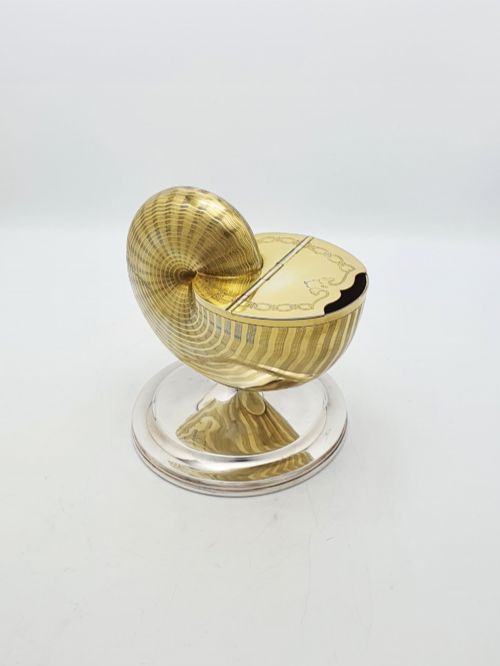
Object types vary widely between practical caddy spoons, sifter spoons, serving spoons, spoon warmers, and complete boxed sets. Each iteration serves a specific historical function, whether handling dry tea leaves, sifting sugar, or serving festive meals.
Materials and construction
Makers formed these items using sterling silver, solid silver, silver plate, or gilt metal as the primary substrate. Artisans then applied a gold gilt finish over the base metal to enhance the visual depth and protect the underlying silver from tarnishing.
Vivid coloured enamel frequently decorates the handles and bowls, particularly in Scandinavian twentieth-century pieces. Additional components like velvet appear within fitted presentation cases, complementing the polished metalwork.
Materials found across the inventory incorporate sterling silver, silver gilt, enamel, solid silver, silver plate, and gilt metal.
Evaluating craftsmanship
The integrity of the gold gilt surface dictates much of the visual success, as uneven wear or rubbing reveals the base metal underneath. Crisp hand-chased details, such as the naturalistic leaf veins on Victorian examples or the intricate enamel work on Scandinavian pieces, separate standard production from superior work.
Maker marks, clear hallmarks, and family crests provide verifiable pedigree and weight to solid silver examples. The balance of the handle in the hand and the structural thickness of the bowl reflect the original maker's investment of time and metal.
David Andersen·Sebastian Crespell·Harrods London
The Gold Gilt Spoon Glossary
- Silver Gilt
- Silver that has been coated with a thin layer of gold. This technique protects the underlying silver while providing the rich appearance of solid gold.
- Caddy Spoon
- A short-handled spoon specifically designed for measuring loose tea leaves from a storage caddy. These often feature decorative bowls shaped like leaves or shells.
- Sifter Spoon
- A perforated spoon used for dusting fine sugar over food or desserts. The pierced bowl allows the powder to fall evenly.
- Spoon Warmer
- A Victorian vessel designed to hold hot water and warm spoons before they were used for serving. These pieces often take whimsical forms such as shells or nautilus shapes.
- Hallmark
- An official stamp applied to precious metals indicating the standard of purity, the maker, and the year of assay. These marks help establish the exact provenance of an antique piece.
Gold Gilt Spoon: Frequently Asked Questions
How do I clean a gold gilt spoon?
Use only warm water and a very mild soap with a soft cloth to protect the delicate gold layer. Avoid abrasive polishes that will strip the gilt wash from the silver underneath.
Pat the piece completely dry immediately after washing to prevent water spots from forming on the surface.
What were caddy spoons used for?
Caddy spoons measured loose tea from storage containers into the teapot during the eighteenth and nineteenth centuries. Their short handles allowed them to sit neatly inside the tea caddy alongside the leaves.
Collectors prize them today for their varied and imaginative bowl designs, which range from simple shells to engraved floral motifs.
How can I tell a Victorian spoon from a Georgian one?
Georgian pieces often display heavier cast handles with hand-engraved crests and traditional berry motifs added later in the nineteenth century. Victorian items frequently embrace naturalistic designs, incorporating detailed leaf shapes and heavier ornamentation.
Checking the hallmarks provides the most accurate dating method for distinguishing between these two periods.
Can I use antique spoons for daily dining?
Solid silver and silver gilt spoons are generally durable enough for careful everyday use if washed by hand immediately after meals. Enamelled or plated pieces require gentler handling to preserve the decorative surfaces over time.
Many collectors prefer to reserve these items for special occasions or display them within fitted presentation cases.