

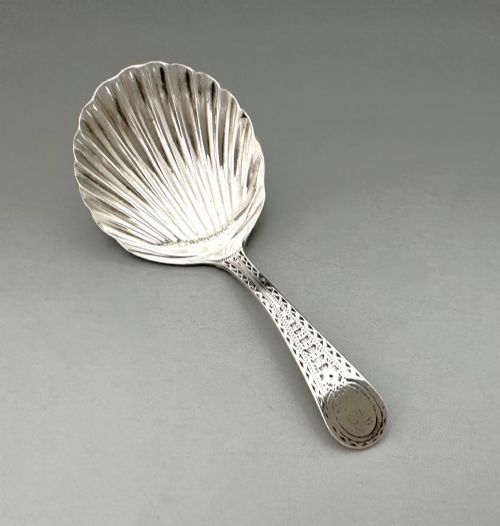
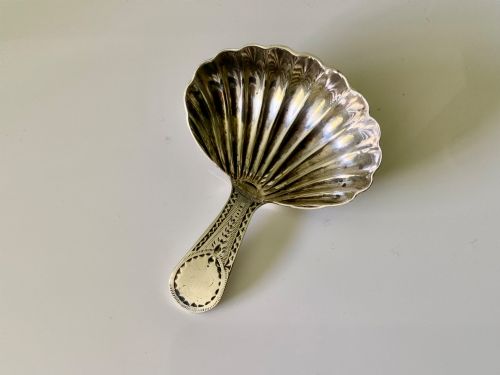
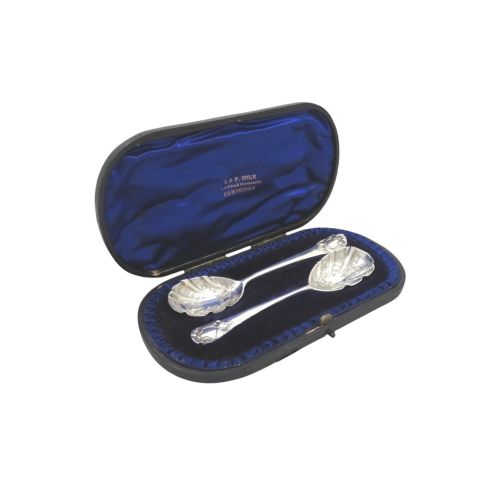


Shell Bowl Spoon
These shell bowl spoon pieces bring natural form to the table, and a collector values them for their distinct marine shaping.
Shell Bowl Spoon
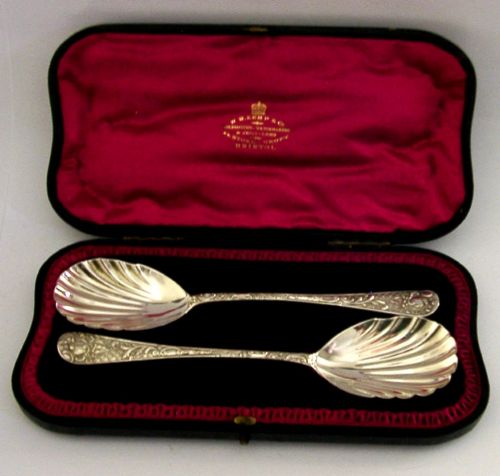
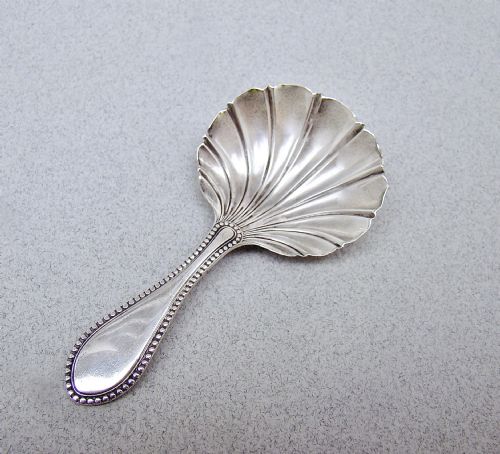
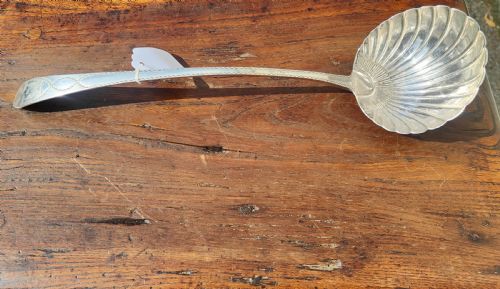
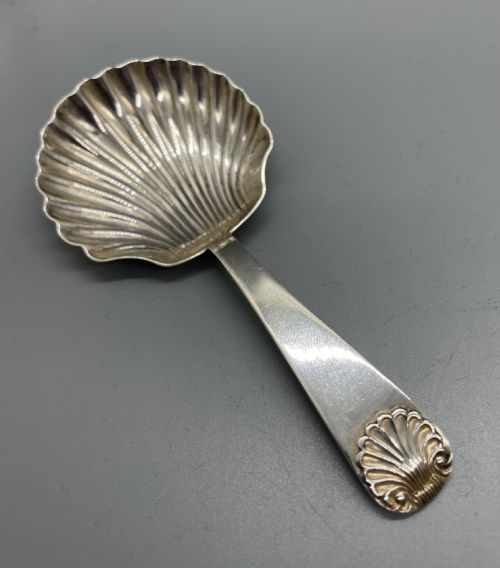
When you search for a shell bowl spoon, you encounter small serving implements and table utensils shaped to resemble natural bivalve shells. The selection ranges from compact tea and caddy spoons to larger serving pieces, ladles, and butter knives.
Caddy spoons and preserve spoons dominate the offerings on this page, often appearing alongside pairs of salt spoons and larger soup ladles. These items emerge primarily from the Georgian, Victorian, and Edwardian eras.
Origins stretch across English provincial and London assay offices, alongside continental European workshops and American makers. The form serves functional dining roles while displaying decorative metalwork.
What varies in quality
The distinction between standard pieces and superior examples rests in the crispness of the bowl's fluting and the depth of the repoussé work. Early hand-chased specimens demonstrate sharper anatomical details in the shell ridges than mass-produced later variants.
Maker marks and clear assay hallmarks contribute significantly to the standing of a piece, as do matching fitted presentation cases lined in original silk or velvet.
Listings feature sterling silver and silver gilt forms, alongside fitted cases lined in velvet, silk, satin, and leatherette.
Martin Hall & Co·The Goldsmiths & Silversmiths·Michael Smith·Tiffany & Co·Mappin & Webb·Whiting Co·William Devenport
The Shell Bowl Spoon Glossary
- Caddy spoon
- A short-handled spoon utilised for measuring dry tea leaves from a caddy into a teapot. These small utensils often feature shell-shaped bowls.
- Onslow pattern
- A distinct handle design featuring a scrolled volute terminal that curls downward, popular during the eighteenth century.
- Repoussé
- A metalworking technique where the artisan hammers the design from the reverse side to form raised relief work on the front.
- Silver gilt
- Sterling silver that has been coated with a thin layer of gold on the surface, providing a rich dual-tone appearance.
- Sifter spoon
- A perforated spoon designed for sprinkling sugar over fruit or desserts, frequently paired with tea and dessert services.
Shell Bowl Spoon: Frequently Asked Questions
What is a shell bowl spoon used for?
These utensils serve various tabletop duties, from measuring loose tea to transferring preserves, sugar, and salt. Smaller variants suit condiment dishes, while larger examples function as soup ladles.
Their distinctive marine bowls allow them to handle loose substances gracefully during formal dining occasions.
How do I identify a Georgian piece?
Georgian items exhibit hallmarks specific to the eighteenth and early nineteenth centuries, often lacking a maker's sovereign duty mark depending on the exact year. Look for softer patination and hand-engraved crests.
The manufacturing techniques display individual hammer marks and hand-chased fluting rather than uniform machine pressing.
Why are some spoons found in cases?
Fitted presentation boxes protect delicate silver and silver gilt surfaces from tarnishing and physical damage. Velvet, silk, or satin linings cradle each utensil securely.
Sets intended as gifts or high-end presentation pieces typically retain their original leatherette or leather outer cases.
How should I clean antique silver?
Maintain silver items with a soft cloth and gentle, non-abrasive cleaning agents specifically formulated for antique metals. Avoid harsh dips that strip the natural patination.
Store pieces in dry environments away from direct sunlight to preserve any original velvet or silk case linings.