

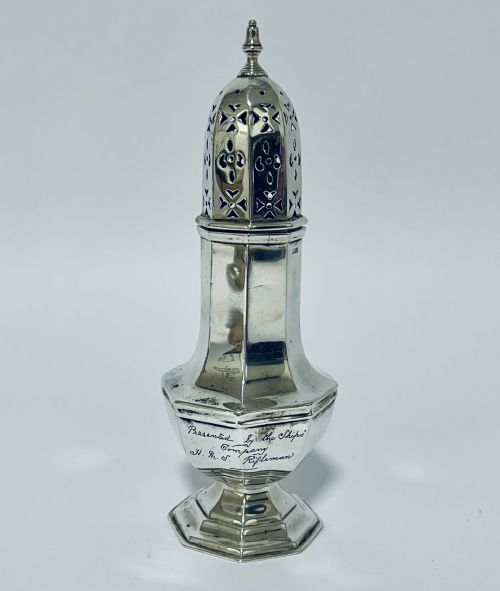


Sterling Silver Sifter
A sterling silver sifter brings the refined ritual of dusting sugar or spice onto a table through pierced bowls and cast forms.
Sterling Silver Sifter
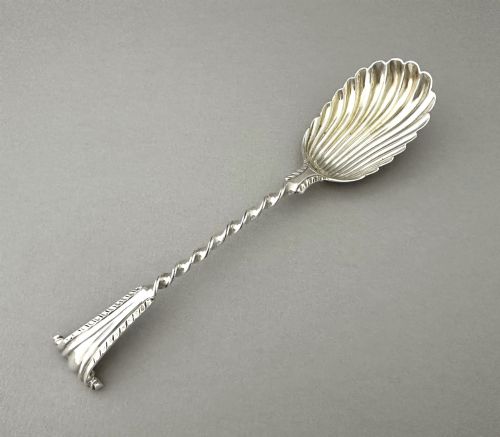
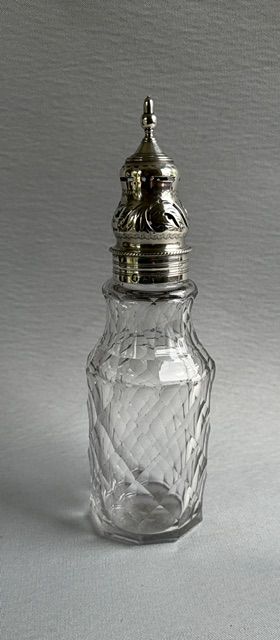
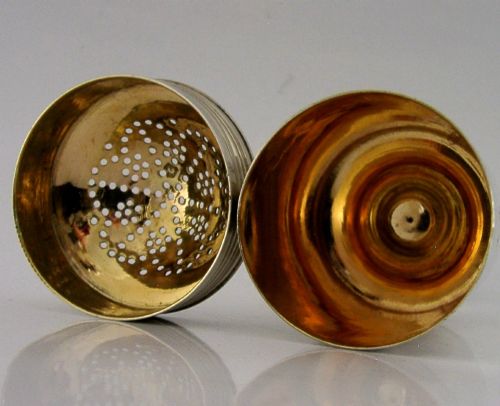
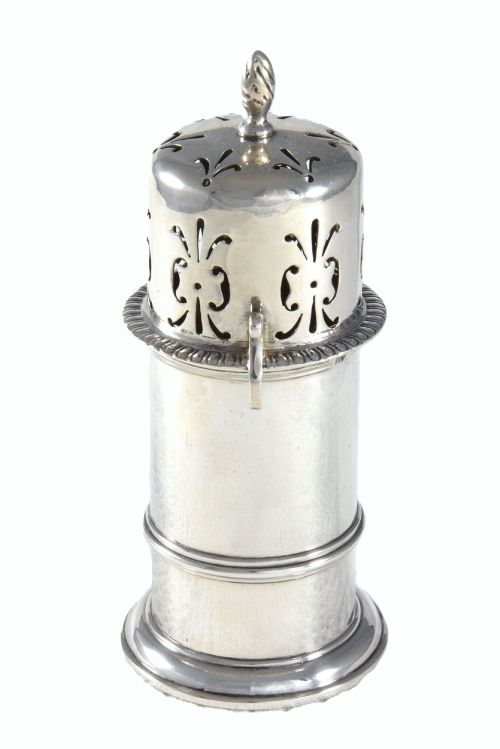
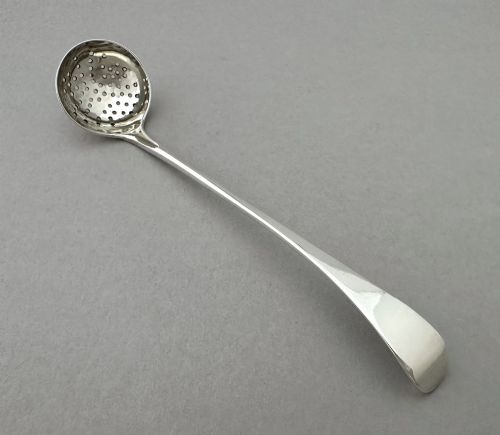
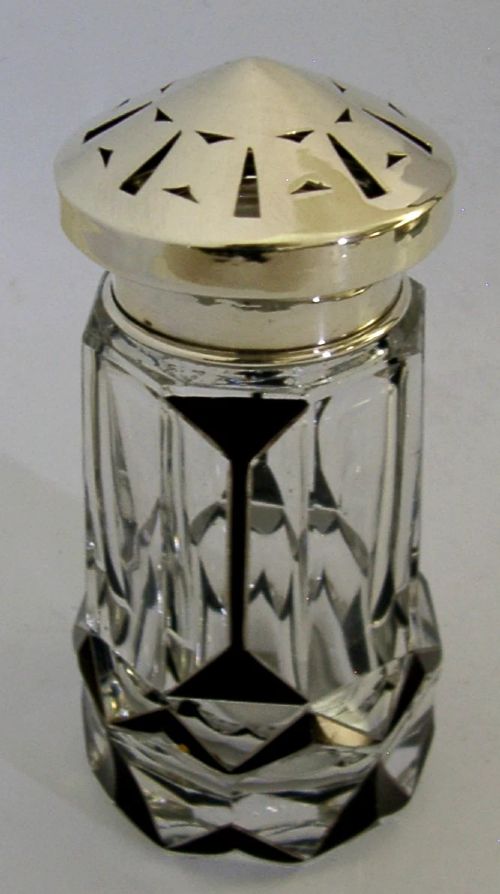
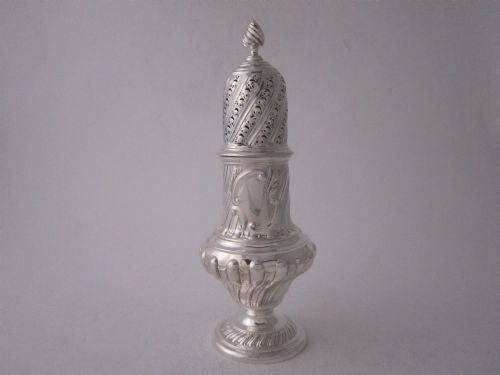
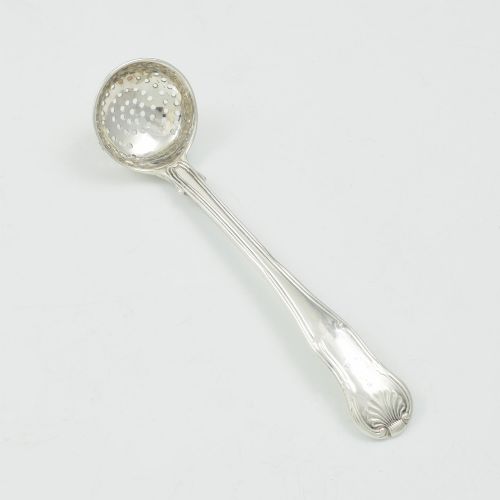
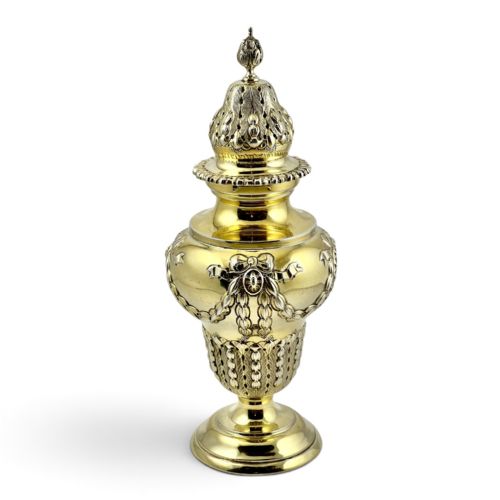
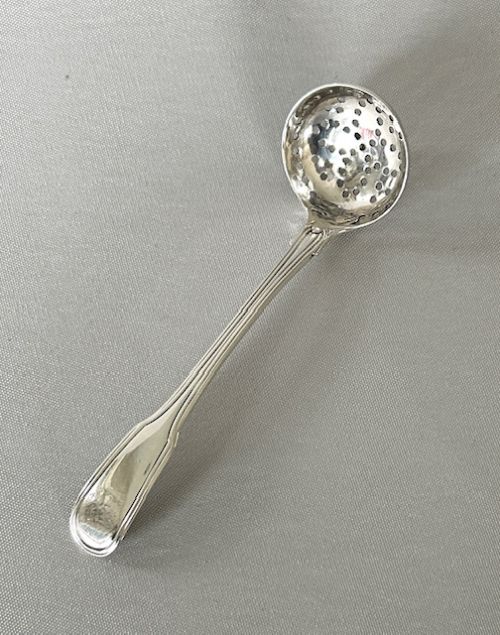
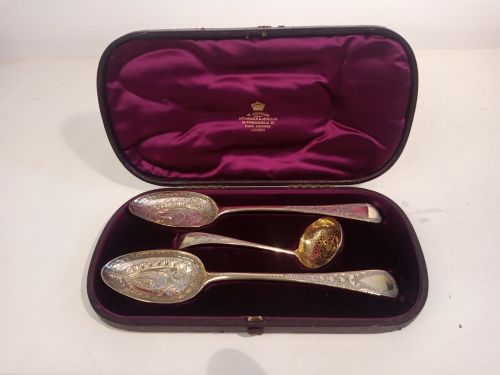
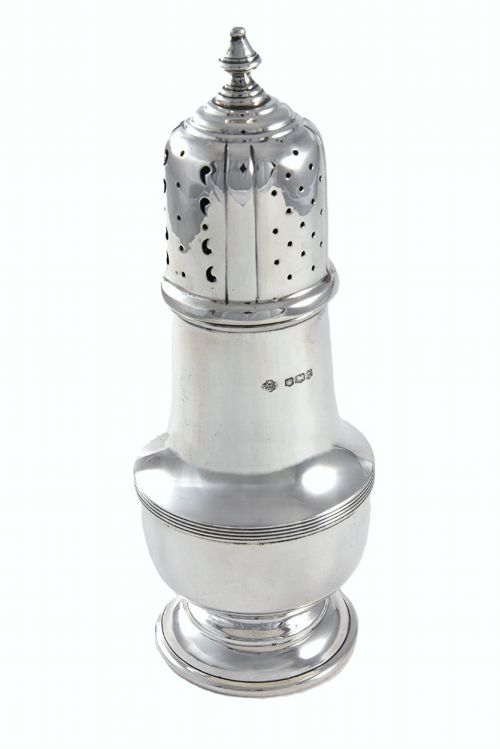
A sterling silver sifter takes two primary forms across the periods recorded here: the handled spoon with a pierced bowl and the standing caster designed to shake powder from a perforated top. Examples range from early Georgian spice spoons to Victorian berry spoons and Edwardian casters.
The pieces on this page span the Georgian, Victorian, Edwardian and Art Nouveau eras, reflecting changing domestic fashions in dining and tea service. Spoons often feature patterned stems like Onslow or Fiddle and Thread, while casters provide substantial weight for the sideboard.
Materials and Craftsmanship
Every piece listed is fashioned from sterling silver, with select early examples bearing Britannia standard metal. Manufacturing techniques combine hand hammering, piercing with fine saws, and casting for heavy decorative elements.
Ornate motifs such as lily flowers, grape vines, and cherubs appear as cast components applied to bowls and handles, while pierced patterns are meticulously cut into the silver to allow sugar or spice to pass through cleanly.
Sterling Silver Sifter Retail Price Guide 2026
Typical asking prices for sterling silver sifter among the pieces listed under this phrase on Sellingantiques today, from the lower quarter to the upper quarter. They describe what is for sale here now, not the wider market.
Some Victorian sifter spoons feature cast cherubs peering directly into the sugar.
Quality Variations
Quality rests in the weight of the metal and the crispness of the piercing, where heavier gauges of silver provide a better hand feel and durability. Finer examples display deeply chased or cast ornamentation rather than shallow stampings.
Maker marks and intact crests or monograms add historical depth to certain pieces, while the precision of the pierced apertures separates standard domestic silver from exceptional silversmith work.
Evald Nielsen·Henry George Murphy·John Lambe·Bateman·Taylor and Perry·A B Savory and Sons
The Sterling Silver Sifter Glossary
- Sterling silver
- A silver alloy containing 92.5 percent pure silver and 7.5 percent other metals, usually copper, ensuring durability for tableware.
- Sifter spoon
- A spoon with a wide, pierced bowl designed to sprinkle powdered sugar or spices over food or drinks.
- Sugar caster
- A standing vessel with a perforated lid used for shaking sugar onto dishes.
- Onslow pattern
- A distinctive eighteenth-century spoon handle style featuring a scrolled terminal curling backward.
- Fiddle and Thread
- A nineteenth-century handle design shaped like a fiddle with a raised thread border along the edge.
Sterling Silver Sifter: Frequently Asked Questions
What is a sterling silver sifter used for?
These pieces were designed for dusting powdered sugar over desserts, fruits, or pastries during formal meals and tea services. Certain earlier variants served specifically for sifting dry spices into beverages.
Over time, their domestic role shifted with changing dining habits, turning them into decorative tableware items collected for their intricate metalwork and craftsmanship.
Are sifter spoons and sugar casters the same thing?
They serve the same function of dispensing fine sugar or spice, but they take different physical forms. Sifters are handled spoons with pierced bowls, whereas casters are upright containers with perforated lids.
Both appear frequently across Georgian and Victorian silver services, often matching bowls or presented in fitted presentation cases.
How should I clean antique silver?
Maintenance requires gentle washing in warm soapy water using a soft cloth, followed by thorough drying to protect the metal surface. Harsh abrasive dips or heavy scrubbing should be avoided to preserve original hallmarks and fine details.
Storing pieces in tarnish-resistant cloth helps maintain the natural lustre of the silver without requiring frequent polishing.