



Georgian Silver Sifter Spoon
A georgian silver sifter spoon is a pierced tabletop implement for dusting sugar, made to sit proudly on the tea tray or sideboard.
Georgian Silver Sifter Spoon
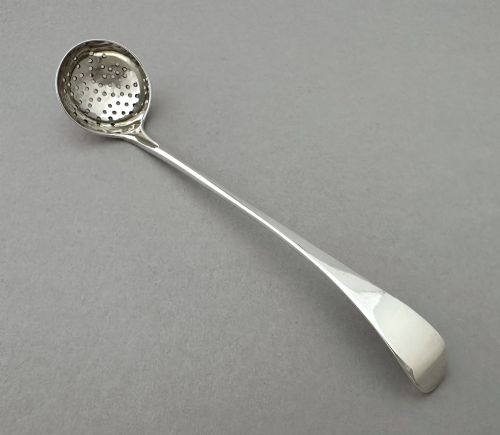
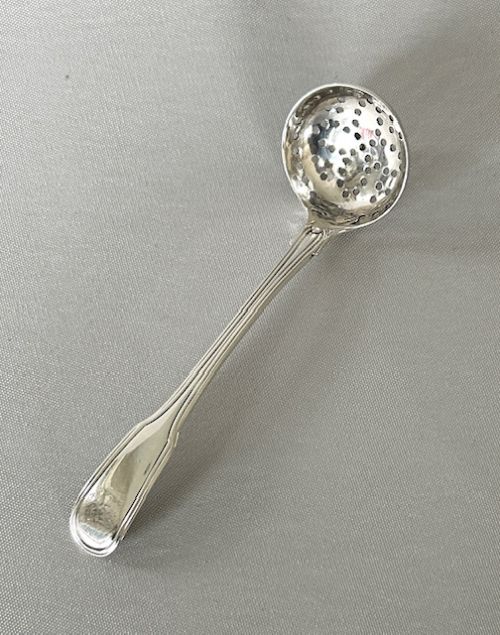
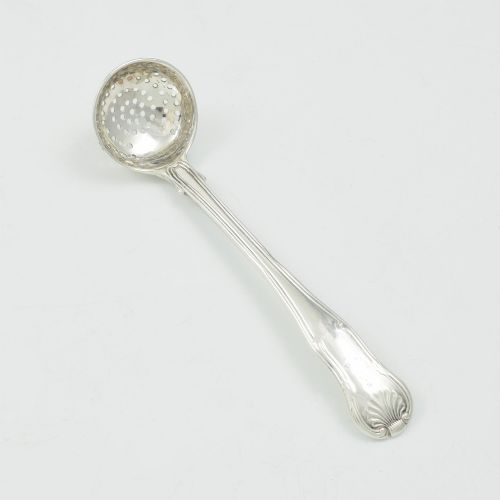
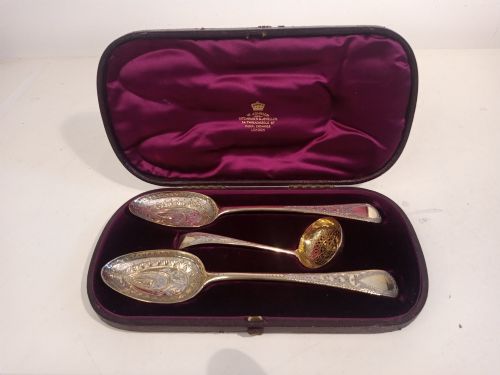
A georgian silver sifter spoon is a specialised piece of tableware designed for scattering sugar or spices over food and drink. These implements appear in various forms on this page, including dedicated spice sifters, larger sugar sifter spoons, and matched sets alongside berry spoons.
The objects span the eighteenth century and the early nineteenth century, reaching into the Regency and Victorian periods. Collectors encounter diverse regional origins and specific patterns such as King's Hourglass, Onslow, and Fiddle and Thread.
What varies in quality
The crispness of the piercing in the bowl distinguishes standard production from finer work, as does the clarity of London hallmarks and maker's marks. Early examples with distinct decorative motifs like scallop shells or crests demonstrate superior craftsmanship.
The completeness of original presentation cases and matched sets influences the overall character of a piece. Substantial gauge silver and well-balanced handles indicate higher manufacturing standards in these utensils.
Georgian Silver Sifter Spoon Retail Price Guide 2026
Typical asking prices for georgian silver sifter spoon among the pieces listed under this phrase on Sellingantiques today, from the lower quarter to the upper quarter. They describe what is for sale here now, not the wider market.
Listings feature sterling silver and silver-gilt materials, occasionally accompanied by protective presentation cases lined in velvet, silk, fabric, and leatherette.
William Sumner I
The Georgian Silver Sifter Spoon Glossary
- Silver-gilt
- Sterling silver that has been plated with a thin layer of gold. This treatment protects the silver underneath and provides a rich contrasting colour.
- Onslow pattern
- A distinct handle design featuring a scrolled terminal that curls backwards. This decorative style appears on flatware from the eighteenth century.
- Fiddle and Thread
- A handle pattern characterised by a fiddle-shaped outline bordered by a raised thread line. It represents a classic design found on dining silver.
- Caddy spoon
- A short-handled spoon used for measuring loose tea leaves from a caddy. These small implements share a period with many sifter spoons.
Georgian Silver Sifter Spoon: Frequently Asked Questions
What is a georgian silver sifter spoon used for?
These spoons scatter refined sugar over desserts, pastries, or hot drinks before the widespread use of granulated sugar shakers. They functioned as both practical tableware and decorative elements on the dining table.
Their pierced bowls allowed fine particles to pass while holding back any larger lumps. Today they find a place in modern table settings or collections of antique silver.
How do I date a georgian silver sifter spoon?
Silversmiths stamped official hallmarks onto the metal, including date letters that correspond to specific years of assay in London or other cities. Examining the shape of the bowl and the handle style also helps narrow down the period.
Makers' marks provide further clues to the exact decade of manufacture. Comparing these stamps against established records reveals the chronological origin of each item.
Are these spoons made of solid silver?
The majority of these utensils consist of solid sterling silver conforming to traditional fineness standards. Some exceptional pieces feature a parcel-gilt surface where gold is applied only to the interior bowl.
Testing and hallmark identification confirm the metal composition of each piece. Makers utilised durable silver alloys to withstand regular use at the dining table.
How should I display my sifter spoon?
These spoons fit neatly inside glass display cabinets or traditional silverware trays alongside other flatware. Keeping them away from excessive moisture helps preserve the polished finish of the silver.
Some examples arrive in original fitted cases lined with velvet and silk, designed for secure storage. Collectors often choose to exhibit these boxed sets open to show both the spoons and the interior lining.