


Pierced Silver Spoon
When you handle a pierced silver spoon, you hold an intricate piece of domestic history shaped by centuries of changing dining habits.
Pierced Silver Spoon
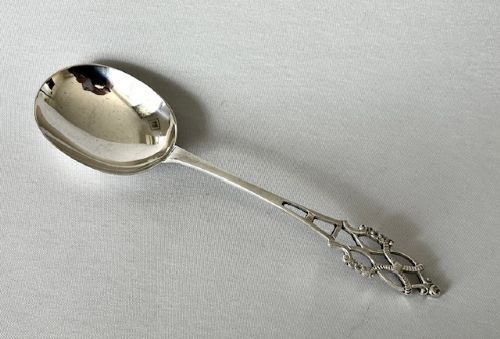
A pierced silver spoon is a functional or decorative eating utensil featuring pierced, slotted, or cutwork designs across the bowl. When searching for a pierced silver spoon, buyers encounter various forms designed for specific table tasks, including caddy spoons, sifter spoons, fruit spoons, and mustard ladles.
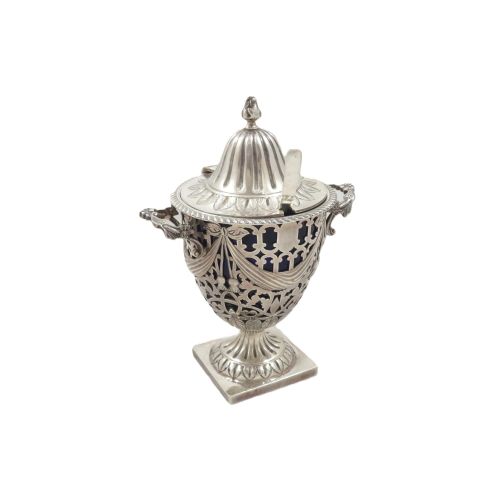
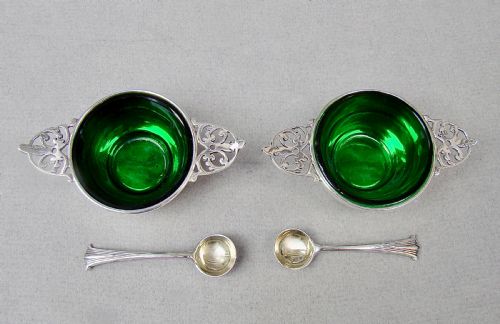
The pieces available span multiple eras, notably the Georgian, Victorian, and Edwardian periods, alongside Arts and Crafts and Flemish Baroque styles. Caddy spoons, spice sifting spoons, and berry spoons dominate the physical evidence, often appearing alongside related items such as mustard pots, cruet sets, and salt cellars with coloured glass liners.
Origin points range from British provincial towns like Chester, York, and Glasgow to London workshops, alongside Dutch and French imports. These utensils reflect both formal dining rituals and intimate tea table customs of past centuries.
Materials and manufacture
Makers primarily utilised sterling silver and standard silver, though silver plate also occurs in the manufacturing record. Metal was shaped through casting, hammering, and embossing, creating sturdy handles and bowls.
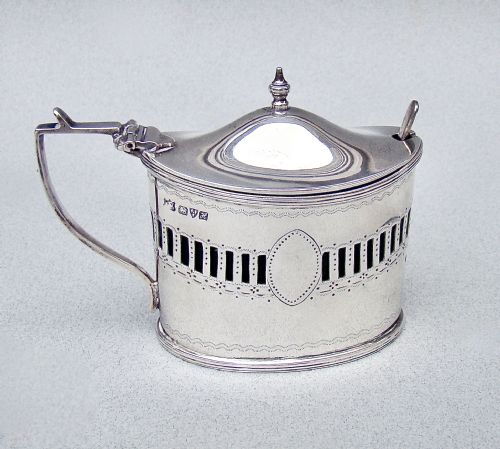
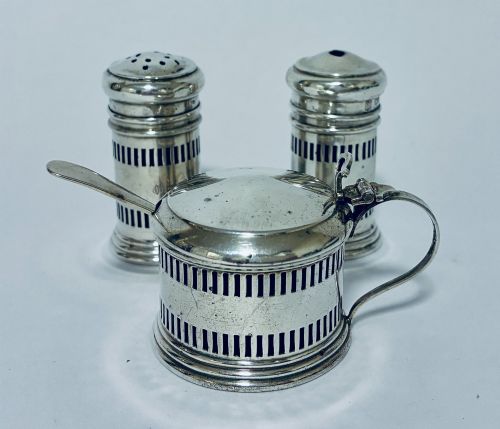
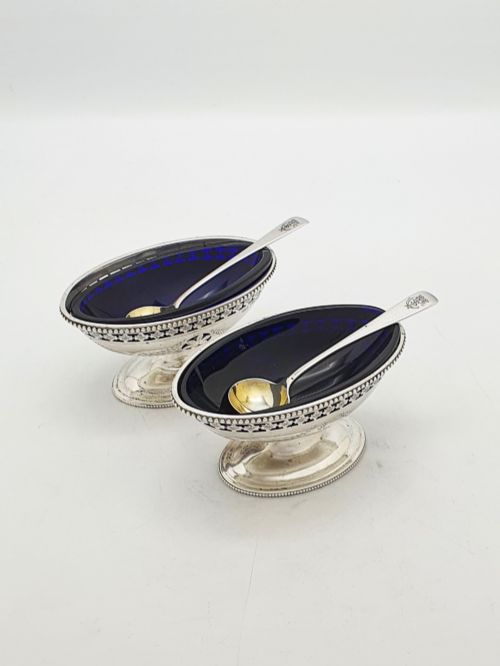
Piercing was achieved through hand-sawing, piercing, and filing to produce intricate lattice, heart, or scrolling patterns. Some iterations feature parcel-gilding or embossing, while paired items frequently incorporate cobalt blue, cranberry, ruby red, or green glass liners.
Pierced Silver Spoon Retail Price Guide 2026
Typical asking prices for pierced silver spoon among the pieces listed under this phrase on Sellingantiques today, from the lower quarter to the upper quarter. They describe what is for sale here now, not the wider market.
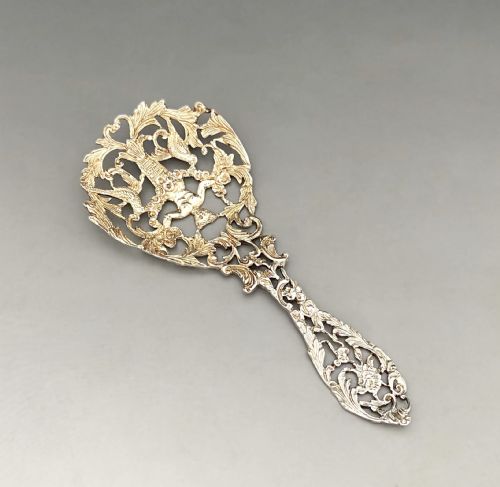
Some spoons star cherubs, birds, and pierced hearts, proving that past diners took their condiments with a healthy dose of romance.
Judging quality in pierced work
Quality rests in the precision and crispness of the openwork cutting and the preservation of the original detail against the bowl rim. Hand-pierced geometric or floral motifs executed with clean, sharp edges indicate superior workmanship compared to softer, shallower stamping.
The weight and balance of the handle relative to the pierced bowl also determine the standard of the object. Maker marks, clear hallmarking, and the survival of original gilding or matching glass liners elevate the standing of a piece within its period.
Alfred Marston·Wallis·Jeremiah Lee·William Comyns·Charles Stuart Harris·Omar Ramsden·Amy Sandheim·Plucknett·James Dixon and Son·Thomas Latham and Ernest Morton
The Pierced Silver Spoon Glossary
- Mote spoon
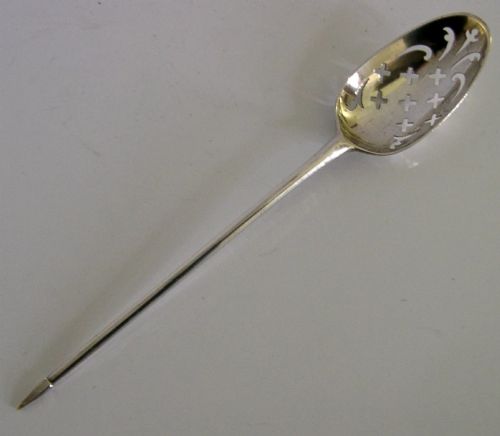
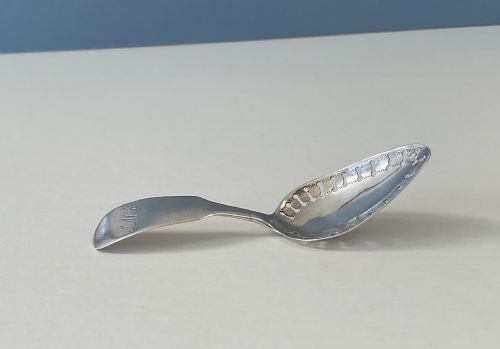
- A small, narrow spoon from the Georgian era featuring a pierced bowl used to strain tea leaves from cups. The tapered terminal often took the form of a spike for clearing the teapot spout.
- Sifter spoon
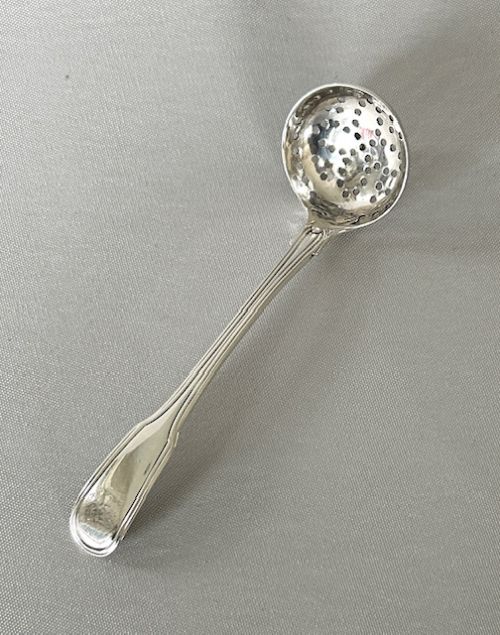
- A utensil with a heavily perforated bowl designed for dusting sugar or spices over food. These appear frequently in Georgian and Victorian contexts alongside sugar baskets and bowls.
- Caddy spoon
- A short-handled spoon utilised for measuring loose tea leaves from a caddy into the pot. They exhibit diverse bowl shapes, including shell, leaf, and pierced heart designs.
- Berry spoon
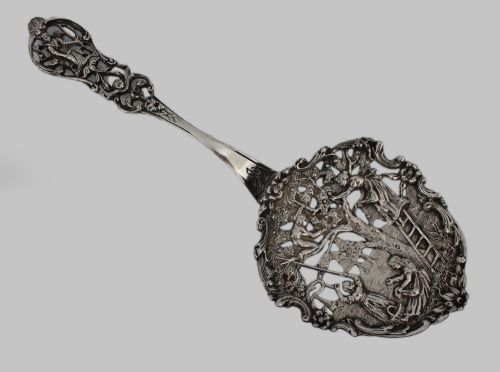
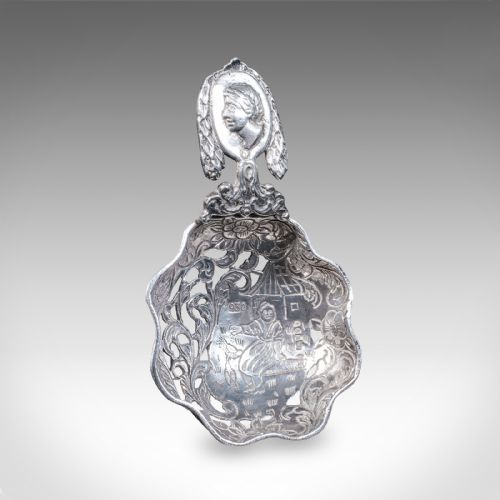
- A large serving spoon, often originally from the Georgian period, later retrofitted or embossed and pierced with fruit and foliage during the Victorian era. The pierced bowl allowed juices to drain.
- Cruet set
- A collection of small bottles, jars, or salt cellars held in a frame, frequently paired with mustard pots and matching spoons. Liners of cobalt or cranberry glass often accompany these sets.
Pierced Silver Spoon: Frequently Asked Questions
What were mote spoons used for?
Mote spoons served an eighteenth-century tea table purpose, functioning both to skim loose leaves from the brew and to clear blocked spouts with their pointed tails. Their bowls display delicate pierced slots.
Finding a mote spoon usually connects a collection directly to early Georgian tea-drinking traditions.
Are glass liners original to salt cellars?
Many salt cellars and mustard pots retain their original cobalt blue, cranberry, or green glass liners. These liners protected the silver from the corrosive nature of salt and mustard.
Checking for a snug fit helps determine if the glass belongs to the original piece or represents a later replacement.
How do I date a silver spoon?
Dating relies heavily upon the assay office marks, maker's stamps, and date letters stamped directly onto the silver. Stylistic indicators such as Arts and Crafts hand-beating or Georgian bright-cut engraving also provide clues.
Matching these hallmarks against established registry records yields the exact year of manufacture.