


Victorian Caddy Spoon
When you handle a victorian caddy spoon, you hold a specialised piece of domestic silver designed to portion out loose tea leaves.
Victorian Caddy Spoon
A victorian caddy spoon is a small, short-handled implement intended for reaching deep into storage jars and tea caddies. The examples on this page predominantly date from the nineteenth century, reflecting the widespread British social ritual of tea preparation during the period.
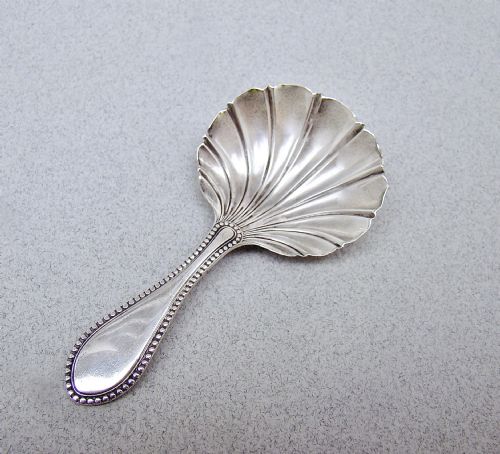
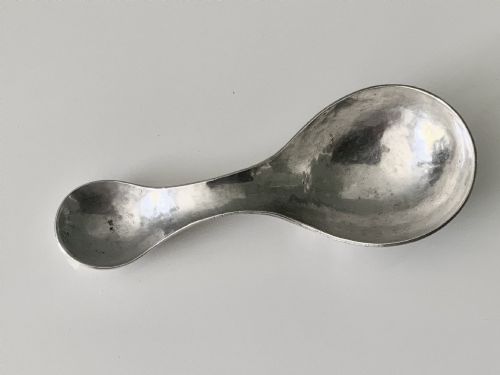
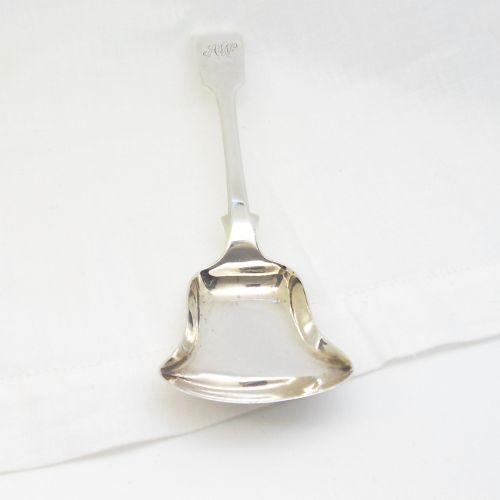
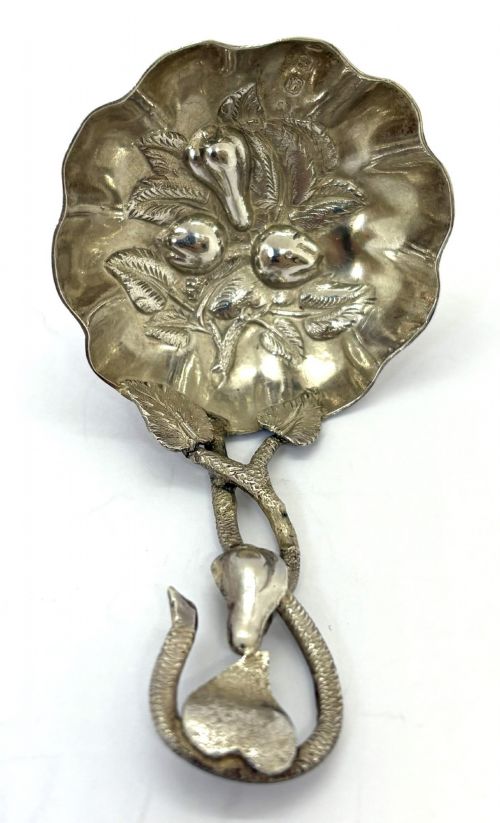
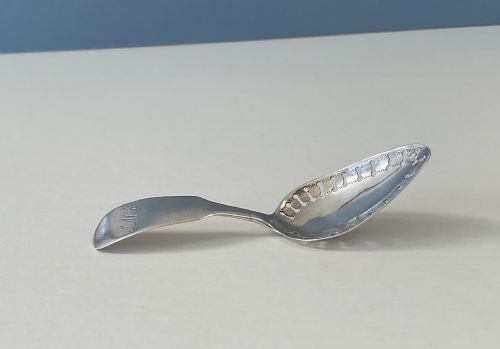
Most pieces seen here take the form of standard shallow bowls paired with fiddle pattern or engraved handles, though novelty designs shaped like jockey caps, leaves, and shovels also appear frequently. While the core of the selection belongs firmly to the Victorian era, items originating from adjacent periods such as the Georgian and Regency epochs occasionally surface in the listings.
How they were made
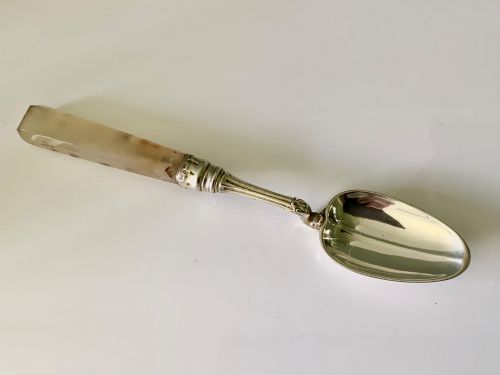
Makers relied primarily on sterling silver and solid silver, shaping bowls and stems through hammering, casting, and pressing techniques. Certain specialised variants incorporate organic materials like agate and mother-of-pearl for handles, joined to silver bowls via pins or mounts.
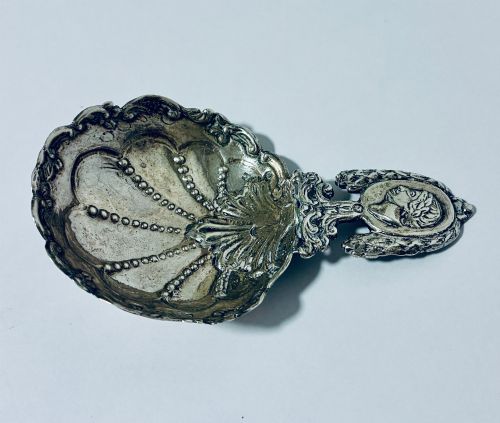
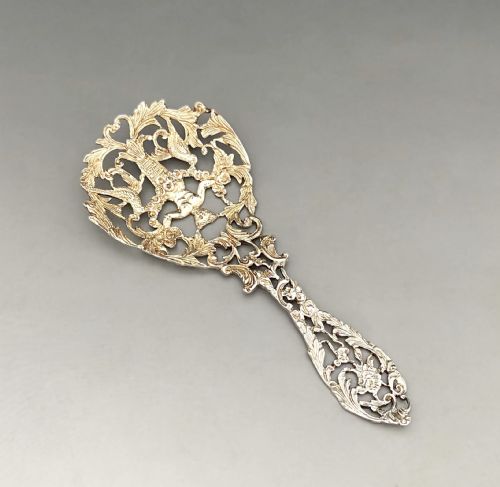
Surface decoration was achieved through detailed hand engraving, piercing, and embossing, creating foliate patterns, crests, and fluted shell motifs across the bowl interiors.
Victorian silversmiths occasionally shaped silver into jockey caps and camel forms just to make tea-time startlingly eccentric.
What varies in quality
The distinction between standard production and exceptional work rests on the crispness of the chasing and the originality of the form. Standard fiddle pattern spoons meet functional utility, whereas novelty shapes and intricately pierced vine leaf or jockey cap designs demonstrate higher artistry from named workshops.
Weight, gauge of silver, and clarity of the assay office hallmarks further separate ordinary utilitarian pieces from heavily detailed collector items.
Martin Hall & Co·John Walton·William Comyns·Mappin & Webb·George Unite·Yapp & Woodward·Hilliard & Thomason·John Aldwinkle & Thomas Slater·Foxhall & Co·Alfred Taylor·Thomas Hayes·Thomas Dones·Barnard & Sons·John Millward Banks
The Victorian Caddy Spoon Glossary
- Hallmark
- Official stamps struck into precious metals to guarantee the purity, the maker, and the year of assay. These marks are typically found on the reverse of the handle or bowl.
- Fiddle pattern
- A nineteenth-century handle design featuring a distinct shoulder tapering down to a squared-off end. This style remains one of the most common profiles encountered in flatware.
- Novelty silver
- Pieces fashioned into recognizable pictorial or sculptural objects rather than standard utensil shapes. Examples include caps, leaves, and shovels.
- Assay office
- An official body responsible for testing precious metals and applying standard marks. Towns such as Birmingham, Sheffield, London, and Chester maintained active offices.
- Casting
- A manufacturing method where molten silver is poured into a mould to form three-dimensional handle terminals or decorative figural elements.
Victorian Caddy Spoon: Frequently Asked Questions
What is a caddy spoon used for?
These small spoons were specifically designed to measure loose tea leaves from a storage caddy into a teapot. Their short handles allowed the spoon to sit neatly inside or beside the tea container.
Today, they serve primarily as cabinet collector items or decorative tableware rather than daily utility pieces.
How do I identify a Victorian piece?
Identification relies upon reading the stamped hallmarks, which record the town mark, the silver standard, and a specific date letter corresponding to the reign of Queen Victoria. Stylistic clues such as heavy foliate engraving and specific handle patterns also point to the era.
Comparing the maker's mark against historical registers confirms the exact decade of manufacture.
Why do some spoons have strange shapes?
Silversmiths enjoyed experimenting with novelty forms during the nineteenth century to appeal to changing tastes and gift-giving traditions. Shapes mimicking jockey caps, seashells, or animal parts brought a playful element to the tea table.
These whimsical designs required greater skill from the maker and are particularly sought after by modern collectors.
Are these items made of solid silver?
The majority of the pieces listed are fashioned from sterling silver, meeting the statutory fineness standard of the period. Makers also utilised silver plate for certain domestic items, though solid silver remains predominant among these listings.
Assay marks provide the definitive guide to the exact metal composition of each spoon.