
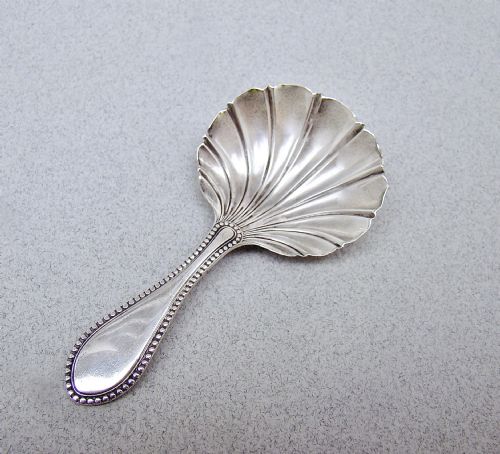
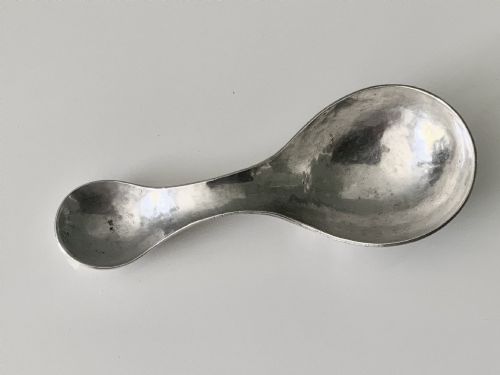
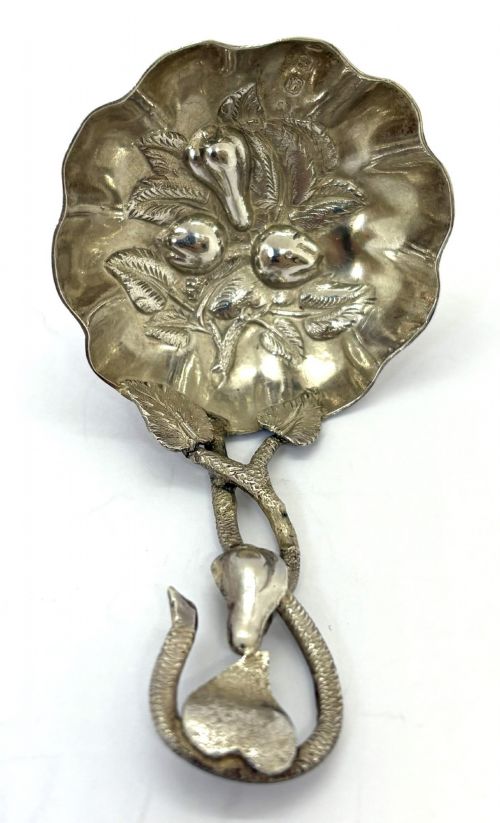
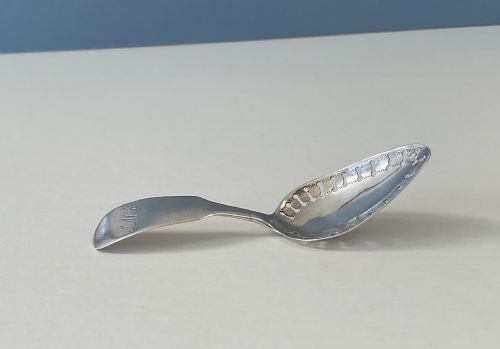


Victorian Silver Tea Scoop
These Victorian silver tea scoop pieces are small, finely wrought vessels for measuring dry leaf into the pot.

What they are
A Victorian silver tea scoop is designed for measuring loose leaf tea from a caddy into a pot. Collectors encounter these primarily as caddy spoons originating from the 19th Century and the Georgian era.
The evidence shows forms catalogued variously as a caddy spoon, a tea caddy spoon, and silverware. Makers produced these implements in both standard Victorian designs and regional styles such as Scottish provincial.
Examples on this page span the 19th Century, including items specifically dated to 1838 and 1896. Buyers find that these small spoons reflect the domestic tea-drinking rituals of the period.
How they were made
Every piece recorded here is fashioned from sterling silver. Silversmiths shaped the metal into bowls and handles suited for scooping dry leaf.
Makers utilised traditional metalworking techniques to form each spoon, incorporating the hallmarks and maker stamps characteristic of British silver production.
Retail Price Guide 2026
Typical UK retail prices for victorian silver tea scoop, calculated from the Sellingantiques database of over a million retail prices indexed since 2003. This retail price guide relies exclusively on Sellingantiques data; no external sources or auction records are used, so the figures do not describe the wider market.
Glasgow silversmiths occasionally added a distinct provincial flair to an ordinary tea scoop just to keep things interesting.
What varies in quality
Distinction across these spoons lies in the clarity of the hallmarks and the reputation of the silversmith, such as George Unite or Mappin & Webb. Pieces associated with named makers or regional centres like Glasgow command greater interest.
The crispness of the chasing on the bowl and the integrity of the handle construction separate standard work from superior examples.
Mappin & Webb·George Unite
The Victorian Silver Tea Scoop Glossary
- Caddy spoon
- A small spoon designed specifically to measure loose tea from a caddy into a teapot. These pieces typically feature a shallow bowl and a short handle.
- Sterling silver
- A silver alloy containing 92.5 percent silver by mass, with the remainder consisting of other metals. This standard has been used for centuries in British silverware.
- Georgian
- The period covering the reigns of the four British monarchs named George, spanning from 1714 to 1830. Pieces from this era predate the Victorian items in these records.
- Victorian
- The period spanning the reign of Queen Victoria from 1837 to 1901. Items from this era dominate the current listings.
Frequently Asked Questions
How do I know if it is Victorian?
You can identify a Victorian piece by examining the hallmarks stamped into the silver. These marks indicate the assay office, the date letter, and the maker.
The listings here include examples from the nineteenth century alongside pieces from the Georgian era.
Who made these caddy spoons?
Silversmiths working in workshops and firms across Britain produced these spoons. Notable names recorded on this page include George Unite and Mappin & Webb.
Some pieces also originate from regional centres such as Glasgow, showing distinct Scottish provincial characteristics.
How should I care for silver spoons?
Silver requires gentle cleaning with a soft cloth to maintain its finish. Avoid harsh abrasive materials that can wear away the detail on the bowl.
Store them in a dry environment to slow down the natural tarnishing process of sterling silver.