


Victorian Sterling Silver Scoop
A victorian sterling silver scoop is a purposeful table implement for dry tea, sugar or cheese, combining solid metal weight with period craftsmanship.
Victorian Sterling Silver Scoop
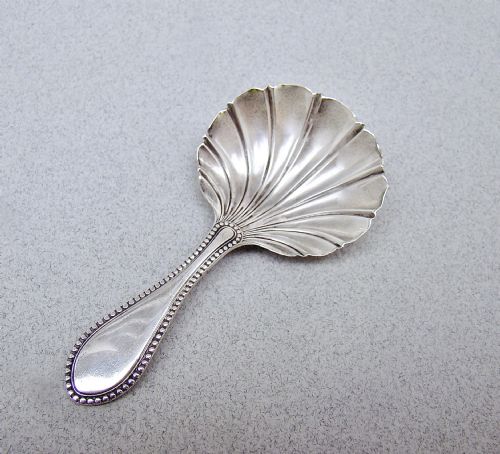
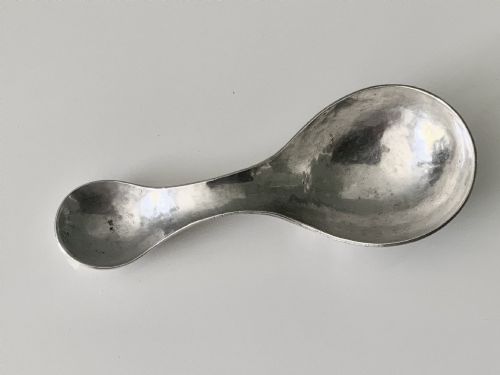
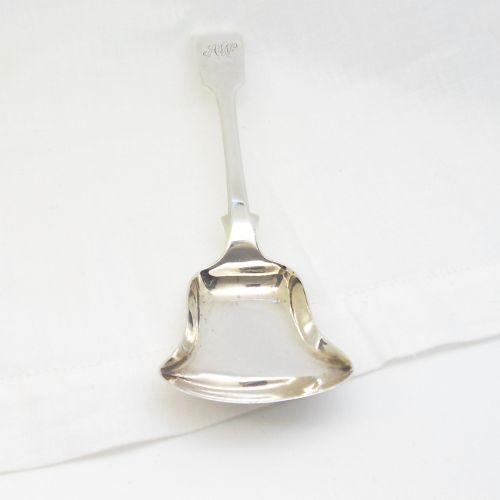
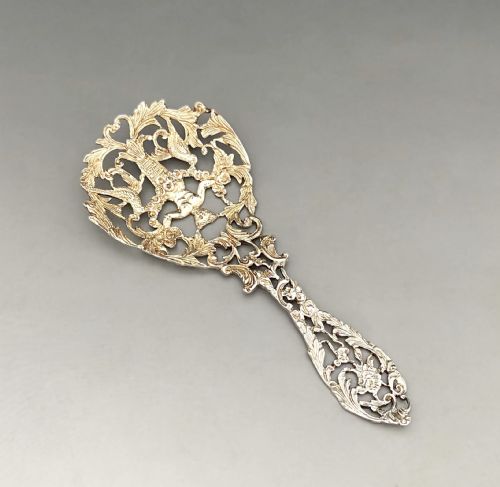
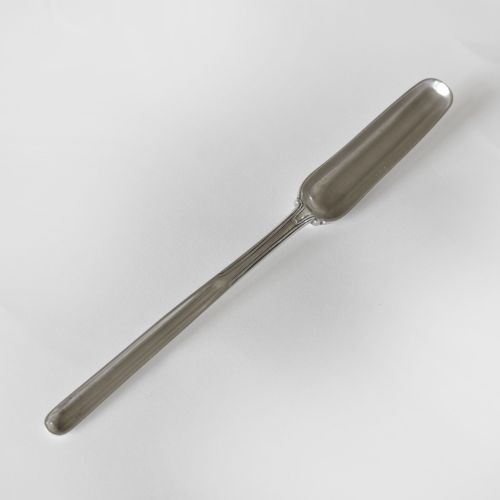
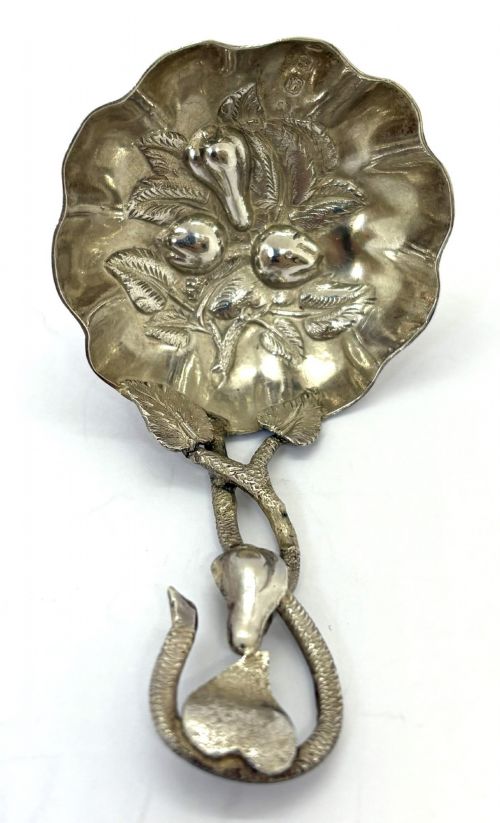
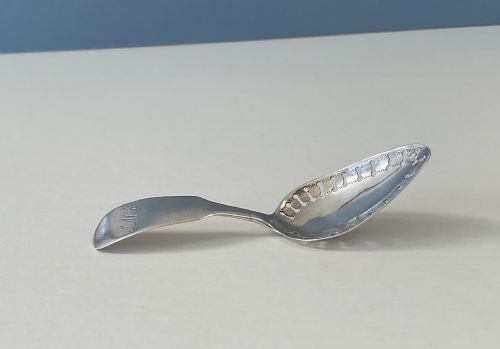
A victorian sterling silver scoop brings functional 19th-century metalwork to the tea service or dining table, taking forms such as caddy spoons, marrow scoops, and stilton cheese scoops. The pieces appearing here span the Victorian era alongside related Georgian and 20th-century examples, utilising precious silver and occasionally mother-of-pearl.
Caddy spoons represent the most frequent form within this category, often featuring engraved bowls designed for measuring loose tea leaves into a pot. Larger serving utensils and specialised cheese scoops extend the utility of the metal beyond the tea tray.
Regional British assay offices mark many of these objects, connecting individual spoons to silversmithing centres in Sheffield, Newcastle, Glasgow, and London. The physical evidence demonstrates a clear preference for solid sterling silver construction across the surviving examples.
Assessing quality in period scoops
Quality in a victorian sterling silver scoop rests upon the crispness of the original chasing, the weight and balance of the metal handle, and the clarity of the town and maker marks. Pieces featuring cast dimensional details or integrated family crests show a higher degree of initial craftsmanship.
The integrity of the connection between handle and bowl distinguishes standard utility items from finer presentation silver. Preservation of the original hand-engraved foliate patterns on the bowl interior maintains the visual appeal of the piece.
Listings feature sterling silver and mother-of-pearl across forms ranging from tea caddy spoons to marrow scoops and stilton cheese servers.
Martin Hall & Co·William Comyns·John Walton·Mappin & Webb·George Unite
The Victorian Sterling Silver Scoop Glossary
- Sterling silver
- A silver alloy containing 92.5 percent pure silver by mass, providing the durable standard required for British dining and serving implements.
- Hallmark
- A system of official marks stamped onto precious metal items in Britain to certify the purity, origin workshop, and year of assay.
- Caddy spoon
- A small specialised spoon designed specifically for measuring loose tea leaves from a storage caddy into the teapot.
- Marrow scoop
- A narrow, elongated utensil traditionally used for extracting marrow from animal bones at the dining table, constructed with small troughs at each end.
- Stilton scoop
- A long-handled serving implement created for cutting and scooping firm cheeses like Stilton.
Victorian Sterling Silver Scoop: Frequently Asked Questions
What was a silver scoop used for?
These implements served specific dining and domestic tasks, primarily measuring tea leaves from caddies, serving cheese, or handling sugar. Their shapes directly reflect these precise household functions.
Smaller variants remained on the tea tray while larger specialised scoops belonged to the formal dining room sideboard.
How do I identify a Victorian piece?
Examination of the stamped hallmarks provides the most reliable method for dating these silver items, revealing the assay office and active year. Stylistic details like foliate engraving also point toward mid-to-late 19th-century manufacturing.
Comparing the shape and decorative motifs with documented examples helps confirm the period of origin.
Are mother of pearl handles durable?
Mother-of-pearl provides a smooth, iridescent grip that contrasts against the polished silver bowl, though it requires gentle handling during use and cleaning. This natural material was prized for its luminous quality on fine serving pieces.
Proper care prevents moisture damage to the pins securing the organic material to the metal shank.
Can I use these for daily dining?
Solid silver utensils remain structurally capable of regular use provided they receive gentle hand washing without abrasive cleaners. Many collectors choose to integrate them into modern tea services and cheese boards.
Regular handling actually helps maintain a natural polish across the raised surfaces of the silver.