
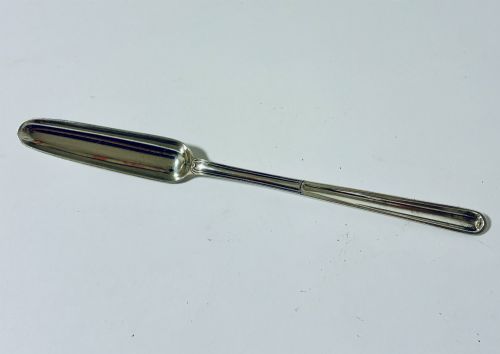
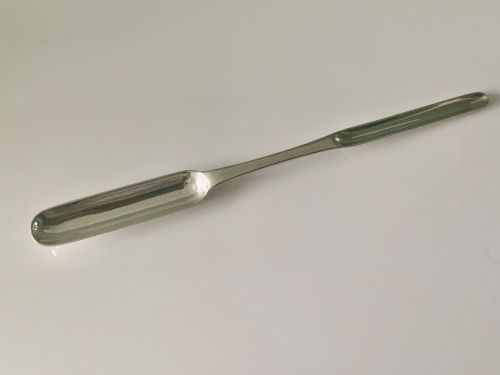
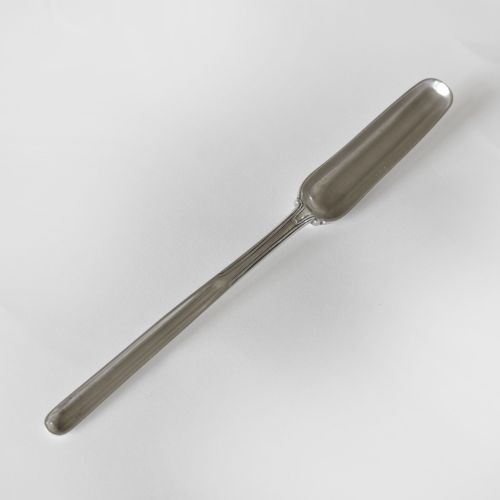
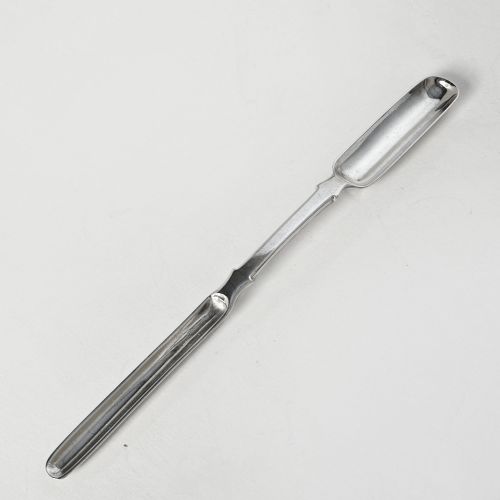
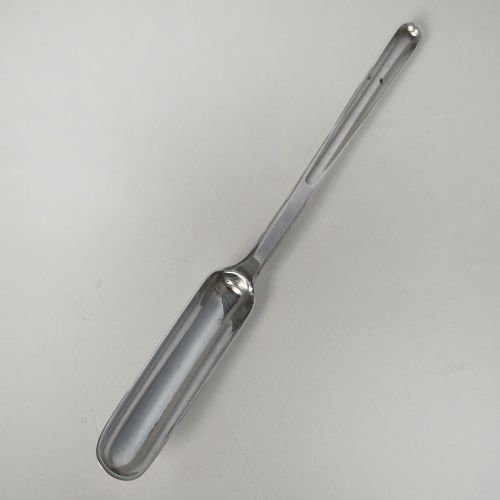


Double Ended Marrow Spoon
A double ended marrow spoon is a specialised piece of silver cutlery from the eighteenth and nineteenth centuries designed to extract marrow cleanly.
Double Ended Marrow Spoon
When you search for a double ended marrow spoon, you are looking at specialised cutlery designed for extracting bone marrow from joints during formal dining. These pieces take the form of elongated silver implements featuring scoops at both ends, often with one narrow trough and one wider bowl. The examples you encounter on this page span the Georgian and nineteenth-century periods, originating from English and Irish makers.
The most common versions on this site date from the Georgian era, including specific years such as seventeen thirty-three, seventeen fifty-one, eighteen hundred and eight, eighteen hundred and twenty-seven, and eighteen hundred and thirty-three. You will find them categorized across flatware, silverware, and marrow scoops. These items reflect the refined dining habits of their respective periods.
How they were made
Makers fashioned these pieces using sterling silver and solid silver, hammering and shaping the metal into the characteristic elongated double-ended form. The construction required precise control to create the narrow trough for reaching inside narrow bones alongside the broader scoop.
Silversmiths incorporated hallmarks directly onto the metal to record the origin, date, and standard of the silver. These methods ensured durable flatware capable of withstanding the rigours of dining tables while maintaining a polished appearance.
Ensure your dinner guests do not mistake your antique marrow scoop for a very confused teaspoon.
What varies in quality
The distinction between standard examples and the finest pieces rests upon the crispness of the hallmarks and the preservation of the original bowl shapes. Early eighteenth-century specimens, such as those from seventeen hundred and seventeen thirty-three, often demonstrate superior thickness and weight in the solid silver.
The clarity of the maker's mark, such as the work associated with Jonathan Hayne, Edward Power, or Thomas Johnson, influences the desirability of the piece. Superior examples retain their balanced proportions without excessive thinning of the silver trough from centuries of use.
Edward Power·Jonathan Hayne·Thomas Johnson
The Double Ended Marrow Spoon Glossary
- Marrow scoop
- A piece of cutlery featuring a long, narrow trough designed to extract marrow from bones. These items form the primary focus of this collection.
- Flatware
- Table cutlery including spoons and forks made from silver. The pieces in this category span Georgian and nineteenth-century periods.
- Sterling silver
- A silver alloy containing ninety-two point five percent silver by mass. This material provides the durable foundation for the items listed here.
- Georgian
- The period covering the reigns of the first four British monarchs named George, lasting from seventeen fourteen to eighteen thirty. Much of the silver on this page originates from this era.
Double Ended Marrow Spoon: Frequently Asked Questions
What is a double ended marrow spoon used for?
These implements were used at the dining table to extract marrow from roasted bones cleanly and efficiently. The narrow trough allowed diners to reach deep inside the bone cavity.
They formed part of formal table settings during the eighteenth and nineteenth centuries. Today, they serve as collectible examples of period silver flatware.
How do I identify a Georgian marrow scoop?
Georgian pieces often feature distinct hallmarks stamped directly onto the silver, indicating the year and place of manufacture. London hallmarks and specific monarch periods help date these items.
The style and weight of the solid silver also point to eighteenth-century craftsmanship. Makers such as Thomas Johnson and Jonathan Hayne worked during these periods.
Are these pieces made of solid silver?
The listings on this page consist of sterling silver and solid silver constructions. Silversmiths hammered and shaped the metal to create the characteristic double-ended design.
This material ensured the cutlery remained durable and resistant to tarnish over centuries of handling. Hallmarks on the pieces confirm the silver standard.
When were these marrow spoons made?
The items available span the eighteenth and nineteenth centuries, with specific examples dating back to seventeen hundred and the seventeen thirties. Many pieces originate from the Georgian era.
Nineteenth-century examples from makers like Edward Power also appear in the collection. Each piece reflects the manufacturing standards of its specific decade.