
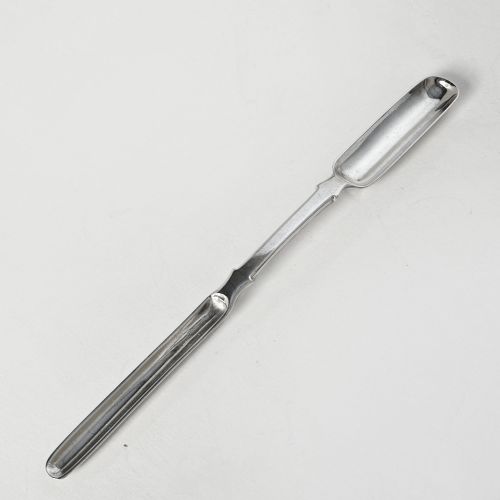
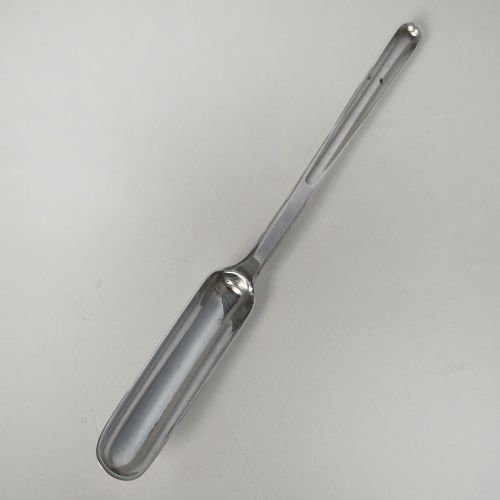


Antique Marrow Scoop
An antique marrow scoop is a specialised piece of cutlery designed for extracting marrow, prized by collectors of Georgian silverware for its sleek utility.
Antique Marrow Scoop
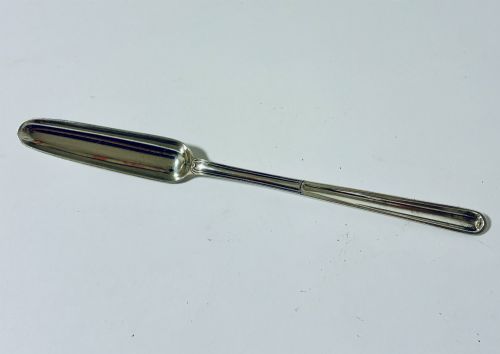
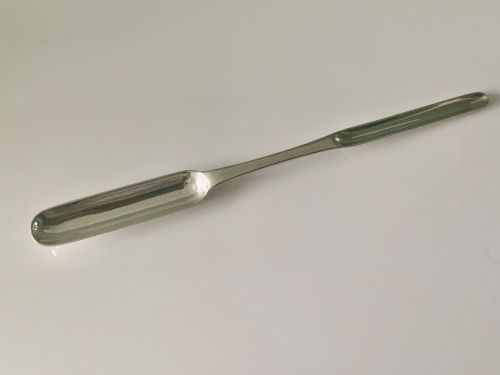
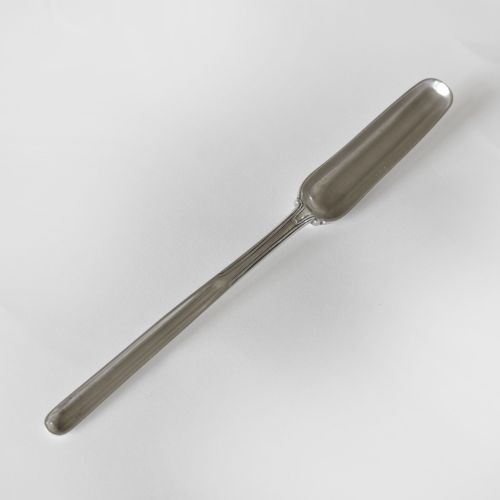
An antique marrow scoop is a long, slender item of silverware featuring narrow troughs at each end, created specifically to reach deep into bones during formal dining. Most examples you will encounter date from the Georgian era or the nineteenth century, reflecting a time when bone marrow was a regular luxury at the table.
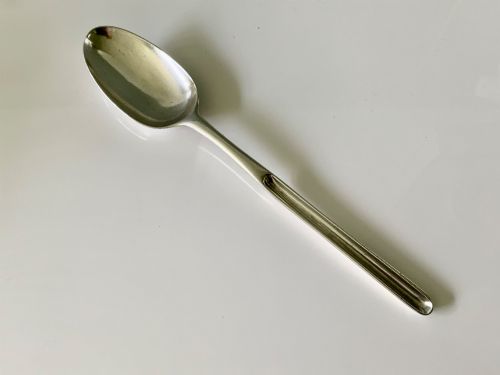
The form typically comprises a larger scoop for the main cavity of the bone and a smaller trough for the tighter extremities. Alongside standard silver flatware, you occasionally find bone variants, including prisoner of war pieces, showing the diverse scope of these eating implements.
How they were made
Makers fashioned these pieces primarily from sterling silver, Britannia silver, and solid silver, hammering and shaping the metal to form the double-ended troughs. Some provincial or prisoner of war examples utilise carved bone instead of metal.
Silversmiths frequently incorporated family crests or monograms onto the reverse or handle, applying crisp engraving techniques that remain sharp on well-preserved specimens.
Antique Marrow Scoop Retail Price Guide 2026
Typical asking prices for marrow scoop among the pieces listed under this phrase on Sellingantiques today, from the lower quarter to the upper quarter. They describe what is for sale here now, not the wider market.
Listings for this phrase span the Georgian period, the eighteenth century, and the nineteenth century, predominantly in sterling silver and solid silver.
What varies in quality
The distinction between ordinary and exceptional pieces lies in the crispness of the hallmarks, the weight of the silver, and the preservation of the original bowl profiles without excessive thinning from polishing. Pieces featuring distinct armorial crests or attributed to notable makers carry greater weight among collectors.
Edward Power·Jonathan Hayne·Benjamin Watts·Thomas Johnson·Richard Redrick·George Smith·Hester Bateman·Atkins Bros
The Antique Marrow Scoop Glossary
- Marrow scoop
- A narrow double-trough implement designed for extracting marrow from bones at the dining table. It forms a distinct category within antique silverware and flatware.
- Hallmark
- A series of official stamps indicating the metal standard, assay office, and year of manufacture. These marks help verify the period of Georgian silver items.
- Britannia silver
- A higher standard of silver alloy introduced by statute, containing more pure silver than sterling. It appears in early eighteenth-century pieces.
- Crest
- An engraved family heraldic symbol placed upon the handle of the scoop. Many Georgian items bear these personalised armorial bearings.
Antique Marrow Scoop: Frequently Asked Questions
What is an antique marrow scoop used for?
These implements were used at the dining table to extract marrow from roasted bones during formal meals. Guests would use the wider or narrower trough to reach into different parts of the bone.
They disappeared from standard table settings as dining habits changed, becoming collectible pieces of silver flatware today.
How do I date an antique marrow scoop?
Dating relies heavily on the hallmarks stamped into the metal, which indicate the assay office and the specific year of production. Stylistic clues like bowl shape and handle engraving also point toward the Georgian or nineteenth-century periods.
Matching the maker's mark against historical records confirms the exact decade of manufacture.
Are all marrow scoops made of silver?
While the vast majority of surviving examples consist of sterling silver or solid silver, alternative materials do exist in the historical record. You can occasionally find items carved from bone, such as prisoner of war pieces.
Silver versions generally bear clear hallmarks denoting their metallic composition.
How should I display a marrow scoop?
Because of their slender and flat profile, these items store well in traditional cutlery trays or shallow display cabinets where the engraved crests remain visible. Avoid materials that cause tarnishing when resting silver for long periods.
Their unusual double-ended design makes them particularly striking when laid flat in a collection of Georgian silverware.