


Georgian Marrow Spoon
These georgian marrow spoon examples are functional dining silver made to extract marrow from bones, offering collectors fine Georgian craftsmanship.
Georgian Marrow Spoon
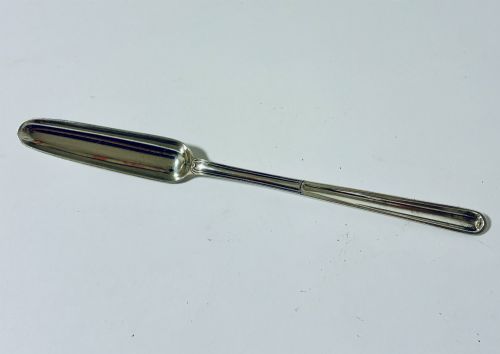
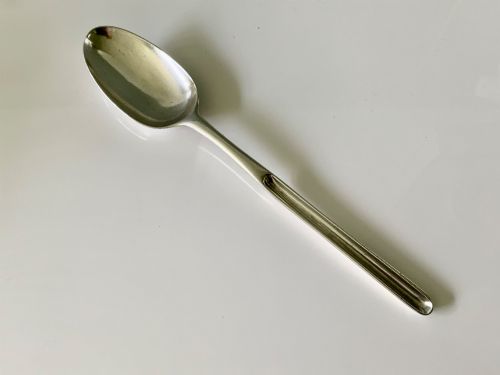
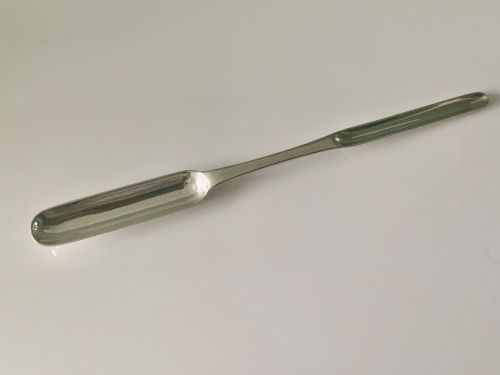
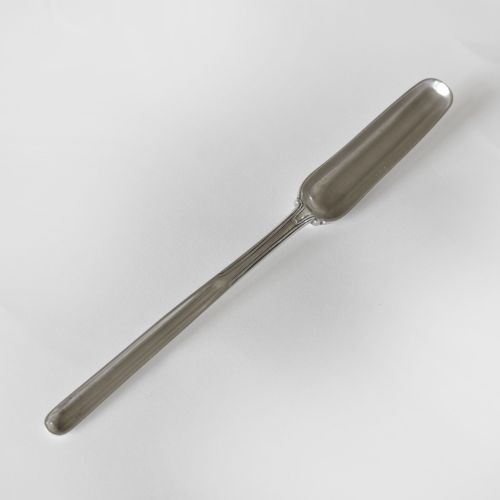
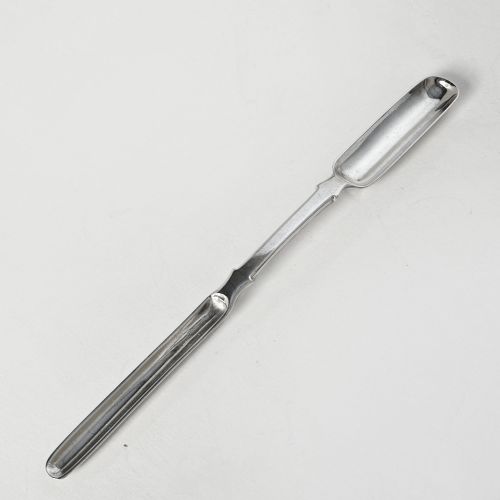
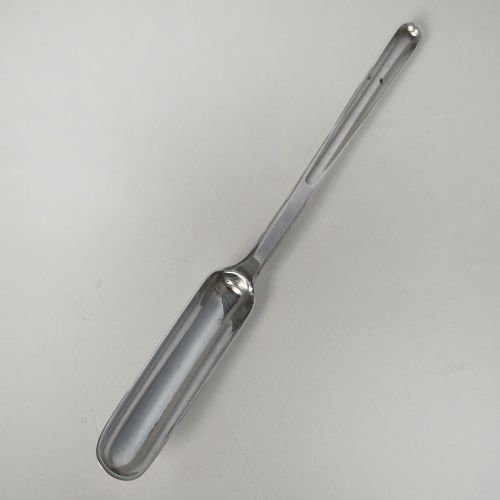
When you search for a georgian marrow spoon, you are looking at narrow, elongated items of cutlery designed specifically for scooping marrow from animal bones at the dining table. The listings here encompass both spoons with standard bowls and scoops with two troughs of differing sizes.
Most pieces you meet on this page belong to the Georgian period and the nineteenth century, taking the form of silverware or flatware fashioned in solid silver. Alongside standard adult dining implements, the selection includes smaller variations intended as child or baby miniature pieces.
Origins span English and Irish workshops, with occasional domestic pieces like a bone marrow spoon rendered in a prisoner of war style. The forms range from plain double-ended scoops to examples featuring shell backs or Fiddle and Thread patterns.
How they were made
Makers fashioned these pieces primarily from sterling silver and solid silver, hammering and shaping the metal into slender, elongated troughs designed to reach deep inside long bones. The material provides both the rigidity needed for the task and the durability that ensures survival over centuries.
Alternative items in the record utilise bone, specifically shaped and carved by hand in prisoner of war contexts rather than standard silversmithing workshops. Metal examples frequently carry hallmarks stamped directly into the silver to record the assay office, year, and maker.
Listings span sterling silver and bone materials across Georgian and nineteenth-century periods, featuring forms from standard scoops to child miniatures.
What varies in quality
The distinction between ordinary and superior pieces rests on the crispness of the hallmarks, the weight of the solid silver, and the elegance of any decorative elements like shell backs or thread borders. Heavier gauges of silver provide a more substantial feel in the hand and resist bending along the narrow stem.
Condition and original form preservation dictate desirability, particularly whether double-ended troughs retain their distinct profiles without excessive wear from use and cleaning. Pieces tied to named makers or specific regional origins command attention through documented provenance.
Edward Power·Jonathan Hayne·Thomas Johnson·Roger Hare
The Georgian Marrow Spoon Glossary
- Marrow scoop
- A form of flatware featuring a narrow, trough-like bowl at each end, or a spoon bowl at one end and a slender scoop at the other. It was utilised during the eighteenth and nineteenth centuries for serving and eating bone marrow.
- Hallmark
- A series of official marks stamped onto silver items to guarantee the metal standard, identify the maker, and record the year of assay. These marks provide vital evidence for dating Georgian silver.
- Sterling silver
- An alloy of silver containing ninety-two point five percent silver and seven point five percent other metals, usually copper. It forms the standard material for quality British dining silver.
- Fiddle and Thread
- A decorative flatware pattern featuring a handle shape resembling a fiddle outline accompanied by a threaded border. It appears on nineteenth-century spoons and scoops.
- Shell back
- A decorative motif cast or embossed in the shape of a scallop shell on the underside of the spoon bowl or scoop base. This feature frequently appears on mid-eighteenth-century silver.
Georgian Marrow Spoon: Frequently Asked Questions
What is a georgian marrow spoon used for?
These items were used at the dining table to extract marrow from roasted bones during formal meals. Guests utilised the narrow troughs to reach inside long bones where table knives could not fit.
Over time, changing dining fashions rendered them obsolete for everyday use, transforming them into collectible items of antique silver.
Are bone marrow spoons genuine antique pieces?
Some alternative pieces are fashioned from bone rather than silver, occasionally created by prisoners of war during the eighteenth century. These items share the same elongated form but reflect improvised materials and folk carving techniques.
They are collected alongside silver examples as authentic period artefacts with distinct historical contexts.
How can I date a silver marrow scoop?
Dating relies primarily upon the stamped hallmarks, which record the assay office and the specific year letter for London or other cities. Stylistic indicators like shell backs or Fiddle and Thread patterns also help narrow down the period of manufacture.
Many pieces on this page carry specific dates from the eighteenth and nineteenth centuries based on these official marks.