
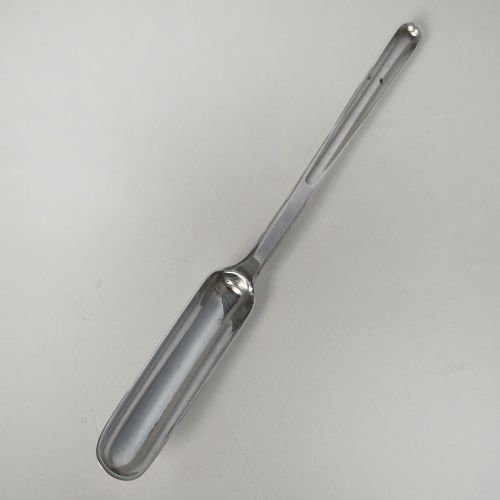


Double Ended Marrow Scoop
A double ended marrow scoop is a specialised piece of antique cutlery designed to extract marrow from bones, prized for its sleek functionality.
What They Are
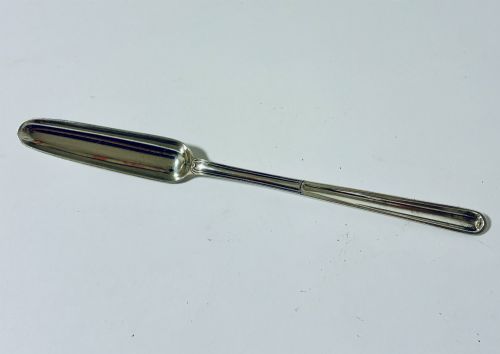
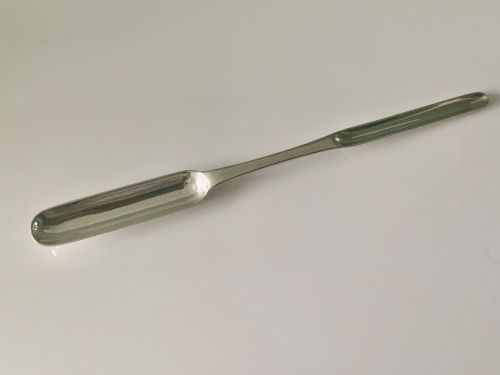
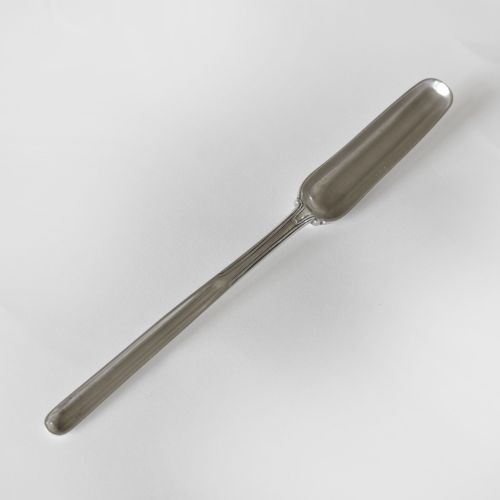
When you search for a double ended marrow scoop, you are looking at specialised silver cutlery designed for extracting bone marrow at the dining table. These pieces span from the early eighteenth century through the nineteenth century, including Georgian and William IV periods.
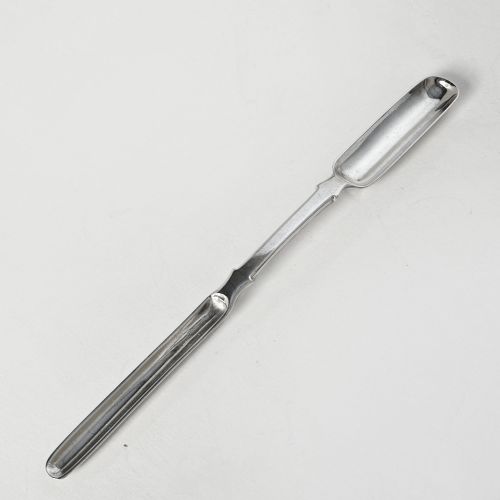
The objects on this page typically feature a long, narrow trough at one end and a smaller scoop at the other, fashioned from solid silver. Examples range from plain Georgian forms to Fiddle pattern variations and Irish silver pieces dated to specific years like 1827 and 1833.
How They Were Made
These items are constructed entirely from sterling silver and solid silver, reflecting the dominant metalworking techniques of the Georgian and nineteenth-century periods. Silversmiths hammered and shaped the metal to create the distinctive double-ended troughs required for serving marrow.
Makers shaped the dual bowls to different widths to accommodate various bone sizes, ensuring practical use at the table while maintaining a slender, balanced profile. Hallmarks stamped directly onto the silver record the assay office, date letter and maker's mark.
Retail Price Guide 2026
Typical UK retail prices for double ended marrow scoop, calculated from the Sellingantiques database of over a million retail prices indexed since 2003. This retail price guide relies exclusively on Sellingantiques data; no external sources or auction records are used, so the figures do not describe the wider market.
The site's records feature pieces made from sterling silver and solid silver, spanning the Georgian, William IV, and nineteenth-century periods.
What Varies in Quality
Quality in a double ended marrow scoop rests upon the crispness of the hallmarks, the weight of the solid silver, and the preservation of the original bowl profiles. Pieces with clear maker stamps and minimal wear to the delicate troughs stand at the upper end of the range.
The distinction between standard production and finer work also lies in the elegance of the central stem and the balance of the double-ended design. Early eighteenth-century examples exhibit distinct craftsmanship compared to later nineteenth-century Fiddle pattern variations.
Edward Power·Jonathan Hayne·Benjamin Davis·Orlando Jackson·Garrard and Co·Solomon Hougham·Christopher and Thomas Barker
The Double Ended Marrow Scoop Glossary
- Sterling Silver
- An alloy consisting of ninety-two point five percent silver and seven point five percent other metals, typically copper. This standard composition provides the durability required for antique cutlery.
- Hallmark
- A series of official marks stamped onto silver items by an assay office. These symbols indicate the maker, the metal purity, and the year of manufacture.
- Fiddle Pattern
- A nineteenth-century flatware style featuring a stem that broadens into a shoulder near the terminal, resembling the outline of a fiddle. This design appears on specific double-ended marrow scoops from the period.
- Georgian
- The period spanning the reigns of the first four British monarchs named George, from 1714 to 1830. Pieces from this era display distinct stylistic traits associated with eighteenth-century design.
Frequently Asked Questions
How were double ended marrow scoops used?
These utensils were placed on the dining table to extract marrow from roasted bones during formal meals. Guests used the larger scoop for wider bones and the smaller end for narrower sections.
The slender shape allowed the implement to reach deep inside the bone without damaging the delicate meat or splintering the surrounding structure.
What periods do these silver scoops come from?
The available pieces date from the early eighteenth century through the nineteenth century. Examples span the George II period up to William IV and later nineteenth-century dates.
Specific pieces recorded in the evidence include items made in 1700, 1733, 1775, 1803, 1827, 1831, 1833, and 1921.
Are these items made of solid silver?
The listings show that these pieces are constructed from sterling silver and solid silver. Silversmiths used these robust materials to ensure the utensils could withstand regular dining use.
Every piece carries official hallmarks that verify the metal standard and trace the origin of the silver.
How do I identify different styles?
Style identification relies on examining the overall silhouette and any decorative patterns on the stem. For instance, nineteenth-century examples may incorporate a Fiddle pattern handle.
Comparing the proportion of the dual bowls and checking the date letter within the hallmarks also helps determine the specific era of manufacture.