


Georgian Silver Marrow Scoop
A Georgian silver marrow scoop is a specialised dual-ended flatware piece designed for scooping marrow, crafted to grace elite dining tables with functional elegance.
What these pieces are
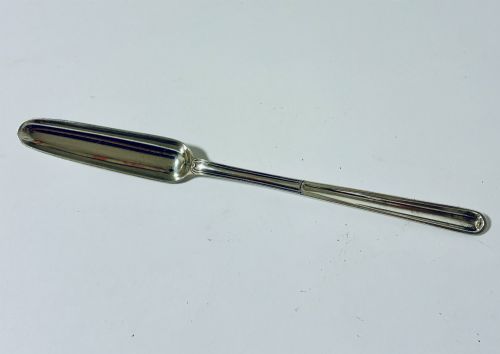
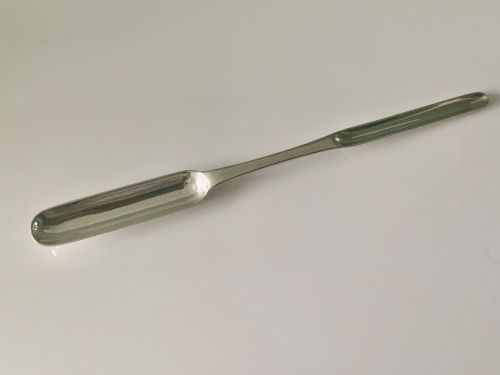
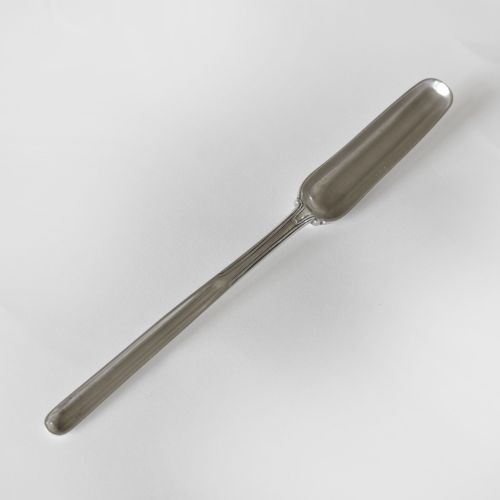
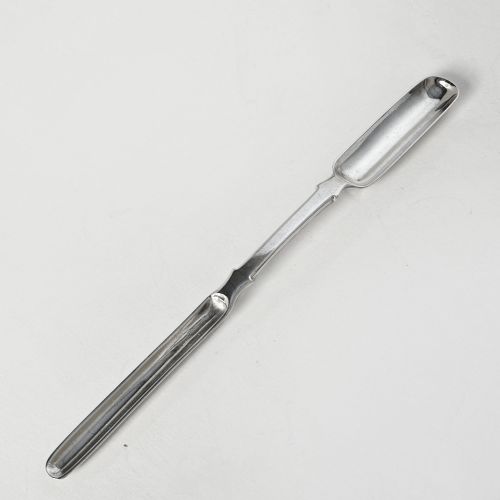
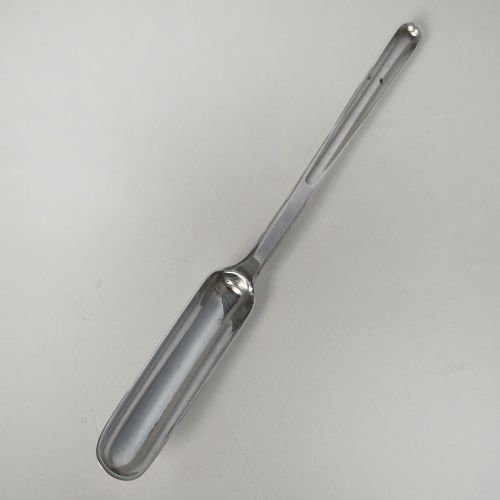
A georgian silver marrow scoop is an elegant dining implement featuring a long, narrow trough at one end and a smaller trough at the other, designed specifically to extract bone marrow. Most examples seen here date from the eighteenth and nineteenth centuries, originating from English and Irish makers. They sit comfortably within flatware collections, representing a distinct era of specialised dining customs.
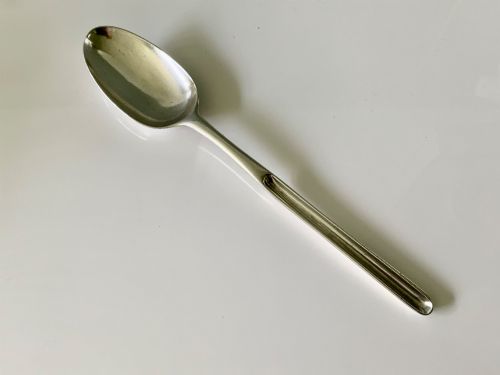
The forms include standard single and double ended variations, occasionally incorporating miniature sizes or specific armorial crests. The evidence shows sterling silver construction throughout, reflecting the high status of the households that originally commissioned them. These pieces offer a direct tactile link to Georgian dining practices.
How they were made
Silversmiths constructed these implements using solid sterling silver, hammering and shaping the metal to form the characteristic double trough profile. The technique required precise skill to balance the weight of the broader handle section against the narrower scoop ends. Hallmarks were typically stamped directly onto the reverse to denote the silver standard, year of production, and maker.
Engraving often added personalized detail, featuring family crests, coats of arms, or initials rendered by hand. Master silversmiths utilised durable alloys to ensure the thin metal could withstand the rigours of dining use without bending.
Listings demonstrate that eighteenth and nineteenth century examples were predominantly fashioned from solid sterling silver.
What varies in quality
The distinction between standard examples and the finest works often rests on the reputation of the silversmith and the crispness of the hand-engraved crests. Pieces produced by renowned makers display superior gauge silver, maintaining a robust weight and balanced proportions. The clarity of the London or provincial hallmarks further influences the standing of an individual piece.
Subtle variations in the shaping of the double troughs and the smoothness of the hand-beaten finish reveal the maker's level of skill. Surviving examples with detailed armorial engravings or uncommon double ended configurations demonstrate a higher tier of original commission.
Paul Storr·George Smith·William Sumner & Richard Crossley·Solomon Hougham·William Eley & William Fearn·Christopher & Thomas Barker
The Georgian Silver Marrow Scoop Glossary
- Marrow scoop
- A piece of flatware with a long, narrow bowl at each end, created for extracting marrow from bones. This specialised dining tool reflects the refined tastes of eighteenth-century dining.
- Sterling silver
- An alloy consisting of silver and other metals, traditionally copper, standardised for durability and lustre. Georgian flatware relies heavily on this material for both strength and appearance.
- Armorial
- A design featuring a coat of arms or family crest hand-engraved onto the silver surface. These heraldic markings indicate the original aristocratic or landed ownership of the piece.
- Double ended
- A variation featuring functional scoops at both terminals, sometimes in differing sizes or paired with a spoon format. This design offered versatility during formal dining courses.
Frequently Asked Questions
What was a marrow scoop used for?
These implements were utilised at formal dining tables to extract marrow from roasted bones during meat courses. Diners used the narrow troughs to reach deep into the bone cavity.
They represent a period of highly specialised dining utensils that have largely disappeared from modern service.
How do I identify a Georgian period scoop?
Identification relies upon examining the hallmarks stamped into the silver, which indicate the assay office, date letter, and maker's mark. The stylistic traits, such as plain bowls or crested handles, also align with eighteenth and early nineteenth-century design.
Comparing the form to known flatware helps confirm the production era.
Are double ended scoops rare?
Double ended examples feature functional elements at both extremities, sometimes combining a scoop with a standard spoon bowl. The surviving record includes specific makers who produced these dual-purpose variations.
They demand careful handling due to the absence of a traditional flat handle.
Why do some scoops have crests?
Many pieces were commissioned by prominent families who had their crests, coats of arms, or initials hand-engraved onto the reverse. This personalization signified ownership and added status to the dining silver.
Such armorial details provide clues regarding the original provenance of the object.