


Engraved Silver Tea Scoop
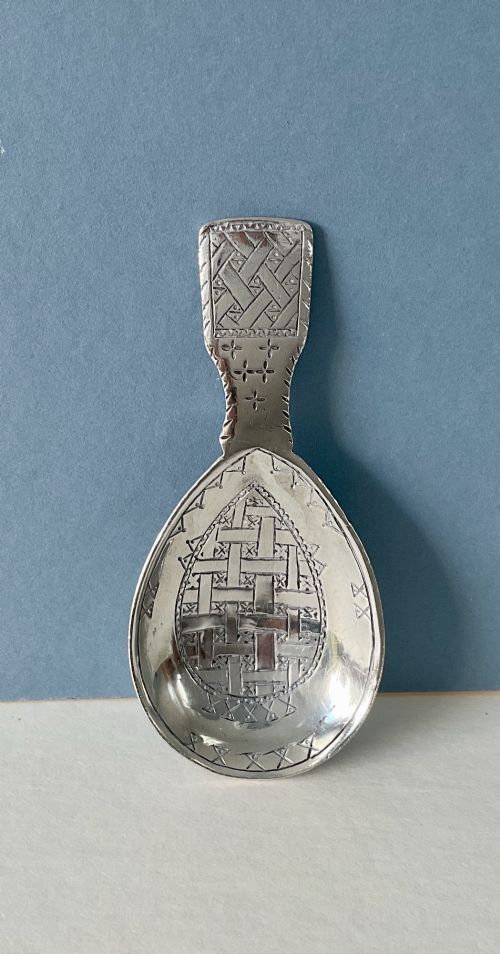
An engraved silver tea scoop is a small, functional table accessory designed for measuring loose leaves, combining practical utility with fine period craftsmanship.

Engraved Silver Tea Scoop
When you search for an engraved silver tea scoop, you find pieces primarily spanning the Georgian, Victorian, and Edwardian eras. These small serving implements were essential items for domestic tea service, designed specifically to measure dry leaves from a caddy into the pot.
The selection here includes regional variations such as Scottish Provincial and Irish examples alongside London and Birmingham pieces. Forms range from traditional shell-shaped bowls and rectangular designs to novelty items like jockey caps.
Dated examples trace production from the late eighteenth century through the early twentieth century. Makers utilised sterling silver exclusively, applying surface decoration to handles and bowls alike.
Materials and construction
Every piece recorded in the inventory consists of solid sterling silver. Silversmiths shaped the metal through hammering and pressing, creating distinctive bowl forms such as the shell and the rectangle.
Engraving was applied by hand using sharp gravers to cut decorative lines, foliage, and patterns into the silver surface. Maker marks, date letters, and assay office symbols were then stamped onto the metal to verify origin and silver standard.
Engraved Silver Tea Scoop Retail Price Guide 2026
Typical asking prices for engraved silver tea scoop among the pieces listed under this phrase on Sellingantiques today, from the lower quarter to the upper quarter. They describe what is for sale here now, not the wider market.
Object forms vary from traditional rectangular and shell-shaped bowls to novelty jockey cap designs produced in Birmingham and London.
Assessing quality and execution
Quality in an engraved silver tea scoop rests on the crispness and depth of the hand-engraved detail. Sharply defined lines on handles and bowls indicate skilled execution by the silversmith.
The weight of the silver and the preservation of original hallmarks contribute significantly to the standing of a piece. Novelty forms, particularly jockey caps, demonstrate greater sculptural ambition than standard shovel or leaf shapes.
William Neale·George Unite·George Wintle
The Engraved Silver Tea Scoop Glossary
- Sterling silver
- A silver alloy containing 92.5 percent pure silver by mass, with the remainder consisting of other metals like copper. This standard was universally adopted across British provincial and city assay offices.
- Hallmark
- A series of official marks stamped onto precious metal items to guarantee the silver standard, the place of assay, and the year of manufacture. These small punches provide the primary documentary evidence for dating.
- Caddy spoon
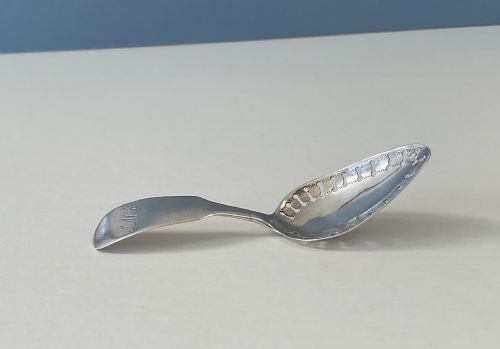
- A specialised small spoon designed to measure tea leaves from a storage caddy. Bowls were frequently shaped as shells, leaves, or rectangular trays to suit the function.
- Novelty silver
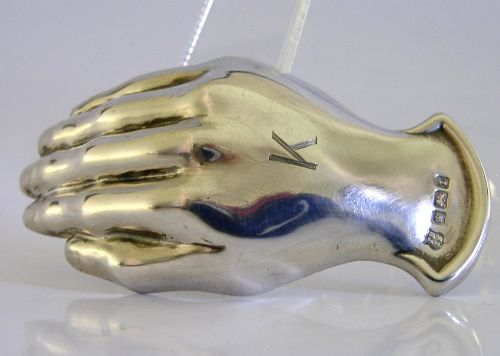
- Silver items fashioned into whimsical or realistic shapes outside standard tableware forms, such as riding caps or hands. These pieces demonstrate playful design alongside traditional silversmithing skills.
- Provincial silver
- Silverware made and marked outside the main London assay office in regional centres such as Glasgow, Sheffield, or Dublin. These items often display distinct local stylistic traits.
Engraved Silver Tea Scoop: Frequently Asked Questions
What is a tea scoop used for?
These small utensils served to measure loose tea leaves from a storage vessel into the teapot during formal domestic service.
Their compact size allowed them to fit neatly inside or alongside standard tea caddies.
How do I date an antique silver scoop?
Dating relies on the stamped hallmarks showing the assay office, standard mark, and a specific date letter.
Stylistic elements like foliate engraving or the shape of the bowl also help determine whether a piece belongs to the Georgian or Victorian period.
Why are some scoops shaped like caps?
Novelty scoops cast in the form of jockey caps became popular during the late Georgian and Edwardian eras.
Silversmiths created these whimsical items to appeal to contemporary tastes for sporting subjects and decorative novelty tableware.
Are these pieces made of solid silver?
The material recorded across all inventory items is sterling silver rather than plated base metal.
Assay stamps confirm the purity of the metal used by makers working in London, Birmingham, Sheffield, and regional offices.
How should I display a collection?
Their small scale makes them suitable for arrangement in shallow glass-topped display cases or flat cabinets.
Keeping them enclosed helps reduce tarnishing from atmospheric sulfur and protects the delicate hand engraving.