
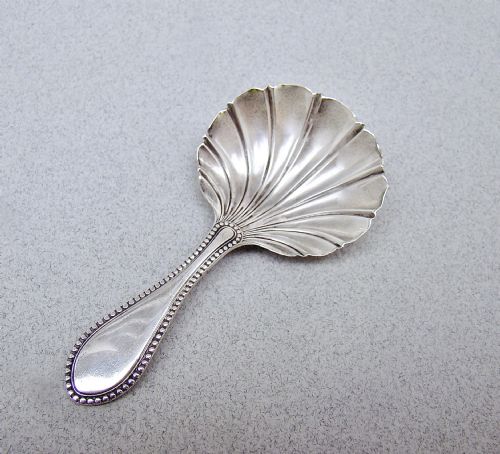

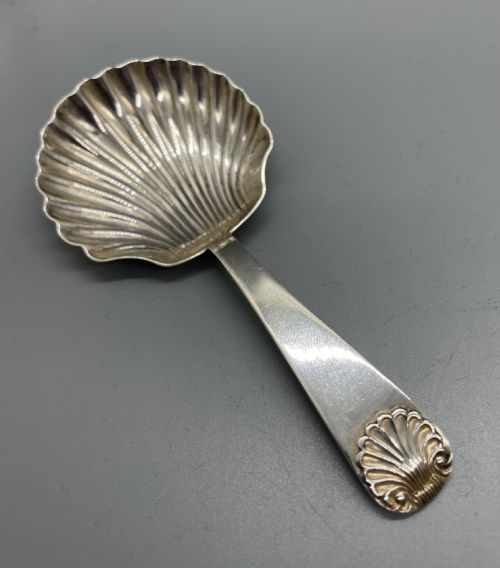
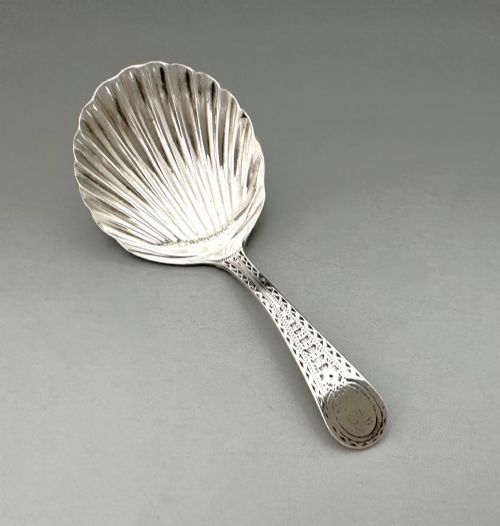
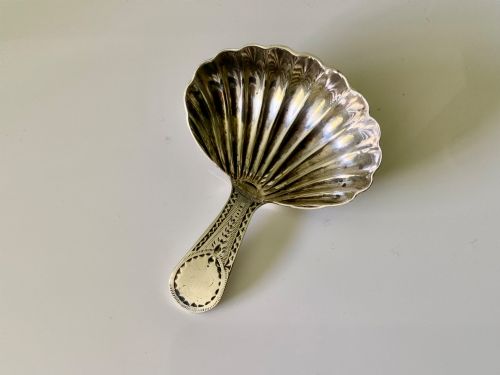


Shell Bowl Caddy Spoon
A shell bowl caddy spoon is a small silver implement designed for measuring tea leaves, prized for its fluted bowl and tactile handle.
Shell Bowl Caddy Spoon
A shell bowl caddy spoon takes the form of a miniature serving implement shaped like a scallop or nautilus shell, created specifically for transferring dry tea from a canister to the pot. When searching for a shell bowl caddy spoon, collectors encounter pieces spanning the Georgian, Victorian, and Edwardian periods.
The objects on this page primarily consist of sterling silver and silver gilt examples originating from workshops in London, Sheffield, and Birmingham. They appear across styles including Regency and French Empire, alongside related tea collectables and silverware.
Materials and construction
Silversmiths formed these pieces from solid sterling silver or silver plate, frequently employing parcel-gilt techniques to apply a thin layer of gold to the interior of the bowl. Handles were shaped through hammering and stamping, then decorated with engraving or heraldic crests.
The distinct fluting of the shell bowl was achieved by pressing the silver into a metal die or working the metal by hand over a specialised stake. Maker marks, date letters, and assay office symbols were then stamped directly onto the reverse of the stem or bowl.
Shell Bowl Caddy Spoon Retail Price Guide 2026
Typical asking prices for shell bowl caddy spoon among the pieces listed under this phrase on Sellingantiques today, from the lower quarter to the upper quarter. They describe what is for sale here now, not the wider market.
Napoleon's silhouette occasionally turns up engraved on a handle, proving that even tea time could involve French ambitions.
Factors of distinction
Quality rests upon the crispness of the shell fluting and the depth of the engraving on the handle, both of which reveal the skill of the silversmith. Finer examples retain their original parcel-gilt contrast and clear hallmarks from assay offices in London, Birmingham, or Sheffield.
The weight of the silver and the structural integrity of the joint between bowl and handle separate standard utilitarian items from finer examples produced by established makers such as Martin Hall & Co, Mappin & Webb, or William Devenport.
Martin Hall & Co·Mappin & Webb·William Devenport
The Shell Bowl Caddy Spoon Glossary
- Caddy spoon
- A small spoon specifically designed for measuring tea leaves from a caddy into a teapot. These pieces date predominantly from the Georgian and Victorian eras.
- Parcel-gilt
- A technique where parts of a silver object are gilded with gold while other areas remain in their natural silver finish. This method is frequently seen inside the bowls of tea spoons.
- Hallmark
- A series of official marks stamped onto precious metals to indicate the standard of purity, the assay office, the maker, and the year of production. British silver relies on these stamps for dating.
- Sterling silver
- An alloy consisting of ninety-two point five percent silver and seven point five percent other metals, usually copper. This standard has governed British silver manufacturing for centuries.
Shell Bowl Caddy Spoon: Frequently Asked Questions
What is a shell bowl caddy spoon?
A shell bowl caddy spoon is a small silver scoop utilised during the eighteenth and nineteenth centuries for measuring loose tea leaves.
The bowl is formed in the shape of a shell, whilst the handle is often engraved or shaped in styles ranging from Georgian to Edwardian.
How were these spoons used?
These implements were kept alongside tea caddies to transfer dry tea leaves cleanly into the pot before brewing.
Because tea was an expensive commodity, having a dedicated measure ensured accurate quantities for each brew.
How do I date an antique caddy spoon?
Dating relies primarily upon the hallmarks stamped into the silver, which indicate the specific assay office and year of production.
Stylistic elements, such as a Napoleon crest or French Empire influence, also provide broad chronological markers.
Are these spoons made of solid silver?
The pieces recorded here are constructed from sterling silver, solid silver, or silver plate, sometimes featuring parcel-gilt finishes.
Assay office marks and material descriptions on individual listings confirm the specific metal composition of each piece.