

Silver Caddy Scoop
A silver caddy scoop is a small, purposeful implement designed for measuring loose tea leaf into a pot, prized for its miniature scale and variety of historical forms.
Silver Caddy Scoop
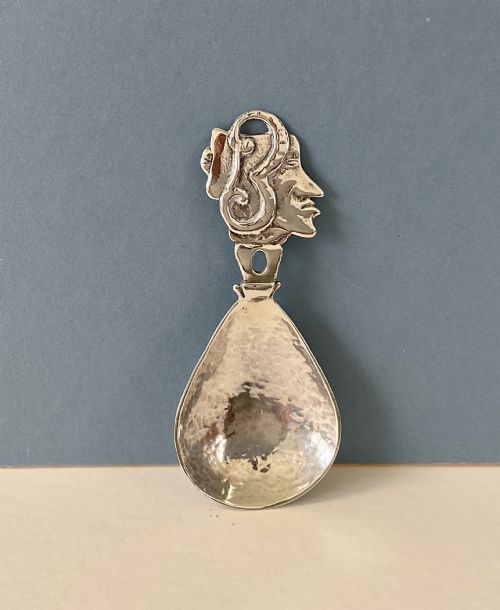
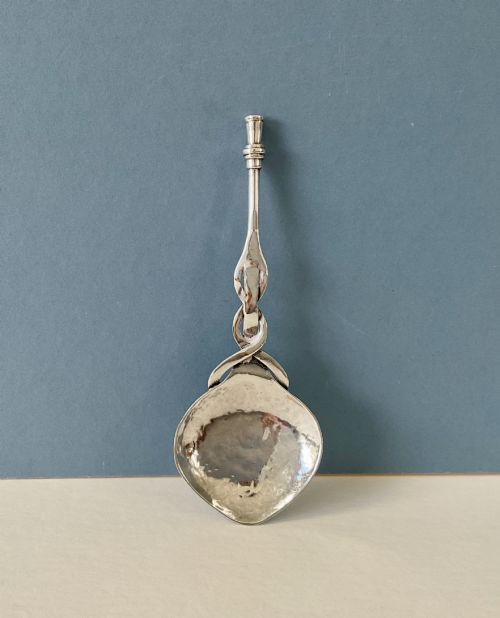
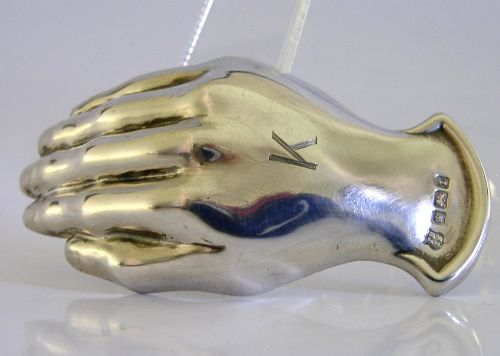
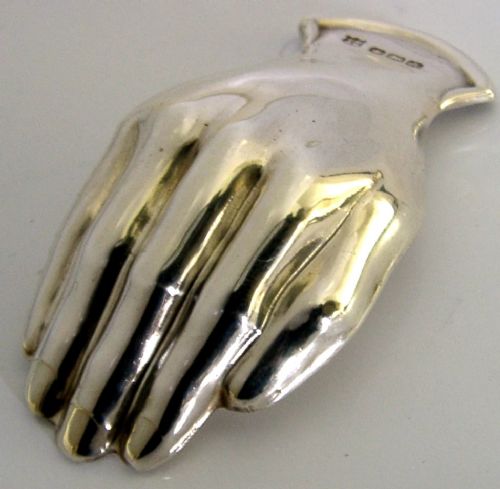
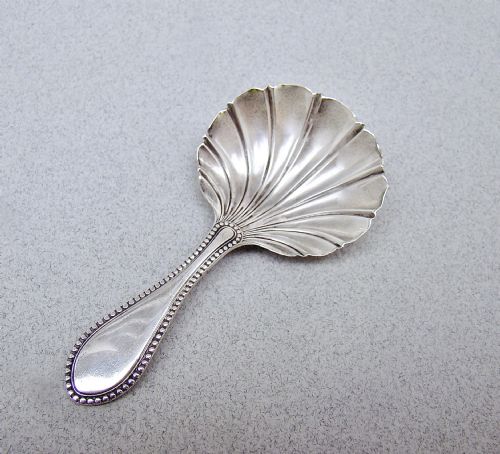
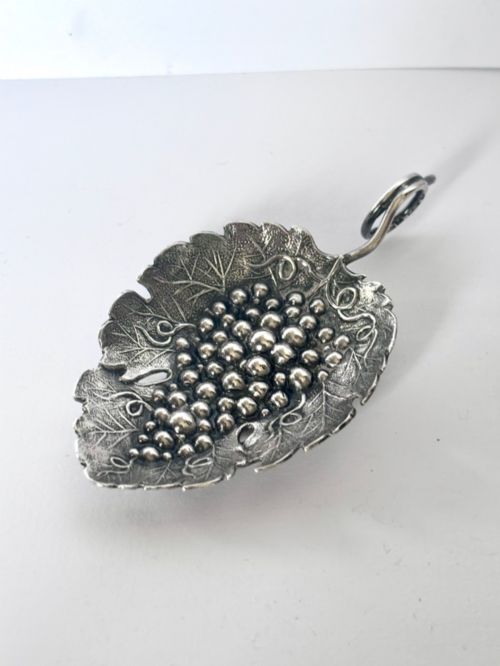
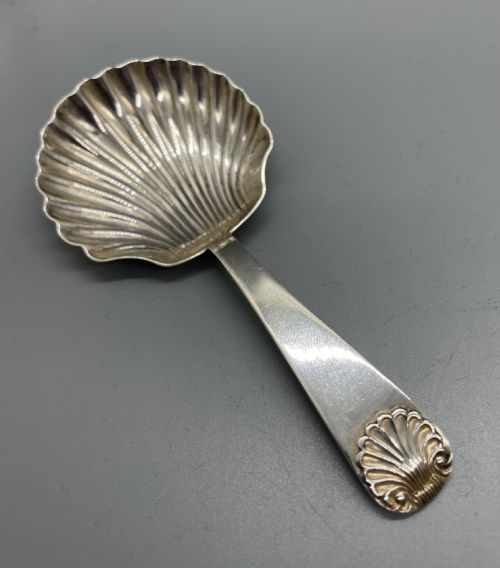
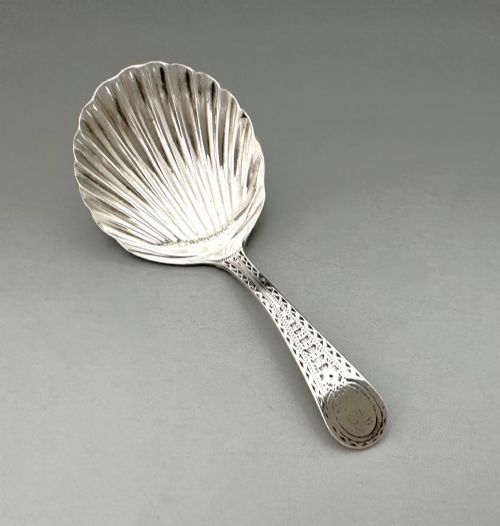
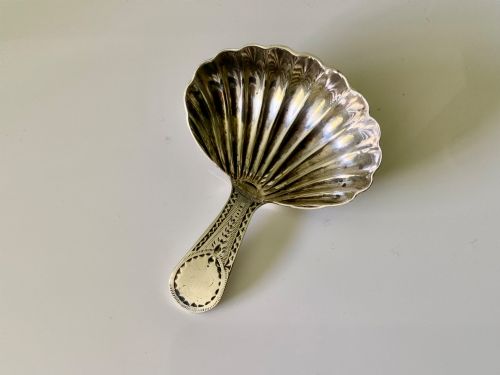
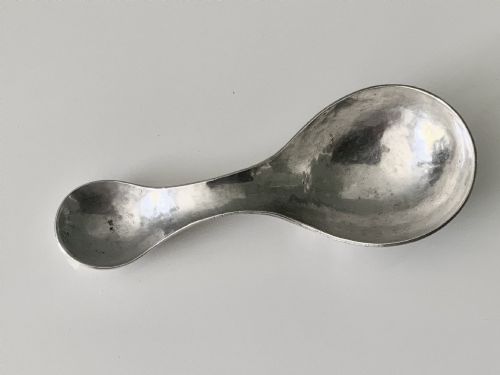
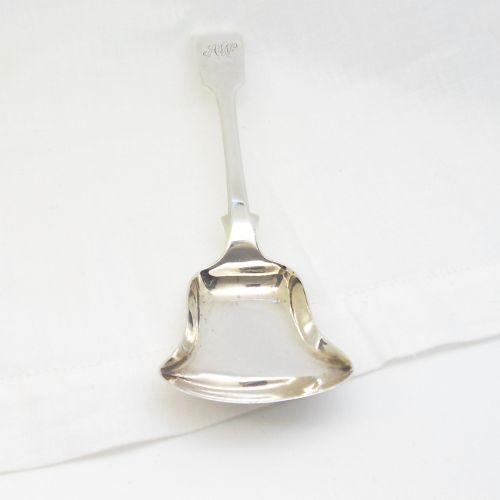
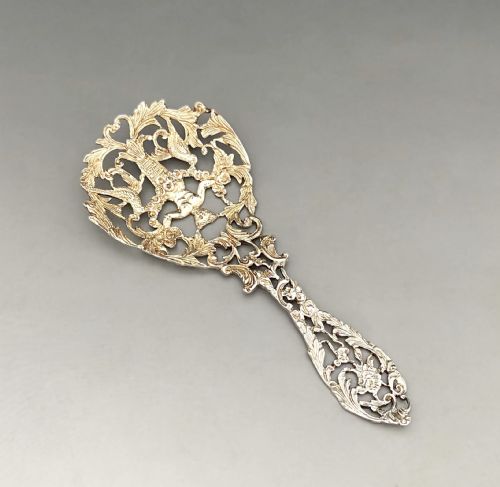
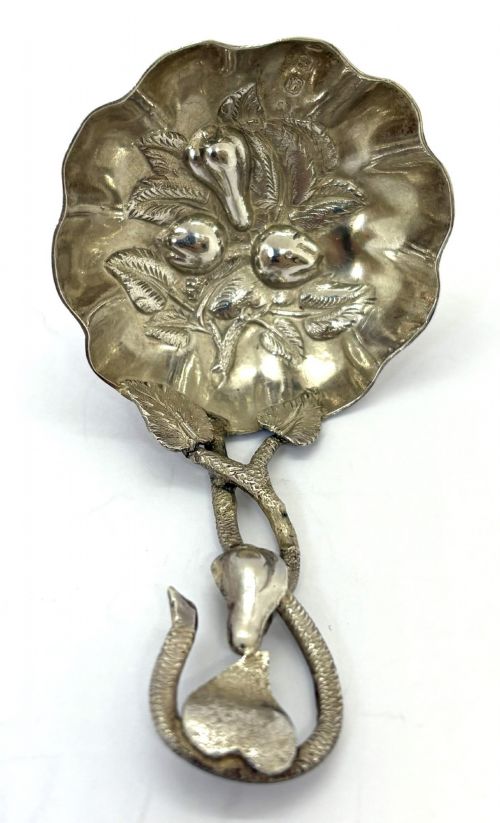
A silver caddy scoop represents a specialised domestic utensil developed to complement tea caddies during the Georgian and Victorian eras, continuing into the twentieth century. These pieces appear primarily as dedicated tea caddy spoons and scoops, occasionally taking playful novelty shapes such as hands, jockey caps, and natural motifs like leaves and acorns.
The selection ranges from eighteenth-century Georgian examples to mid-century Scandinavian designs, including pieces associated with the Arts and Crafts movement and Art Deco period. Buyers encounter both plain functional forms and highly ornamental items produced by provincial and metropolitan makers across Britain and continental Europe.
Materials and Technique
Makers shaped these items predominantly from sterling silver and standard silver, frequently applying parcel-gilt or silver-gilt finishes to the bowls to resist the corrosive properties of tea leaves. Certain twentieth-century examples incorporate polychrome enamel work alongside standard metalworking techniques.
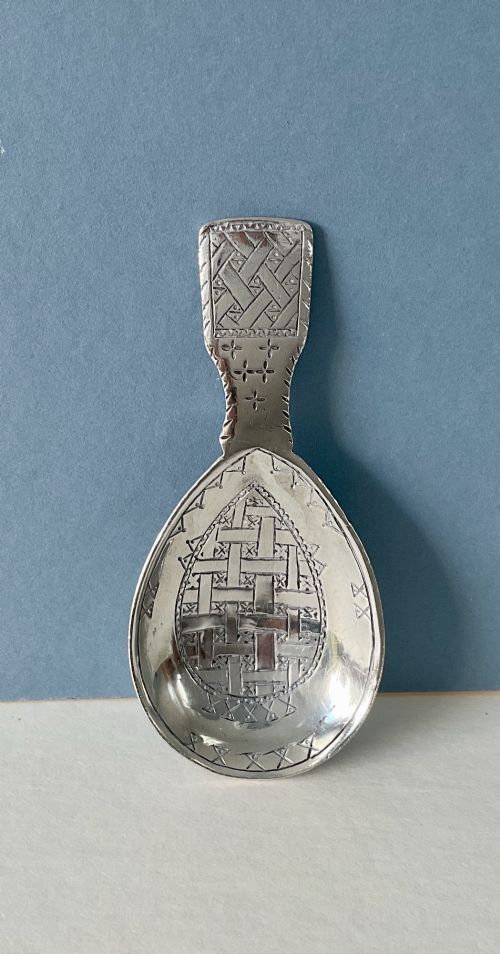
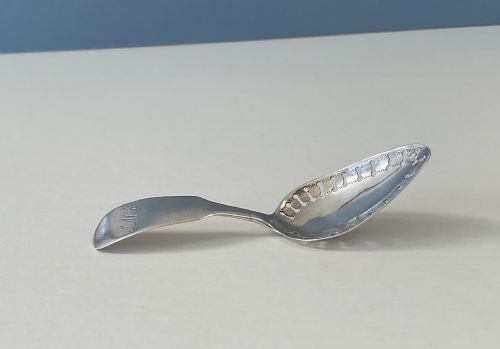
Techniques combine traditional hand-forging, stamping, and chasing with cast elements. Many pieces exhibit detailed engraved handles and pierced bowls, reflecting the shift from simple domestic utility to ornamental craftsmanship across the Victorian and Edwardian periods.
Silver Caddy Scoop Retail Price Guide 2026
Typical asking prices for silver caddy scoop among the pieces listed under this phrase on Sellingantiques today, from the lower quarter to the upper quarter. They describe what is for sale here now, not the wider market.
Listings span periods from the eighteenth century to the mid-twentieth century, featuring sterling silver, enamel, and parcel-gilt materials.
Quality and Execution
The distinction between standard production and superior craftsmanship rests on the crispness of the stamping, the depth of any chasing, and the weight of the silver used in the bowl and handle. Early examples demonstrate precision in hand-engraving and structural balance.
Maker attribution and regional hallmarking contribute significantly to a piece's standing, alongside the complexity of specialised forms like novelty caps or naturalistic leaf designs. Items retaining clear maker marks and original gilding hold particular interest.
Martin Hall And Co·Joseph Willmore·John Walton·William Comyns·William Neale·David Andersen·Georg Jensen·Mappin And Webb·George Unite·Samuel Pemberton
The Silver Caddy Scoop Glossary
- Hallmark
- An official stamp applied to precious metals indicating the maker, standard of silver, and year of assay. These marks provide the primary documentation for dating historical silver.
- Silver-gilt
- Sterling silver that has been coated with a thin layer of gold on the surface. This technique protected the silver from tarnish caused by damp tea leaves.
- Parcel-gilt
- A finish where only specific portions of an object are gilded, leaving other areas in natural silver. This creates contrast on engraved handles and bowls.
- Novelty spoon
- A piece shaped to represent an object, figure, or natural form rather than a standard utensil silhouette. These often take the form of hands, caps, or leaves.
Silver Caddy Scoop: Frequently Asked Questions
How were caddy spoons used?
These implements served the daily ritual of tea preparation in domestic households, measuring exact quantities of loose leaf tea. The shallow bowl held the precise amount required for a single brew.
Because tea was an expensive commodity in past centuries, the caddy scoop ensured measured economy and precise hospitality during social gatherings.
How do I date a silver caddy scoop?
Dating relies on the assay office marks, maker's stamps, and date letters struck directly into the silver. These official hallmarks record the exact year and city of manufacture for British items.
Stylistic indicators such as bright-cut engraving, fiddle patterns, or Arts and Crafts motifs also help place pieces within broad historical periods when hallmarks are absent.
How should I display or store them?
Silver caddy scoops require minimal handling and storage away from direct moisture to prevent tarnishing. Many collectors display them within shallow cabinet trays or wall-mounted shadow boxes.
Gentle cleaning with a soft cloth preserves the original surface texture, hallmark details, and any surviving parcel-gilt finishes without wearing down the metal.