


Vintage Silver Tea Scoop
A vintage silver tea scoop measures leaf tea into the pot with a small, characterful bowl shaped for the task.
Vintage Silver Tea Scoop
When you search for a vintage silver tea scoop, you encounter caddy spoons and tea accessories fashioned from sterling silver or silver gilt across several historical periods. The selection on this page ranges from Georgian and Regency examples to Edwardian, Victorian, Arts and Crafts, Art Deco, and mid-century modern designs.
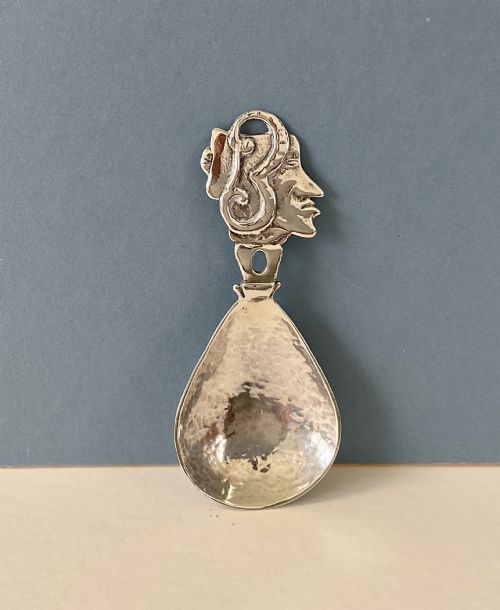
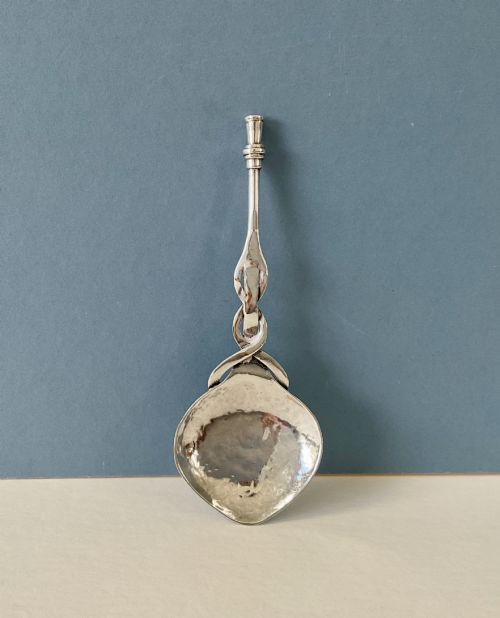
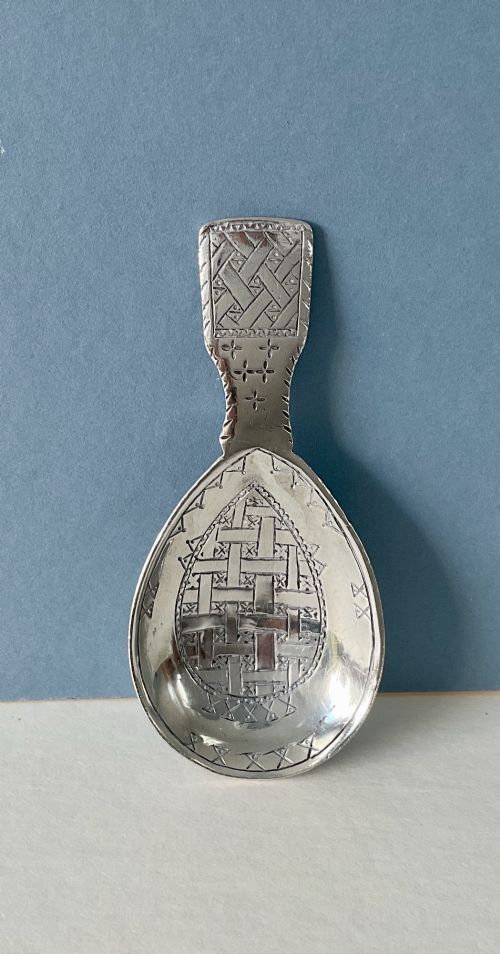
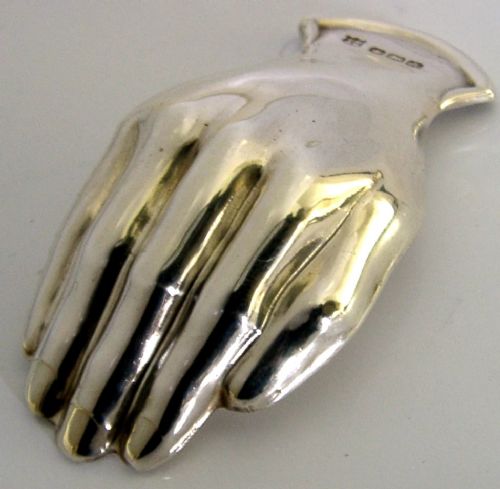
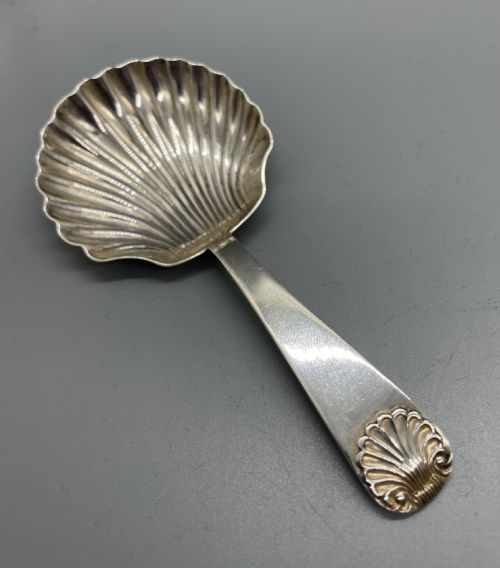
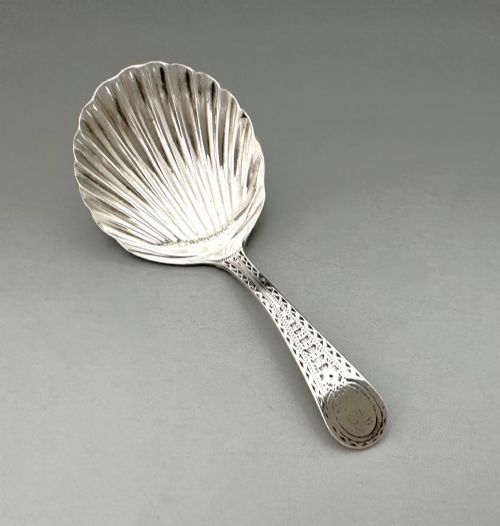
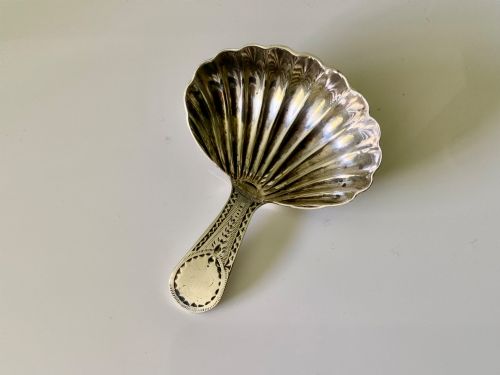
The most common form you will meet is the caddy spoon, often featuring a shallow bowl and an engraved or patterned handle designed to sit inside a tea caddy. Other pieces include novelty shapes such as jockey caps, shell bowls, and sugar tongs associated with tea service.
Origins span English provincial and London makers, alongside continental workshops including Danish and American silversmiths. These items served a practical domestic purpose in measuring loose leaf tea before modern packaging became standard.
How they were made
Makers shaped sterling silver and silver gilt through hammering, casting, and stamping to form the bowls and handles of each tea scoop. Details such as engraving, piercing, and double striking added texture and pattern to the metal surface.
Enamel work appears on select pieces, fusing glass powder to the silver base under heat to add colour to the design. Hallmarks were stamped directly into the metal to indicate the assay office, date, and standard of silver.
Vintage Silver Tea Scoop Retail Price Guide 2026
Typical asking prices for vintage silver tea scoop among the pieces listed under this phrase on Sellingantiques today, from the lower quarter to the upper quarter. They describe what is for sale here now, not the wider market.
Materials appearing across these items include sterling silver, silver gilt, and decorative enamel highlights.
What varies in quality
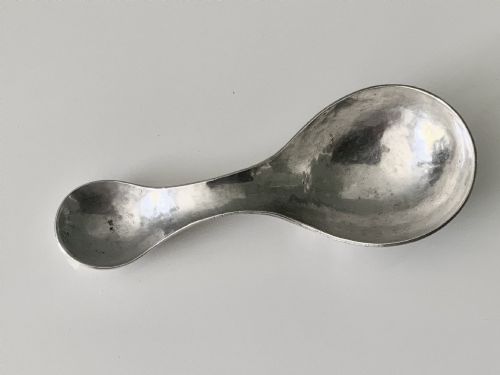
The distinction between standard production and superior work lies in the weight of the silver, the crispness of the chasing or engraving, and the balance of the handle. Hand-hammered Arts and Crafts pieces or finely pierced Georgian examples demonstrate greater artisanal skill than plain stamped items.
Novelty forms, such as jockey caps or shell bowls, achieve higher regard when the detailing of the miniature form remains sharp and realistic. Maker marks from notable workshops also influence the standing of a piece within its period.
Judy·Liberty·David Andersen·Georg Jensen·Plucknett
The Vintage Silver Tea Scoop Glossary
- Caddy spoon
- A short-handled spoon specifically designed for measuring dry tea leaves from a caddy into a teapot. These developed varied bowl shapes, including shells, leaves, and round pans.
- Sterling silver
- An alloy of silver containing 92.5 percent pure silver and 7.5 percent other metals, usually copper, to provide durability. Most British pieces carry hallmarks certifying this standard.
- Silver gilt
- Silver that has been coated with a thin layer of gold on its surface. This technique was frequently applied to the interior bowls of tea scoops.
- Assay office
- An official body responsible for testing the purity of precious metals and stamping them with hallmarks. Towns such as London, Sheffield, and Birmingham maintained distinct offices.
- Double struck
- A minting or stamping technique where the die strikes the metal more than once to deepen the impression and sharpen the decorative relief.
Vintage Silver Tea Scoop: Frequently Asked Questions
What is a tea scoop used for?
A tea scoop measures loose leaf tea from a caddy into a teapot for brewing.
They were essential household items before tea bags became common.
How do I date a silver tea scoop?
Hallmarks stamped on the metal indicate the assay office, standard, and specific year letter.
Style, handle shape, and decorative motifs also help identify the period of manufacture.
What are novelty tea scoops?
Novelty scoops are fashioned into unusual miniature shapes like jockey caps, shells, or leaves.
Silversmiths created them to display technical skill and add whimsy to tea service.
How should I clean silver tea scoops?
Wash silver gently in warm soapy water and dry with a soft cloth to protect the metal.
Avoid harsh abrasive dips that can remove desirable patina or damage enamel work.