


Pierced Silver Caddy Spoon
A pierced silver caddy spoon brings the refined ritual of tea leaf handling right to your table, combining Georgian and Victorian craftsmanship in miniature.
Pierced Silver Caddy Spoon
A pierced silver caddy spoon is a small utensil designed for measuring and serving loose tea leaves from a caddy into a pot. When you search for this phrase, you are looking at small scoop-shaped implements often decorated with intricate pierced patterns.
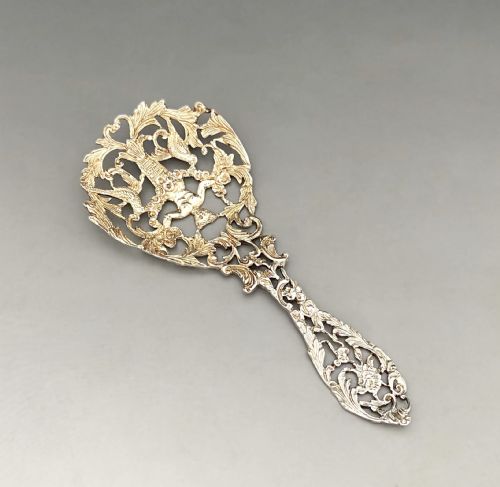
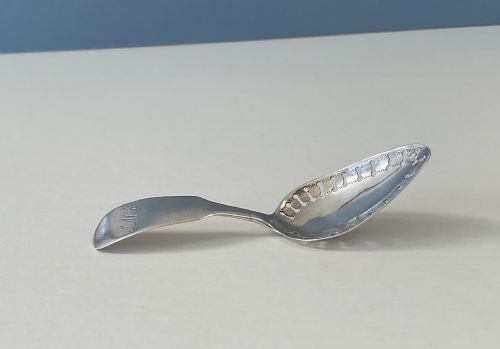
The pieces you are most likely to meet on this page hail from the Georgian and Victorian eras, alongside a few later Arts and Crafts examples. They typically take the form of miniature spoons with pierced bowls showing hearts, leaves, or geometric lattices.
How they were made
Makers fashioned these spoons primarily from sterling silver, using techniques such as hand-piercing to cut out decorative motifs from the bowl or handle. Fine piercing saws removed sections of the metal to create light, openwork designs without compromising the structural integrity of the spoon.
Silversmiths also utilised casting methods for specific handles, particularly in later Victorian and Arts and Crafts pieces. The metal was shaped, pierced, and finished with hallmarks stamped directly into the silver to indicate the assay office and date.
Pierced Silver Caddy Spoon Retail Price Guide 2026
Typical asking prices for pierced silver caddy spoon among the pieces listed under this phrase on Sellingantiques today, from the lower quarter to the upper quarter. They describe what is for sale here now, not the wider market.
Some Georgian tea drinkers relied on pierced hearts in their spoon bowls so the tea dust could fall away before reaching the pot.
What varies in quality
The quality of a pierced silver caddy spoon rests primarily on the crispness and precision of the piercing work in the metal. Sharp, clean edges in the cut-out patterns separate superior examples from those with softer or clumsier hand-cut details.
Weight and balance also dictate the grade of the piece, as sturdier gauge silver provides a more substantial feel in the hand. Furthermore, the clarity of the maker's mark and assay stamps adds to the desirability and documentary value of the spoon.
William Comyns·Amy Sandheim·Plucknett
The Pierced Silver Caddy Spoon Glossary
- Pierced
- A decorative technique where metal is cut through to create an openwork pattern. In caddy spoons, this is often seen in the bowl.
- Sterling silver
- An alloy of silver containing 92.5 percent pure silver and 7.5 percent other metals, usually copper. This standard is denoted by the lion passant hallmark in British silver.
- Hallmark
- A series of official marks stamped on items made of precious metals in the United Kingdom. These marks verify the purity of the silver, the assay office, and the year of manufacture.
- Assay office
- An official body that tested and certified the purity of precious metals. Towns such as London, Chester, and Glasgow maintained their own assay offices.
- Arts and Crafts
- A design movement of the late nineteenth and early twentieth centuries that valued handcraftsmanship and traditional techniques. Items from this period often display simpler, more organic forms.
Pierced Silver Caddy Spoon: Frequently Asked Questions
What is a pierced silver caddy spoon?
A pierced silver caddy spoon is a small serving implement created to transfer loose tea leaves from a storage caddy to the teapot. The pierced bowl allowed any stray dust or small fragments to remain behind in the caddy.
These pieces span the Georgian, Victorian, and Arts and Crafts periods, featuring delicate cut-out designs ranging from hearts to geometric shapes.
How were they used?
They were kept alongside tea canisters and caddies in affluent households to measure out precise portions of expensive tea leaves. The short handle and shallow bowl suited the restricted dimensions of traditional tea caddies.
Over time, many of these spoons transitioned into multi-purpose serving pieces for bonbons, sugar lumps, or small condiments on the dining table.
How do I tell Georgian from Victorian pieces?
Georgian spoons, generally dating from the late eighteenth or early nineteenth century, typically exhibit delicate hand-piercing and restrained neoclassical or bright-cut engraving. They often lack maker's marks that survived clear, or rely on simpler punch marks.
Victorian pieces, made from the mid-nineteenth century onward, frequently display heavier casting, more elaborate floral or naturalistic motifs, and crisper stamped hallmarks from provincial assay offices like Chester or Glasgow.
Are Arts and Crafts spoons different?
Arts and Crafts caddy spoons depart from traditional formal revival styles by emphasising hand-wrought textures and simpler, honest construction. Makers from this movement often left subtle hammer marks visible on the silver.
The piercing on these twentieth-century examples tends to be bolder and more graphic, reflecting the design philosophies of workshops active during the 1920s and 1930s.