



Georgian Silver Sugar Spoon
These georgian silver sugar spoon examples combine practical serving functions with intricate historic metalwork.
Georgian Silver Sugar Spoon
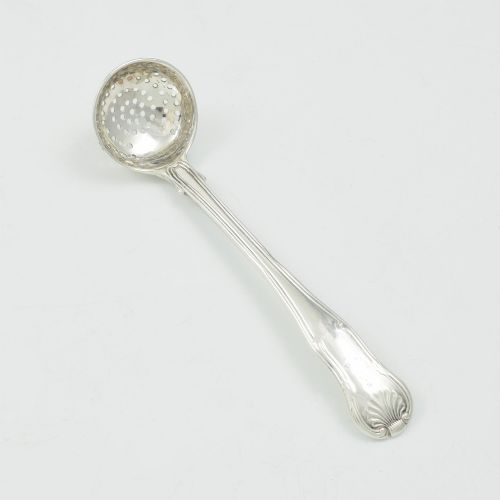
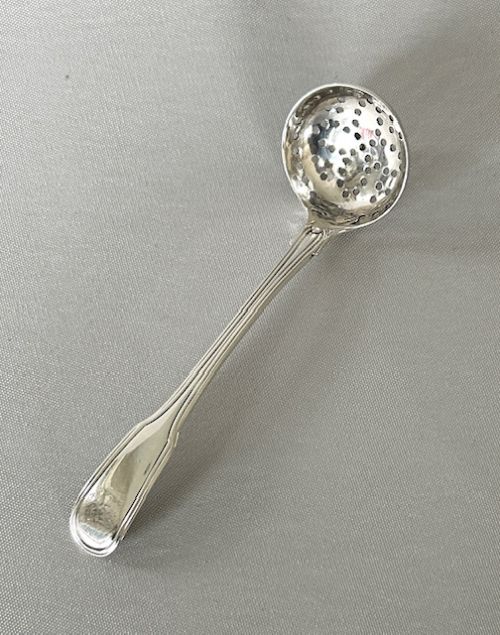
When you search for georgian silver sugar spoon, you encounter objects designed for domestic tea service and dining customs of the eighteenth and nineteenth centuries. The pieces on this page span the Georgian, Victorian, Regency, and Art Deco periods, showcasing diverse flatware forms.
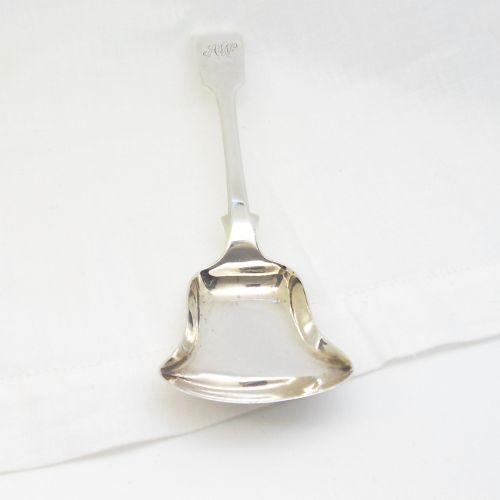
The selection encompasses sifter spoons, caddy spoons, and sugar shovels created for handling loose sugar granules or lumps. Many examples emerge from the Georgian era, featuring distinct perforated bowls and long stems intended for functional use at the tea table.
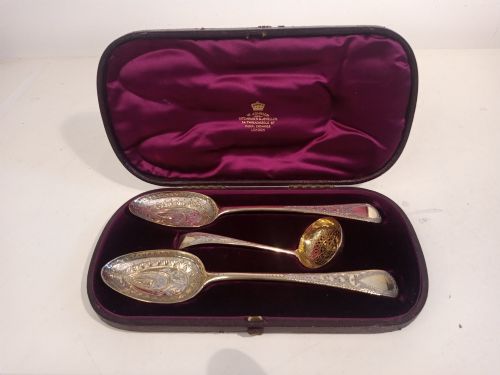
Beyond standard sifting and serving utensils, you find sets paired in cases alongside berry spoons or incorporated into broader cutlery collections. These items reflect changing social rituals surrounding sugar consumption across successive generations.
How They Were Made
Silversmiths utilised sterling silver and silver-gilt to shape these implements, often employing techniques such as piercing, engraving, and bright-cutting. The metal is manipulated into specialised forms like scallop shells and shovels.
Handles display specific decorative patterns including the Onslow pattern, King's Hourglass, and feather edge designs. Certain pieces incorporate interior gilding known as silver-gilt, adding tonal contrast to the pierced bowls.
Several spoons arrive tucked inside original fitted cases lined with satin, preserving them much as they were centuries ago.
What Varies in Quality
Distinction in these pieces lies in the crispness of the piercing work across the sifter bowl and the depth of the engraving on the handle. Sharply defined bright-cut detailing indicates superior execution by the silversmith.
The thickness of the sterling silver gauge and the preservation of original hallmarks contribute to the standing of an individual spoon. Maker marks from prominent assay offices provide additional weight to the provenance.
John Walton
The Georgian Silver Sugar Spoon Glossary
- Sifter Spoon
- A perforated spoon designed for sprinkling sugar over food or beverages. The bowl contains shaped holes or slots.
- Caddy Spoon
- A short-handled spoon utilised for measuring loose tea leaves from a caddy. These often feature shell-shaped bowls.
- Bright-Cut
- An engraving technique using faceted cuts to reflect light from the metal surface. It creates geometric or floral patterns.
- Hallmark
- An official stamp indicating metal purity, assay office, and date of manufacture. These marks establish the authenticity of the silver.
- Silver-Gilt
- Silver that has been coated with a thin layer of gold on the surface. This finish provides a warm, two-tone appearance.
Georgian Silver Sugar Spoon: Frequently Asked Questions
What is a georgian silver sugar spoon used for?
These utensils served the tea table by sifting powdered or granulated sugar over beverages and desserts. Their pierced bowls allowed excess sugar to fall back into the vessel.
They also functioned in transferring sugar lumps or loose granules from specialised containers to individual cups.
How do I identify a Georgian piece?
Authentification relies on locating the official hallmarks stamped directly onto the silver stem or reverse of the bowl. These marks indicate the assay office, standard of silver, and a specific date letter corresponding to the reign.
Stylistic indicators such as bright-cut engraving and specific handle patterns like Onslow further point to the eighteenth and early nineteenth centuries.
How should I care for antique silver?
Maintenance requires gentle cleaning with a soft cloth and specialised silver polish designed to remove tarnish without scratching the metal. Avoid abrasive materials that might wear away fine engraving or thin silver-gilt layers.
Storage in lined boxes or fabric rolls prevents excessive exposure to air and minimises the need for frequent polishing.
What is the difference between a sifter and a caddy spoon?
Sifter spoons feature perforated bowls intended for scattering sugar across food items during dining service. Their handles are generally longer to reach into deep bowls or baskets.
Caddy spoons possess compact, shallow bowls and short stems designed specifically for scooping tea from storage containers.