





Studded Leather Stool
A studded leather stool brings tactile warmth and enduring utility to a room, grounding your seating with patinated hide and metal work.
Studded Leather Stool
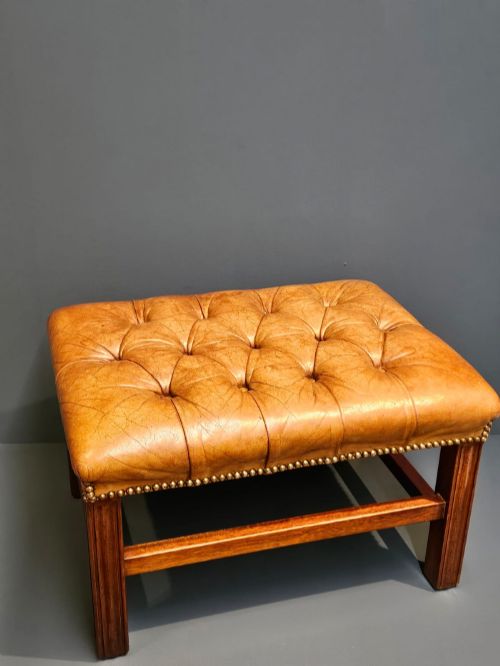
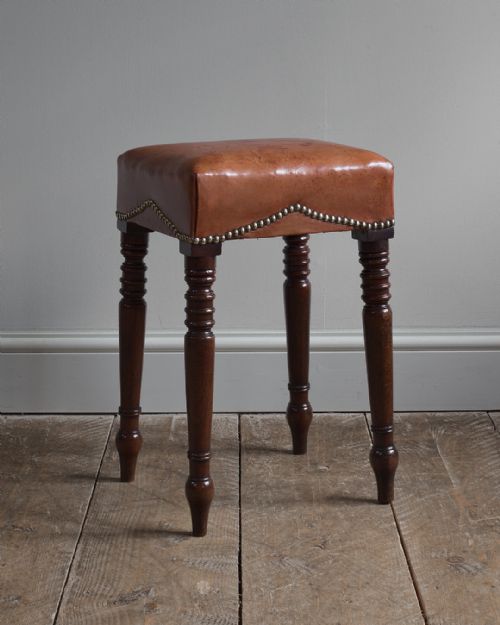
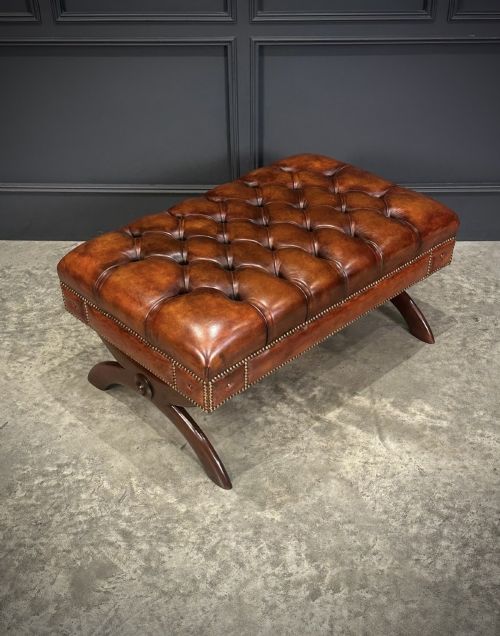
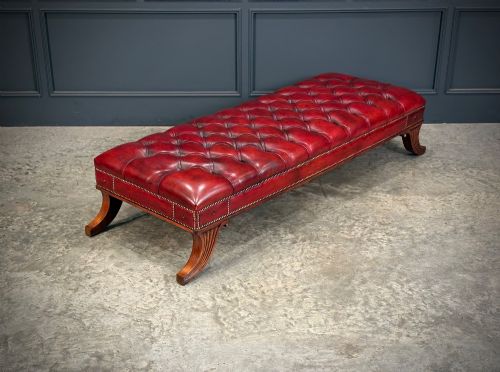
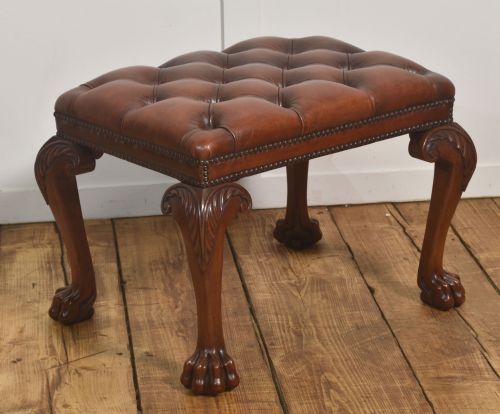
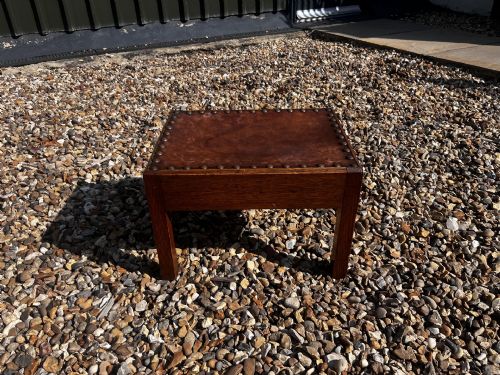
A studded leather stool is a functional seat defined by a leather upper secured with decorative metal tacks, spanning forms from compact footstools to expansive ottomans and long benches. When exploring a studded leather stool today, you will most frequently encounter nineteenth-century mahogany and Edwardian oak examples alongside Regency rosewood variations.
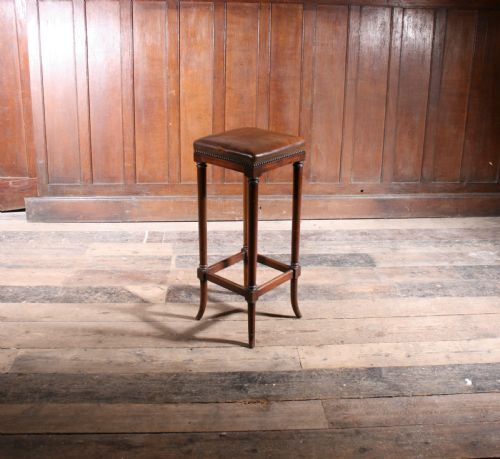
The typology includes low dressing stools, adjustable music chairs, metamorphic library steps, and tall bar seating. These pieces originate across the nineteenth and early twentieth centuries, reflecting changing domestic requirements from formal drawing rooms to libraries.
Makers and designers drew upon established vocabularies, producing pieces in Regency, Victorian, Edwardian, and Arts and Crafts styles. Chippendale and Carolean revivals also appear among the selection, showing how cabinetmakers reinterpreted earlier proportions for later interiors.
Materials and construction methods
Framing relies predominantly on dense timbers such as mahogany, oak, walnut, yew, and rosewood, selected for structural integrity. Joinery ranges from traditional joint construction to turned legs and carved cabriole supports.
Upholstery combines leather surfaces with metal studs or brass tacks, often featuring buttoning to secure internal padding. Metal components also appear in adjustable height mechanisms and patent swivel fittings on specialised seating.
Studded Leather Stool Retail Price Guide 2026
Typical asking prices for studded leather stool among the pieces listed under this phrase on Sellingantiques today, from the lower quarter to the upper quarter. They describe what is for sale here now, not the wider market.
Object forms range from simple low footstools and joint stools to adjustable height bar seating, metamorphic library steps, and box ottomans.
Factors influencing execution and finish
Quality rests upon the selection of timber and the depth of carving in the frame, where crisply hand-carved details on mahogany or oak distinguish superior workshops from plainer production. The grade of the leather and the regularity of the brass studding further separate standard examples from finer commissions.
Structural complexity marks out exceptional pieces, such as those incorporating metamorphic library steps, adjustable height screws, or integrated box ottoman storage. Patination on both the timber and the hide accumulates through age, lending depth to the surface that machine-finished alternatives lack.
Arthur Simpson Of Kendal·Arthur W Simpson
The Studded Leather Stool Glossary
- Ottoman
- An upholstered seat or footstool usually lacking arms or a back, sometimes featuring an internal storage compartment beneath a hinged lid. They emerged as versatile additions to nineteenth-century drawing rooms.
- Buttoned leather
- A method of upholstery where depressions are formed in the leather by pulling ties or threads through to the frame, secured with deep pleats. This technique keeps the internal stuffing evenly distributed.
- Joint stool
- An early form of wooden stool constructed with mortise and tenon joints rather than turned legs, predating more complex chair framing. They provide sturdy, low platforms.
- Metamorphic furniture
- Pieces engineered to transform from one form of furniture into another, such as a stool converting into library steps. These mechanical designs gained popularity in the nineteenth century.
- Cabriole leg
- A furniture leg that curves out in a convex arc at the knee and tapers inward in a concave arc to the foot, inspired by animal limbs. It appears frequently on eighteenth-century and revival seating.
Studded Leather Stool: Frequently Asked Questions
How do I date a studded leather stool?
Dating relies on examining the timber species, framing construction methods, and the style of the legs, such as Regency fluting or Victorian cabriole supports. Secondary woods inside storage compartments or beneath frames often provide further clues to the period.
Hardware elements like brass tacks and mechanical height adjusters also help narrow down the decade of manufacture, aligning with nineteenth or early twentieth-century workshop practices.
Where were these stools used in the home?
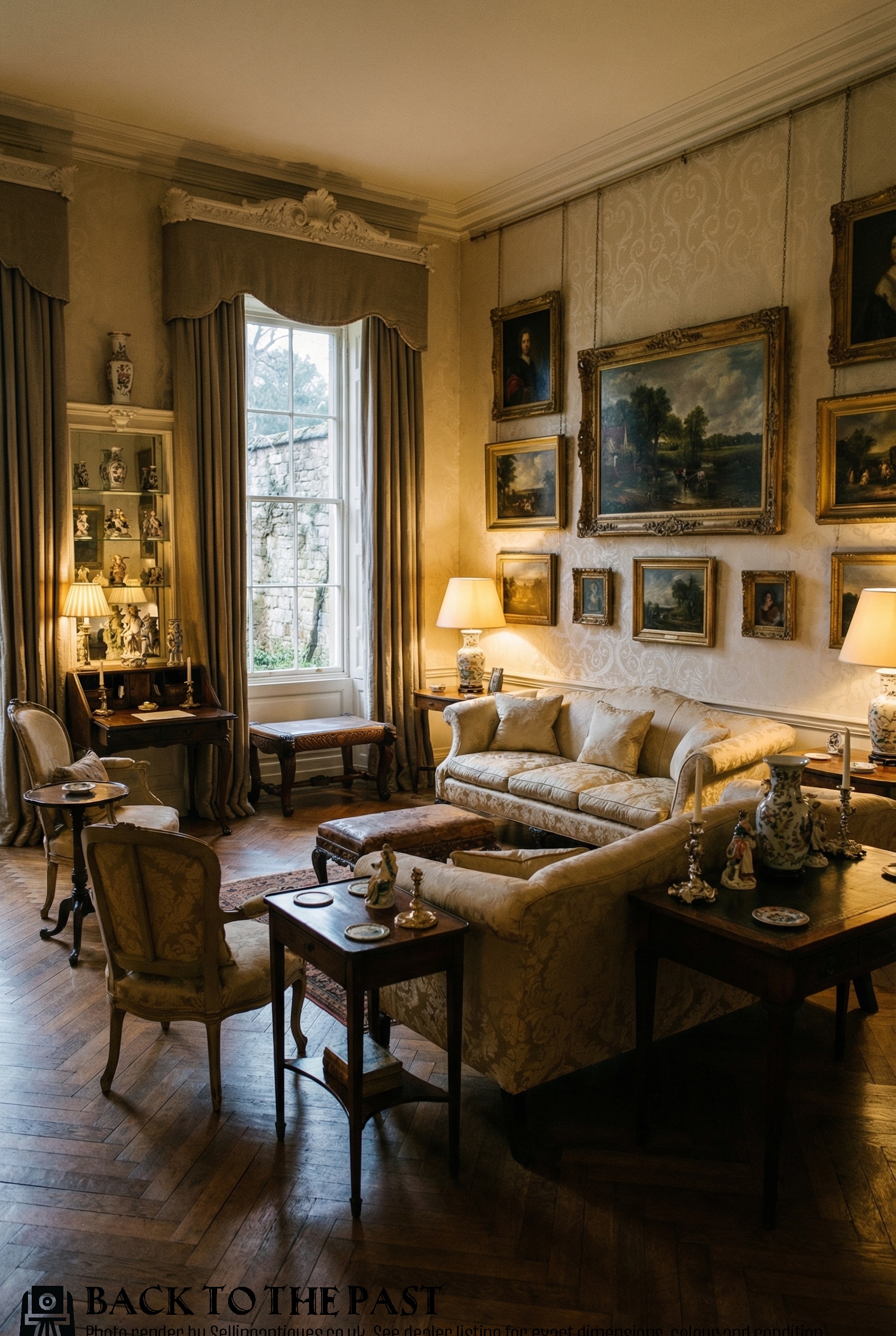
These pieces served multiple domestic functions, appearing as footstools before armchairs, dressing stools in bedrooms, and low hall seats. Tall variants and adjustable music chairs fulfilled specific workspace and parlor requirements.
Ottomans and long benches were placed in drawing rooms or at the foot of beds, offering both seating and concealed storage for textiles.
How do I care for antique leather upholstery?
Maintaining leather involves keeping the hide nourished with appropriate balms to prevent drying and cracking over time. Direct sunlight and excessive heat sources should be avoided to preserve the original colour and suppleness.
Dusting regularly with a soft, dry cloth prevents particulate buildup in the creases and around the individual brass studs.
What is the difference between a footstool and an ottoman?
A footstool is typically a compact, low platform designed solely for resting feet, whereas an ottoman is larger and often functions as an independent seat or low table. Many nineteenth-century ottomans also incorporate hinged tops concealing storage cavities.
Both forms utilise leather upholstery and decorative metal studs, but their scale and internal construction reflect their differing purposes in period interiors.