





Antique Leather Footrest
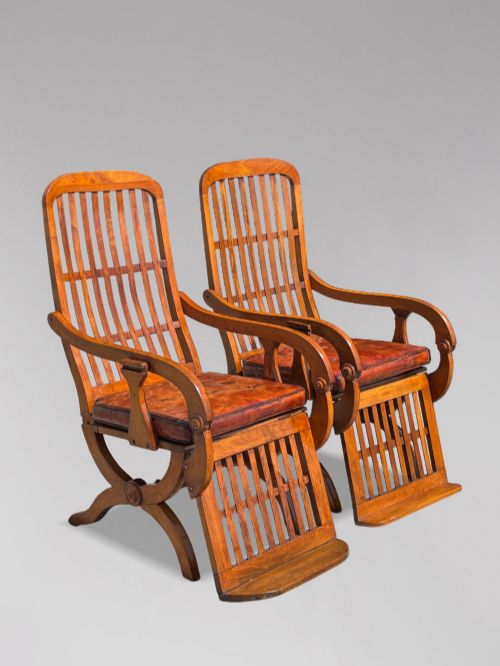
An antique leather footrest brings tactile warmth and period utility to a room, ranging from simple footstools to adjustable reclining chairs.
Antique Leather Footrest
When you search for an antique leather footrest, you encounter a variety of forms including footstools, ottomans, and reclining armchairs designed for comfort. These pieces date across the nineteenth and twentieth centuries, spanning Victorian, Edwardian, and Art Deco aesthetics.
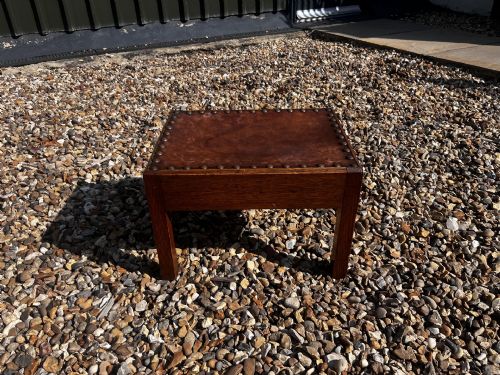
The most common examples on this page are low stools and footstools upholstered in leather, often incorporating timber frames such as mahogany, oak, or walnut. You also find larger reclining armchairs and metamorphic designs that extend to support the legs.
Origins include traditional English workshops and specific makers from periods such as the Arts and Crafts movement. Each piece reflects the domestic seating habits and material preferences of its respective era.
How they were made
Makers utilised solid timbers such as mahogany, oak, walnut, rosewood, and burr walnut to construct the underlying frames of these footrests and stools. Wood selection dictated the structural integrity and dictated the visual weight of the piece within a room.
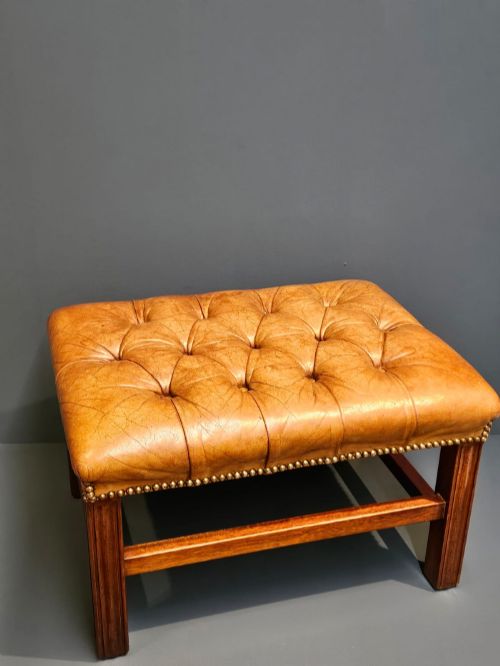
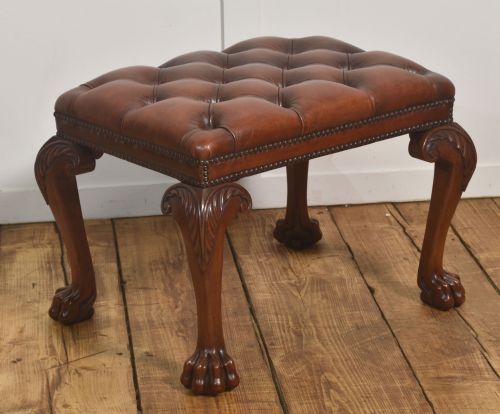
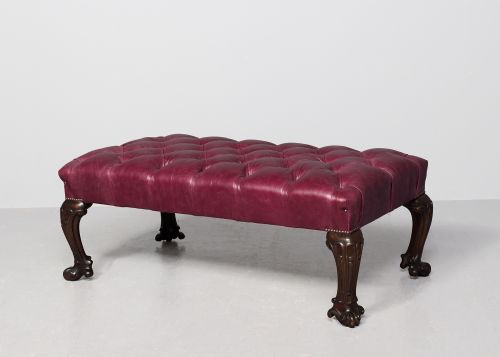
Upholstery involved stretching leather over padding and securing it to the wooden frames, frequently using metal studs for a durable and decorative edge. Buttoned leather techniques appear on specific Victorian and Edwardian examples to add texture and tension to the surface.
Mechanisms were integrated into more complex items like metamorphic gout stools and reclining armchairs, allowing adjustment through metal and wooden components. Carved details, such as lions heads on oak frames, display the hand-worked craftsmanship applied to the wooden structures.
Antique Leather Footrest Retail Price Guide 2026
Typical asking prices for leather footrest among the pieces listed under this phrase on Sellingantiques today, from the lower quarter to the upper quarter. They describe what is for sale here now, not the wider market.
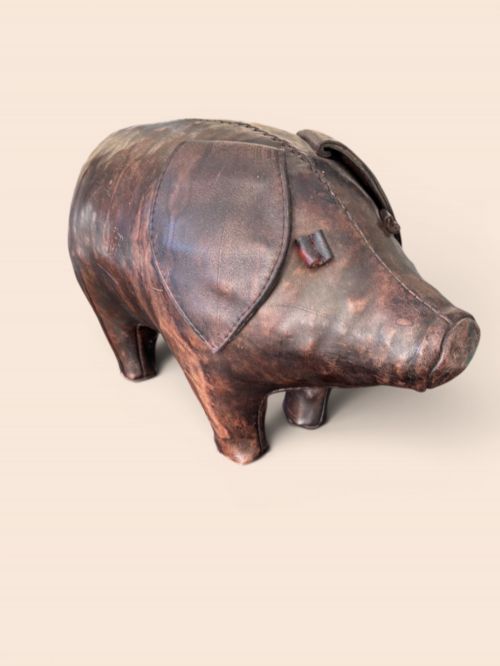
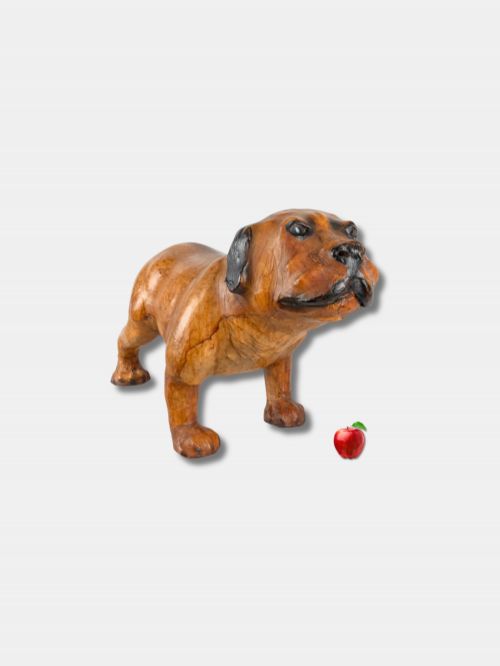
Leather animal footstools bring a playful, sculptural presence to a room alongside traditional upright seating.
What varies in quality
The caliber of the timber frame sets the foundation, with dense hardwoods like mahogany and figured veneers such as burr walnut representing superior construction compared to basic utility woods. Joinery methods, from sturdy joint construction to finely carved ornamentation, separate standard production from exceptional workshop output.
The grade and condition of the leather upholstery dictate much of the tactile appeal and integrity of the piece. Superior examples retain well-preserved leather that shows honest age without compromising the underlying padding and structural support.
Integration of mechanical elements in adjustable or metamorphic designs distinguishes higher quality pieces. Smooth operation of reclining or extending components indicates precision engineering from the period.
Arthur Simpson Of Kendal·Omersa For Liberty·Harry and Lou Epstein·Robert Daws
The Antique Leather Footrest Glossary
- Metamorphic
- A piece of furniture designed to transform from one form into another, such as an armchair converting into a footrest or gout stool.
- Gout stool
- A specialised footrest with an adjustable angle, historically designed to elevate and support the foot of someone suffering from joint pain.
- Joint stool
- An early form of wooden stool constructed with mortise and tenon joints rather than turned legs, offering sturdy domestic seating.
- Ottoman
- A low, upholstered seat or footstool without a back or arms, often built with internal storage or on a larger scale.
- Metal studs
- Small headed tacks driven into the leather upholstery to secure the hide to the wooden frame while adding a decorative border.
Antique Leather Footrest: Frequently Asked Questions
What is a metamorphic footstool?
A metamorphic footstool incorporates adjustable mechanisms that allow the surface to alter its angle or extend into a longer rest. These pieces demonstrate clever nineteenth and twentieth-century engineering for domestic comfort.
Such designs often catered to specific health needs of the period, such as supporting legs affected by gout, while remaining functional furniture in a library or parlour.
How do I identify a Victorian leather footrest?
Victorian examples typically feature dark timber frames like walnut, mahogany, or oak, combined with deep-buttoned brown leather upholstery. You may also observe decorative metal studs edging the leather.
These pieces range from long low benches to comfortable reading armchairs with integrated footrests, reflecting the heavy, substantial tastes of the nineteenth century.
What materials were used for these footrests?
Makers constructed the frames using solid woods and veneers including mahogany, oak, walnut, rosewood, and burr walnut. Leather served as the primary upholstery material for the top surfaces.
Metal components appear as brass fittings, adjustable mechanisms, and decorative studs that secure the leather hides to the wooden bases.
How do Art Deco footrests differ?
Art Deco footrests from the 1930s often showcase exotic woods like birds eye maple alongside smooth leather upholstery. Their forms embrace cleaner, more geometric lines compared to earlier Victorian or Edwardian styles.
These pieces reflect modern design shifts of the early twentieth century, focusing on sleek surfaces and streamlined silhouettes.