
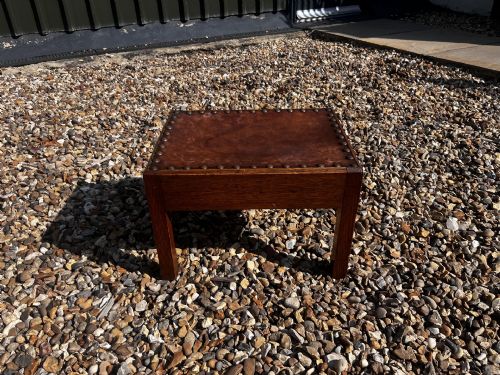


Oak Leather Footstool
An oak leather footstool brings solid timber and aged hide together, offering a sturdy seat that anchors a traditional room.
Oak Leather Footstool
An oak leather footstool combines a timber frame with a hide top, appearing across Victorian, Edwardian, and early twentieth-century periods. These pieces serve primarily as low seats or footrests in domestic settings.
You will frequently encounter examples from the Arts and Crafts movement alongside standard Victorian and Edwardian variations. Formats range from joint stools and window seats to low buttoned footstools fitted with metal studs.
Materials and construction
Makers built these frames using solid oak, often shaping the timber into joint stools or carved structures with exposed grain. Metal studs frequently secure the leather upholstery directly to the wooden base.
Upholstery methods span simple leather pads to buttoned hide surfaces, occasionally paired with rocking mechanisms or carved details like lions' heads.
Listings feature oak, leather, and brass metal studs across Victorian, Edwardian, and Arts and Crafts periods.
Judging quality in oak and leather
Quality rests in the substance of the timber frame and the treatment of the hide, distinguishing workshop-made pieces from standard utility items. Substantial solid oak construction and thoughtful carving indicate superior work.
The integration of the leather upholstery, whether through careful studwork or buttoning, reveals the attention given to the piece by the maker.
Arthur Simpson Of Kendal·Liberty·James Shoolbred
The Oak Leather Footstool Glossary
- Joint stool
- A traditional wooden stool constructed with mortise and tenon joints rather than turned legs. These sturdy seats date back centuries and form a foundation for later revival styles.
- Arts and Crafts
- A design movement prioritising honest construction and local materials over mass production. Pieces from this tradition often display hand-finished oak and simple, robust lines.
- Moorish Revival
- An architectural and decorative style incorporating intricate geometric patterns and exotic influences. Furniture in this vein often utilises turned spindles and detailed woodwork.
- Window seat
- A long, low bench designed to fit beneath a window recess. These forms often feature upholstered leather tops supported by substantial wooden frames.
Oak Leather Footstool: Frequently Asked Questions
How do I date an oak leather footstool?
Dating relies on observing construction methods, timber patination, and stylistic markers such as Arts and Crafts simplicity or Victorian buttoning. Comparing the joinery against known period examples helps narrow down the decade.
Secondary clues include the type of leather dressing and the specific form of the metal studs used to secure the upholstery.
Where were these footstools used?
These pieces sat beside firesides, reading chairs, or within window recesses to provide low seating or a rest for the feet. Larger variants functioned as window seats in formal drawing rooms.
Their robust construction allowed them to endure heavy daily use in busy domestic households.
How should I care for the leather?
Leather upholstery benefits from regular dusting and occasional treatment with appropriate conditioning balms to prevent the hide from drying out. Keeping the pieces away from direct heat sources preserves the natural suppleness of the material.
Avoiding harsh chemical cleaners ensures the antique finish remains intact over years of use.
What defines Arts and Crafts pieces?
Arts and Crafts items showcase visible construction methods, honest materials, and an emphasis on skilled handcraftsmanship. They reject excessive factory ornamentation in favour of sturdy utility and natural wood grains.
Maker attributions often appear on pieces originating from workshops influenced by this philosophy.