



Edwardian Oak Footstool
An edwardian oak footstool brings honest utility and solid craftsmanship to a room, offering a sturdy seat or rest that lasts generations.
Edwardian Oak Footstool
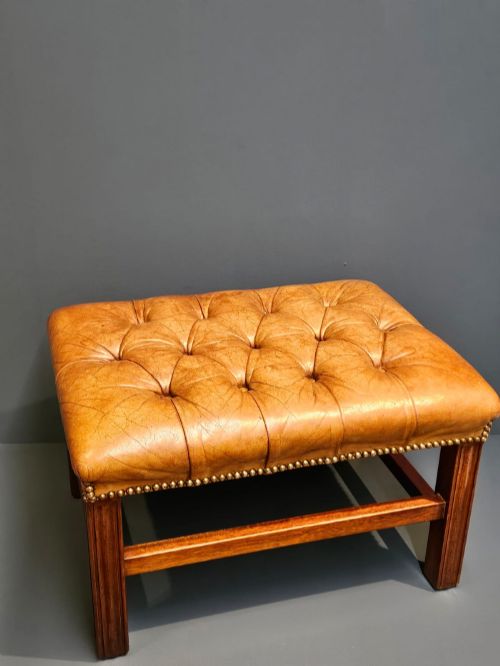
When you search for an edwardian oak footstool, you look at low timber seating designed for comfort or utility by the fireside or in the dressing room. The examples on this page span the Edwardian era alongside surrounding periods like the nineteenth century and the nineteen-twenties, showing simple domestic forms as well as more decorative styles.
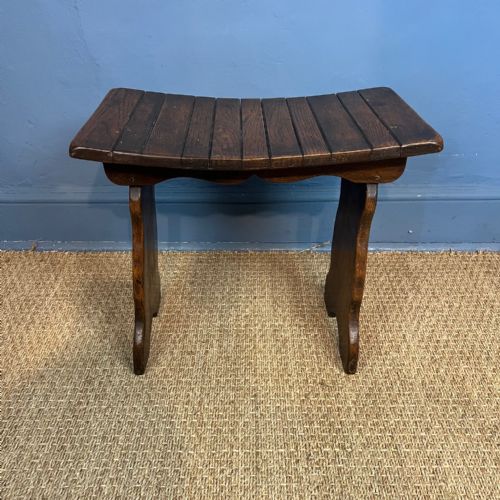
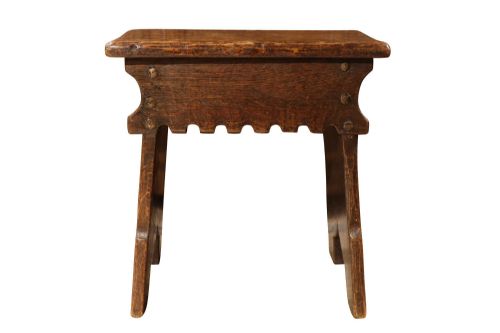
You will encounter pieces ranging from plain pegged construction and saddle seats to elaborate carved designs with lion heads or neoclassical X-frames. Forms include low stools, footstools, piano stools, and occasional slipper boxes, reflecting the varied domestic uses of oak timber furniture during the period.
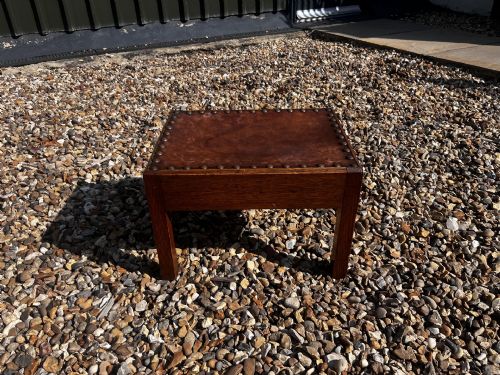
Most items on this page use solid English oak, often paired with traditional coverings such as leather, damask, or woven fabric. Their origins stretch from vernacular farmhouse stools to workshop-produced pieces associated with the Arts and Crafts movement.
Judging quality in oak footstools
Quality rests in the integrity of the timber selection and the precision of the joinery, particularly where pegged joints or structural frames meet under daily weight. Pieces originating from known workshops or exhibiting hand-carved detailing stand apart from simpler utilitarian items.
The choice and execution of upholstery materials, from supple leather to heavy damask, also define the upper tier of pieces. Proportion and balance separate a well-considered design from a purely functional box or stool.
Edwardian Oak Footstool Retail Price Guide 2026
Typical asking prices for edwardian oak footstool among the pieces listed under this phrase on Sellingantiques today, from the lower quarter to the upper quarter. They describe what is for sale here now, not the wider market.
Some stools hide their practical purpose inside storage compartments or greet guests with carved lion heads peering out from beneath the cushion.
Arthur Simpson Of Kendal·Arthur W Simpson·Simpson Kendall·James Shoolbred
The Edwardian Oak Footstool Glossary
- Pegged construction
- A method of joining timber where wooden pins secure mortise and tenon joints without relying on metal nails. This technique ensures a durable frame that withstands heavy use over decades.
- Arts and Crafts
- A design movement valuing honest construction, local materials, and hand craftsmanship over industrial mass production. It heavily influences the plain oak forms and saddle seats found in this category.
- X-frame
- A structural furniture base formed by crossing two diagonal members to support the seat. This classical shape appears on more formal or Neoclassical pieces.
- Damask
- A reversible figured fabric traditionally woven on a jacquard loom with patterns visible on both sides. It provides a formal, textured upholstery surface on period seating.
Edwardian Oak Footstool: Frequently Asked Questions
How do I spot an Edwardian oak footstool?
Look for the characteristic grain and warm tone of oak combined with the structural forms typical of the early twentieth century. Many feature straightforward pegged joinery or simple carved details rather than heavy Victorian ornamentation.
Check for period upholstery materials and construction methods that match the era's preference for functional, honest home furnishings.
Were these stools used for seating or resting feet?
These low timber pieces served both purposes depending on their specific height and top design. Some functioned as piano stools or dressing table seats, while others were built specifically as footrests by the hearth.
Their sturdy oak frames allowed them to handle daily domestic weight regardless of their primary intended function.
How should I care for an antique oak stool?
Keep the timber away from direct heat sources and sudden humidity changes to prevent the wood from splitting. Feed the oak occasionally with a suitable wax to maintain the surface sheen and protect the grain.
Protect any historic leather or fabric upholstery with gentle cleaning methods suited to the specific textile.
Can I use an antique footstool every day?
Solid oak frames are inherently robust and designed for practical use in a modern room. Most surviving pieces remain structurally sound enough for daily sitting or resting feet.
Inspect the joints periodically to ensure the pegged construction remains tight and secure under regular household loads.