





Vintage Leather Ottoman
A vintage leather ottoman grounds a room with functional grace, offering generous seating or a sturdy surface crafted from enduring materials.
Vintage Leather Ottoman
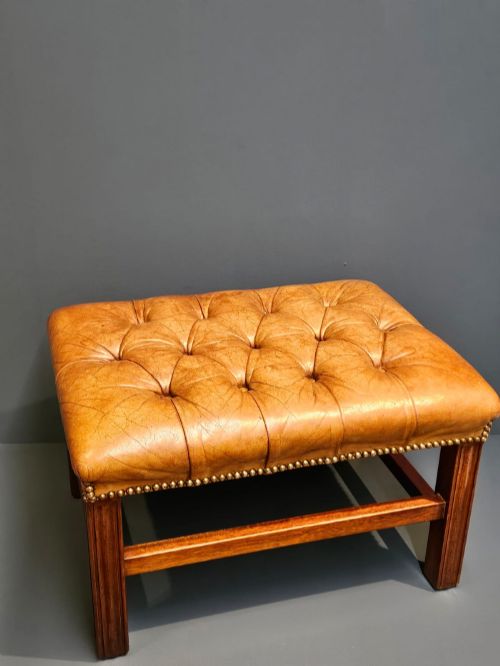
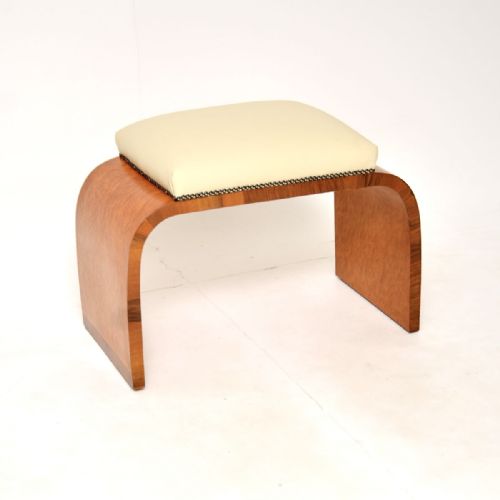
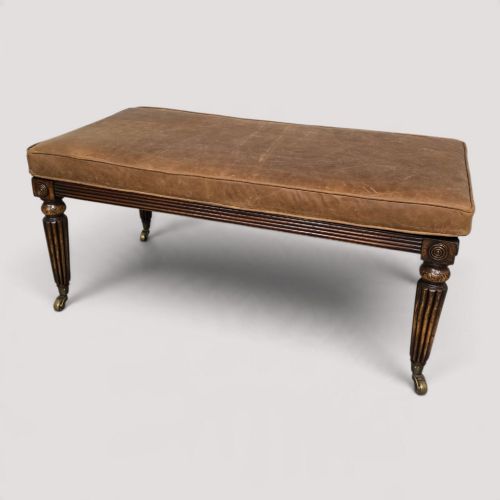
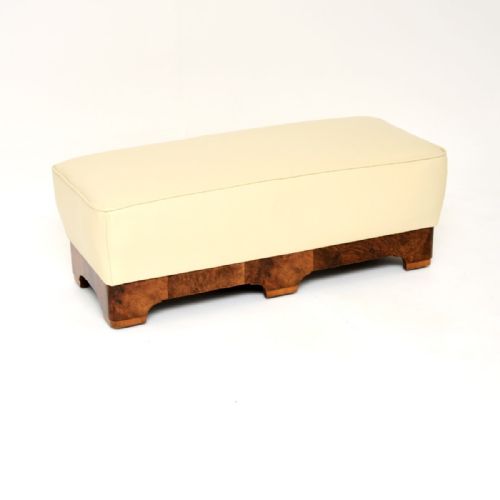
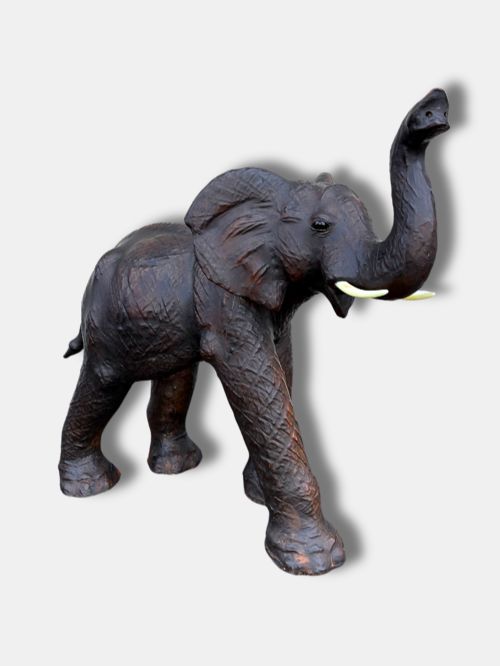
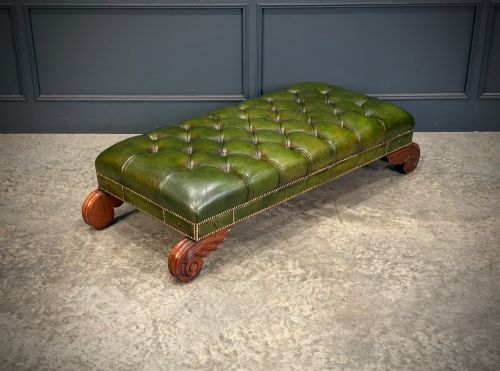
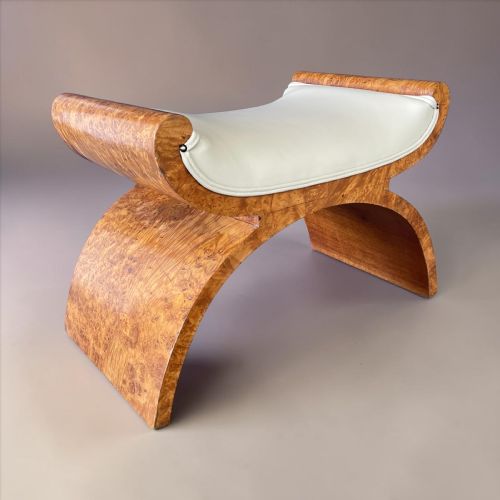
A vintage leather ottoman combines practical seating with low-profile utility, frequently taking the form of footstools, coffee table stools, or blanket boxes. When searching for a vintage leather ottoman, buyers encounter diverse iterations spanning the nineteenth century through the Art Deco period and mid-century British design. The selection ranges from buttoned Victorian centre stools to whimsical animal figures and geometric Art Deco seating.
Victorian and Edwardian examples often showcase deep buttoning, turned mahogany or walnut legs, and hand-dyed leather upholstery suited to traditional English interiors. Later pieces incorporate burr walnut, birch, and rosewood, reflecting shifting stylistic preferences across the decades. Formats vary from large country house proportions to compact metamorphic gout stools designed for specific domestic comfort.
Materials and construction
Makers utilised robust timbers such as mahogany, oak, walnut, and birch to construct the internal frames and legs of these ottomans. Hardwood supports ensure structural longevity, while decorative elements like brass detailing and carved oak or lions' heads provide ornamental finish.
Leather upholstery forms the defining surface characteristic, often hand-dyed and secured with traditional buttoning techniques over padded interiors. Cabinetmakers combined these hides with specialty woods including birds-eye maple and burr walnut veneers to achieve distinct aesthetic textures.
Vintage Leather Ottoman Retail Price Guide 2026
Typical asking prices for vintage leather ottoman among the pieces listed under this phrase on Sellingantiques today, from the lower quarter to the upper quarter. They describe what is for sale here now, not the wider market.
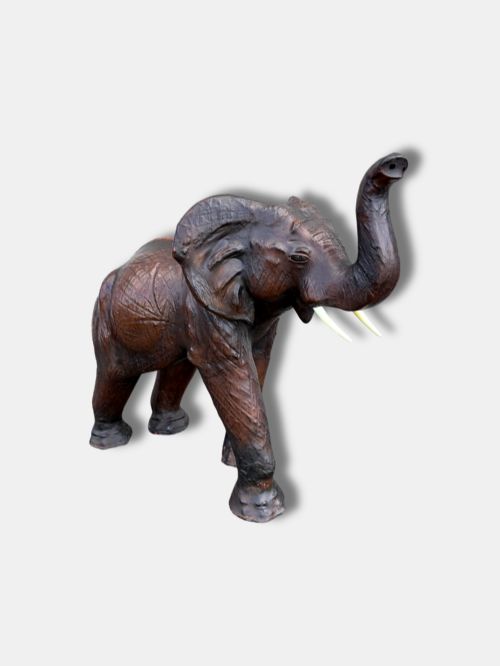
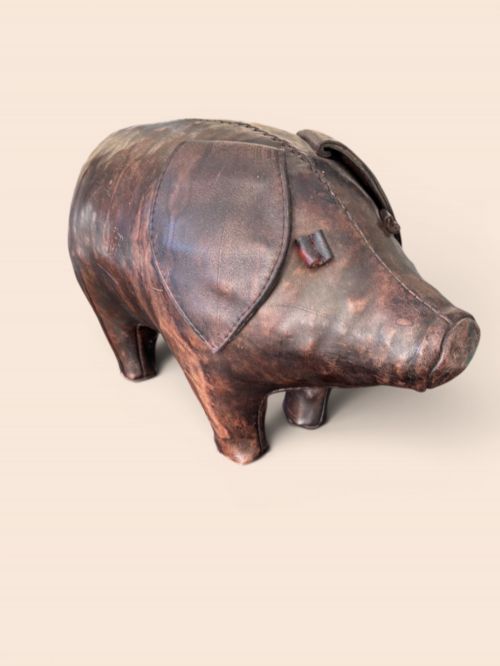
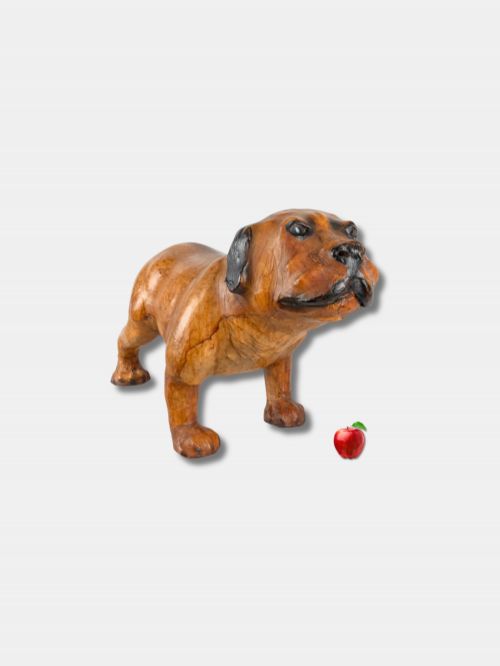
Among the seating arrangements, leather pigs and dogs stand ready to support tired feet.
Factors determining quality
The distinction between standard domestic seating and exceptional pieces rests upon the quality of the timber selection and the execution of the upholstery. Superior examples demonstrate meticulous hand-dyeing on the leather and precise execution of deep buttoning that maintains structural tension over time.
Maker attribution and material choice elevate specific pieces, particularly those incorporating desirable woods like burr walnut or rosewood paired with refined joinery. The integrity of the frame construction and the subtlety of carved wooden details separate ordinary utility stools from distinguished examples.
Harry and Lou Epstein·Omersa Workshop·Simpson Kendall·Fritz Hansen
The Vintage Leather Ottoman Glossary
- Ottoman
- A low upholstered seat or footstool without a back or arms, frequently utilised as a central coffee table alternative.
- Buttoned
- An upholstery technique where recessed buttons pull the leather tight into a diamond pattern, creating padded cushioning.
- Metamorphic
- Describing furniture designed to transform or adjust its configuration for alternative domestic functions.
- Canterbury
- A low compartmentalised stand or stool originally designed for holding sheet music or books.
- X-frame
- A structural furniture base formed by intersecting diagonal wooden members supporting the upper seat.
Vintage Leather Ottoman: Frequently Asked Questions
How do I identify a Victorian leather ottoman?
Victorian examples typically feature rich mahogany or walnut frames, deep buttoned leather upholstery, and turned wooden legs. They often present generous proportions suited to nineteenth-century country house interiors.
Craftsmanship from this era prioritises heavy hardwood construction and traditional hand-dyed finishes that develop a distinct patina over decades of use.
What materials are used in Art Deco stools?
Art Deco pieces incorporate striking decorative veneers such as burr walnut and birds-eye maple paired with smooth leather surfaces. The designs favour streamlined silhouettes and geometric forms distinct from earlier Victorian styling.
These materials reflect a shift towards modern elegance while retaining traditional cabinetmaking techniques in the underlying wood frames.
Can an ottoman double as a coffee table?
Large buttoned leather stools and ottomans frequently function as stable surfaces for trays and books alongside their primary seating role. Their sturdy hardwood frames and firm leather tops accommodate everyday domestic use.
Selecting a piece with a flat, well-padded top ensures balanced placement for household items while maintaining comfort as a footrest.
Where were novelty animal footstools made?
Makers such as Omersa produced leather animal footstools, including pigs and dogs, often retailed through establishments like Liberty's during the early twentieth century. These sculptural pieces combine humorous forms with traditional leather-working methods.
Their distinct craftsmanship makes them notable decorative items that double as functional domestic footstools.