


Edwardian Style Footstool
An Edwardian style footstool brings compact, period character to a room, offering practical comfort through traditional woods and textiles.
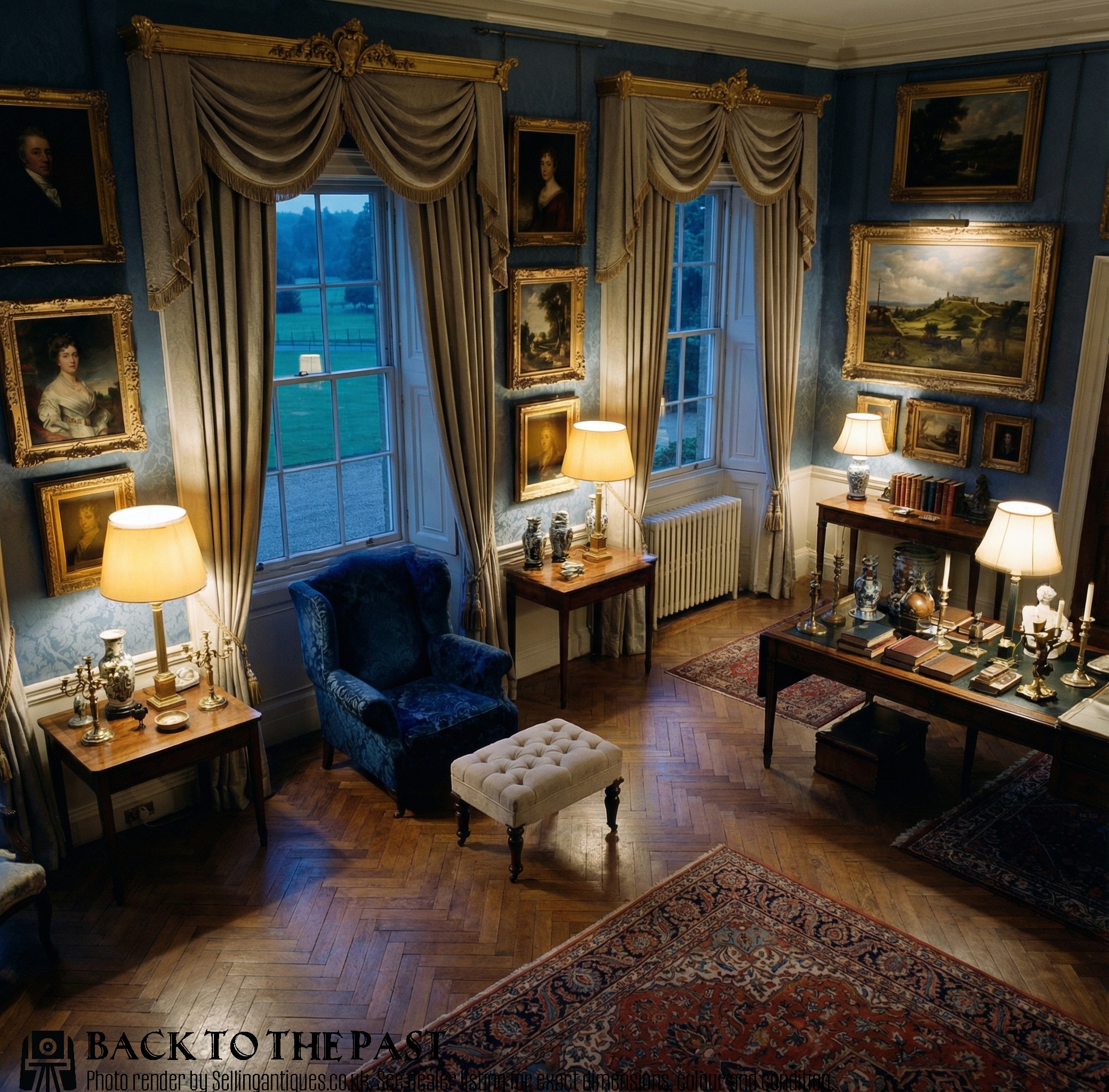
Edwardian Style Footstool
An edwardian style footstool is a low seating piece designed to support the feet or serve as a compact seat, drawing on designs from the Edwardian era and earlier historical revivals. Buyers seeking an edwardian style footstool will encounter items spanning various periods, from the nineteenth century up to the 1930s, reflecting diverse historical influences.
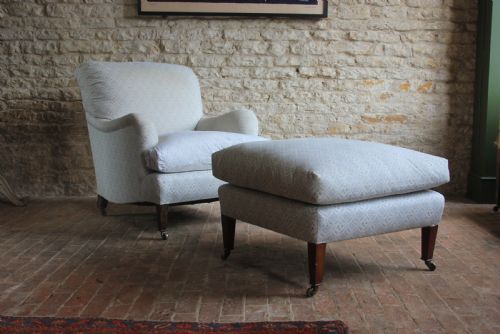
The selection ranges from simple piano stools and dressing table seats to specialised items like metamorphic gout stools and large upholstered ottomans. Common forms include rectangular, oval, and X-frame configurations, often supported by cabriole legs or brass castors.
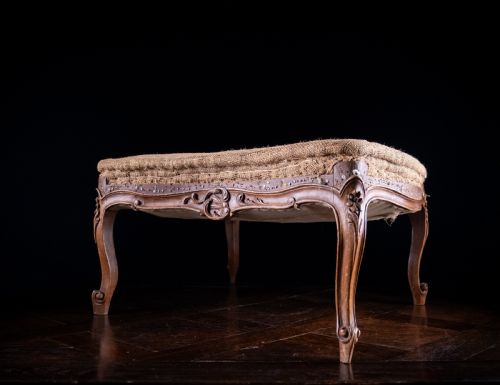
Originating across different decades, these pieces demonstrate a mix of stylistic revivals, including Chippendale, Queen Anne, Louis XV, and Arts and Crafts designs. Walnut, mahogany, and oak form the primary wooden structures, paired with diverse upholstery options.
How they were made
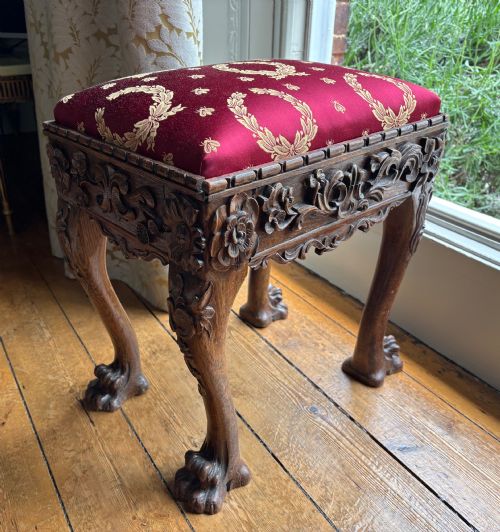
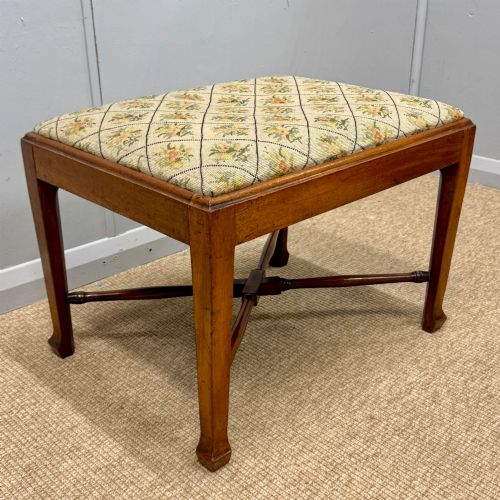
Makers utilised solid hardwoods such as mahogany, walnut, oak, beech, and occasional black lacquer to build the frames, applying hand-carved details in styles ranging from Georgian revivals to Arts and Crafts simplicity. Woodwork often incorporated cross stretchers for stability or featured intricate inlay work.
Upholstery methods involved traditional textiles including wool, tapestry, needlework, leather, fabric, red damask, and cane work. Many pieces incorporated deep buttoning or intricate needlework tops set onto sturdy wooden bases.
Functional hardware such as brass castors appeared on larger or more mobile examples, while specialised pieces like gout stools utilised adjustable wooden mechanisms for elevation.
Edwardian Style Footstool Retail Price Guide 2026
Typical asking prices for edwardian style footstool among the pieces listed under this phrase on Sellingantiques today, from the lower quarter to the upper quarter. They describe what is for sale here now, not the wider market.
A black lacquered Chinoiserie footstool brings a touch of whimsical Eastern-inspired fantasy straight to the fireside rug.
What varies in quality
The standard of timber selection and the crispness of hand-carving define the upper tier of pieces, where woods like walnut and mahogany show deep grain and precise execution. Lesser examples rely on simpler construction and plainer secondary timbers without decorative carving.
The intricacy and preservation of the upholstery elevate certain items, particularly those featuring fine needlework, tapestry, leather, or specialist treatments like Chinoiserie lacquering. Plain fabric coverings or later re-upholstery change the visual weight and historical integrity of the piece.
Structural complexity creates distinction, separating basic four-legged stools from sophisticated metamorphic designs, adjustable gout stools, or pieces with detailed cane work and cross stretchers.
Howard and Sons·Whytock and Reid
The Edwardian Style Footstool Glossary
- Gout stool
- A specialised footrest featuring an adjustable mechanism designed to elevate and support the foot. These pieces often include mechanical wooden ratchets for height alteration.
- Cabriole leg
- A furniture leg that curves out and then in, resembling an animal's leg. This form frequently terminates in scroll or pad feet on revival pieces.
- Chinoiserie
- European decorative design inspired by Chinese artistic traditions, often featuring painted lacquer finishes. Black lacquer finishes with delicate motifs represent this aesthetic.
- Cross stretcher
- Wooden rails connecting the lower legs of a stool to provide structural stability. They often intersect in an X-shape beneath the centre.
- Damask
- A reversible figured fabric woven on a jacquard loom, used for upholstery. Red damask provides a rich texture on period seating frames.
Edwardian Style Footstool: Frequently Asked Questions
What is an edwardian style footstool used for?
These pieces function primarily as low supports for resting the feet while seated in armchairs or by firesides. They also serve as auxiliary seating or dressing table stools in bedrooms and living spaces.
Their compact proportions allow them to fit easily into smaller areas where a full-sized chair might crowd the room.
Can I use an edwardian style footstool daily?
Most antique and vintage stools are constructed from solid hardwoods like oak and mahogany, making them structurally sound for everyday use. Regular care of the wooden frame and careful treatment of vintage upholstery will keep them functional.
Some delicate or decorative pieces, such as those with fine needlework or lacquer work, benefit from lighter use to preserve their surfaces.
What is a metamorphic gout stool?
A metamorphic gout stool is a specialised medical footrest featuring an adjustable mechanism that allows the user to alter the angle and elevation. These pieces were designed to support feet affected by ailments.
They combine practical mechanical wooden parts with traditional upholstery, making them distinct from standard static footrests.