






Striped Tribal Runner
A striped tribal runner brings graphic linearity and nomadic colour into a hallway, offering durable wool construction woven by village and tent-dwelling makers.
Striped Tribal Runner
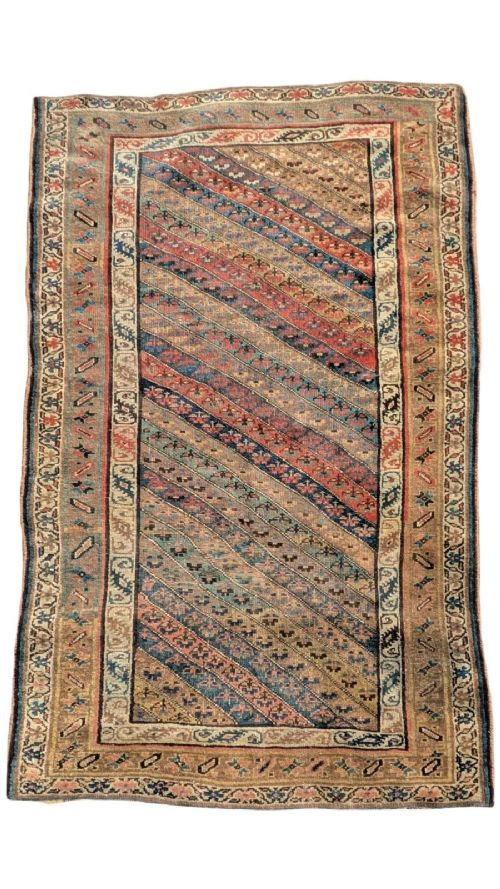
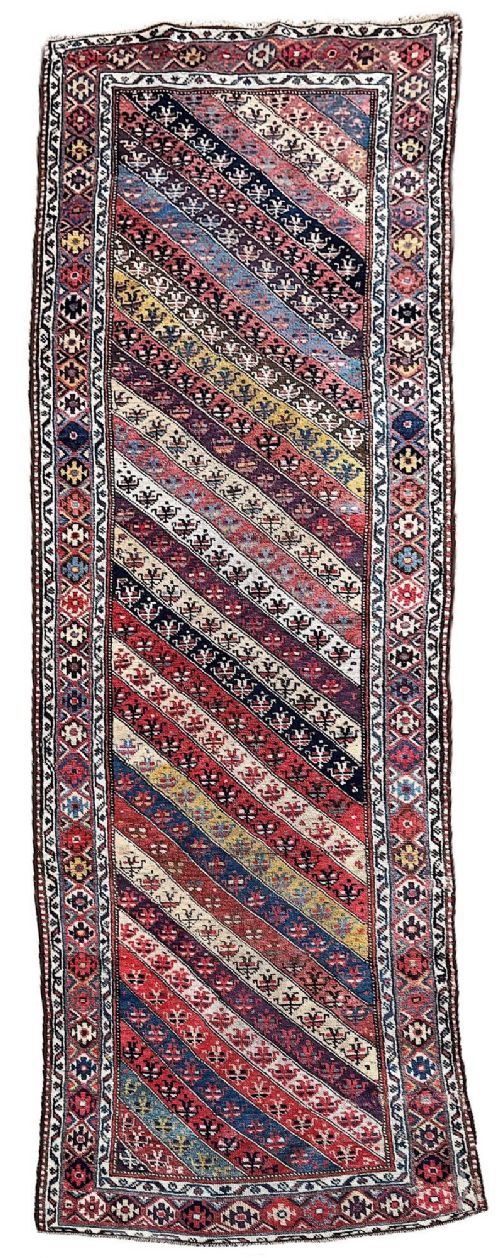
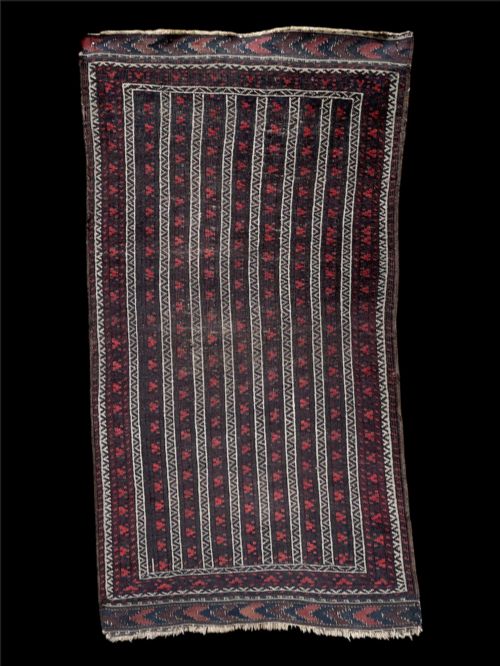
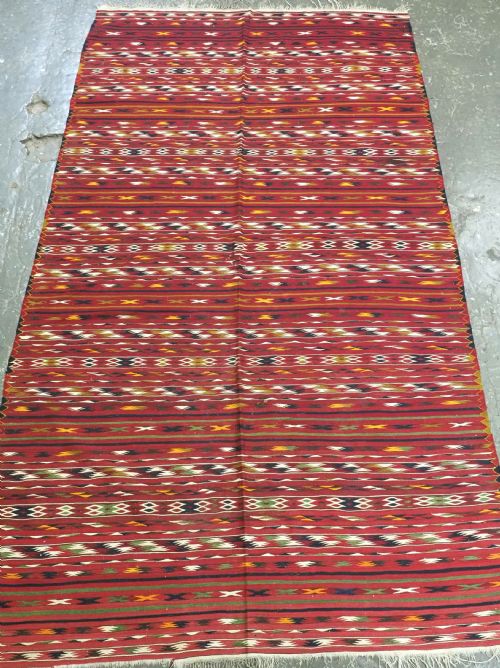
A striped tribal runner is a narrow, elongated textile featuring linear bands, geometric patterns, or diagonal stripes created by weaving traditions from the Caucasus, Persia, and Central Asia. These pieces originate from nomadic and village workshops spanning the late nineteenth and early twentieth centuries, including regions associated with Caucasian, Baluch, and Uzbek groups.
The format typically manifests as runner rugs, flat-woven kilims, and long rugs designed for high-traffic corridors and narrow spaces. Most examples rely on bold graphic layouts, banded designs, and repeated boteh motifs rather than complex floral medallions.
The selection here encompasses nineteenth-century formats alongside items from the 1900s and 1910s, capturing authentic tribal weaving before mid-century commercial standardisation.
Materials and construction
These textiles employ hand-spun wool and occasional camel hair foundation materials, paired with cotton where structural reinforcement is needed. Natural dyes provide the underlying palette, yielding rich tones that age with harmonious patination.
Weaving techniques range from standard pile rug knotting to flat-weave kilim construction and specialised methods like the cicim technique. Individual panels are occasionally joined or repurposed, such as mafrash side panels transformed into compact flat-weaves.
Listings span from the 1870s to the 1920s, utilising hand-spun wool, natural dyes, and camel hair across Caucasian, Persian, and Central Asian tribal traditions.
Evaluating the weaving
Quality rests in the precision of the handle, the tightness of the weave, and the saturation of the natural dyes. Denser knotting or finer flat-weave execution produces a crisp graphic boundary along linear bands and chevron layouts.
Artistic expression distinguishes individual pieces, seen in the confidence of tribal motifs and the balance of contrasting stripe proportions. Original edge finishes and intact dimensions contribute significantly to the structural integrity of the piece.
The Striped Tribal Runner Glossary
- Kilim
- A flat-woven carpet or rug produced without a pile by tightly interweaving warp and weft strands. This technique creates a lightweight, reversible textile with sharp geometric motifs.
- Sofreh
- A specialised dining or spread kilim used traditionally for serving meals or processing grain in nomadic households. These items frequently display minimalist banded or linear compositions.
- Mafrash
- A storage bag or transport chest face woven by tribal groups, often dismantled later to form small flat-weaves or panels. They showcase concentrated geometric ornamentation.
- Boteh
- A stylized floral or almond-shaped motif representing a sprouting bush or cypress tree. It appears frequently in repeating rows or diagonal striped alignments.
- Cicim
- An embroidered supplementary weft-float technique that adds raised geometric patterns onto a plain-weave foundation. This method introduces tactile texture to flat-woven surfaces.
Striped Tribal Runner: Frequently Asked Questions
Where were these runners used?
Nomadic and village weavers produced these textiles for domestic flooring, tent interiors, and functional utility within tribal households across the Caucasus, Persia, and Central Asia.
Today, their elongated proportions suit modern hallways, corridors, and narrow architectural spaces where linear rugs provide both warmth and directional flow.
How do I care for my rug?
Gentle regular vacuuming without a rotating power brush protects the hand-spun wool fibres and prevents structural stress along the flat-woven edges.
Professional specialist cleaning preserves the natural dyes and prevents colour bleeding or shrinkage in antique wool and cotton textiles.
What is a flat-weave?
A flat-weave lacks the raised pile of a standard carpet, constructed instead by tightly interlocking horizontal weft threads across vertical warp strings.
This method produces a thin, reversible textile with clean geometric lines, ideal for high-traffic walkways.
How are periods dated?
Dating relies on structural analysis, examining the specific natural dye palette, wool preparation methods, and traditional tribal weaving designs recorded from the nineteenth and early twentieth centuries.
Variations in primitive tooling and regional motifs help place items securely between the 1870s and the 1920s.