
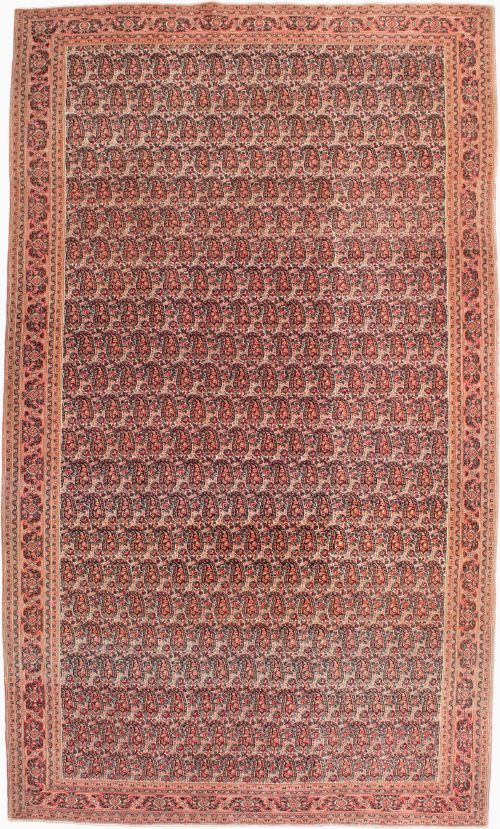
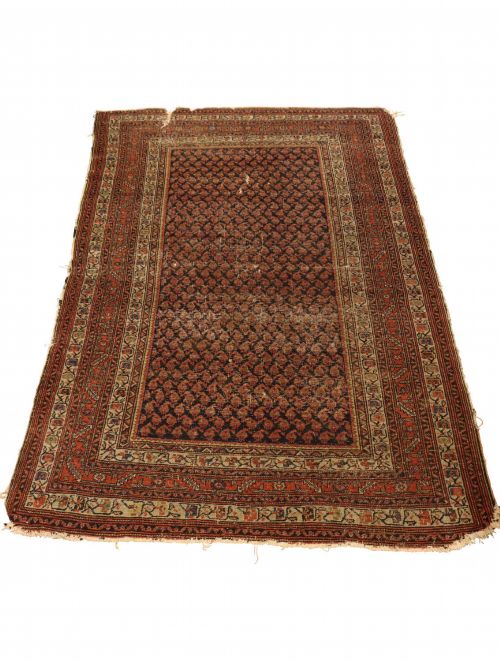


Antique Paisley Rug
An antique paisley rug brings centuries of woven heritage into a room through the enduring motif of the teardrop-shaped botanical emblem.
Antique Paisley Rug
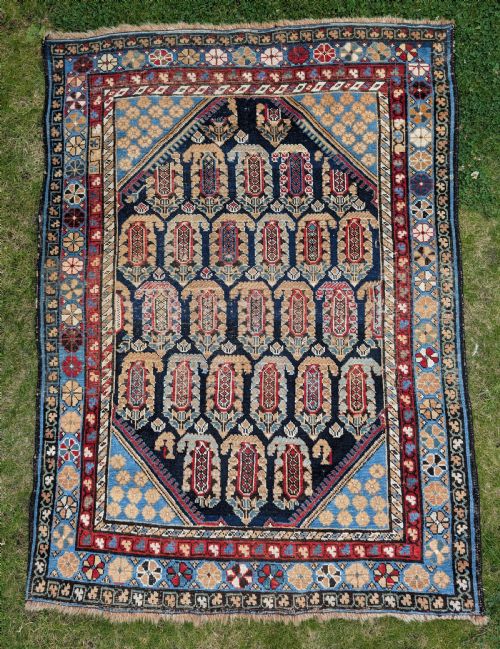
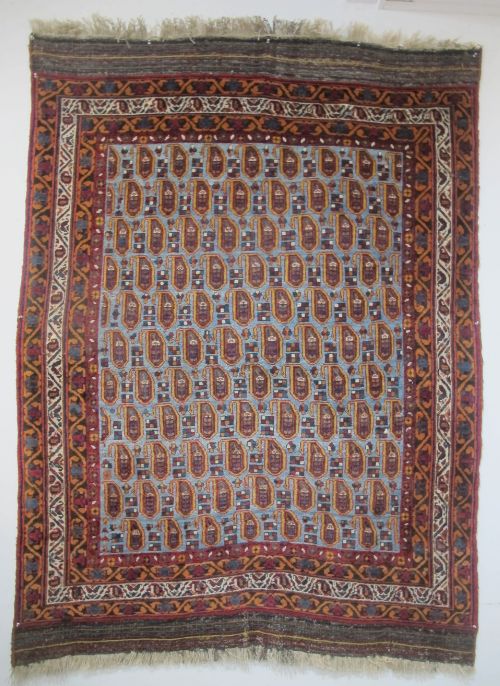
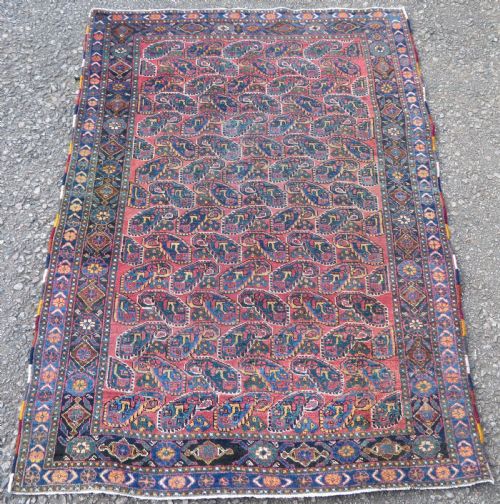
When searching for an antique paisley rug, collectors encounter floor coverings and textiles that prominently display the distinct almond-shaped or pine-cone-like motif known traditionally as the boteh. These textiles span various geographical origins and formats, including room-sized carpets, long runners, and smaller village or tribal rugs from the nineteenth and early twentieth centuries.
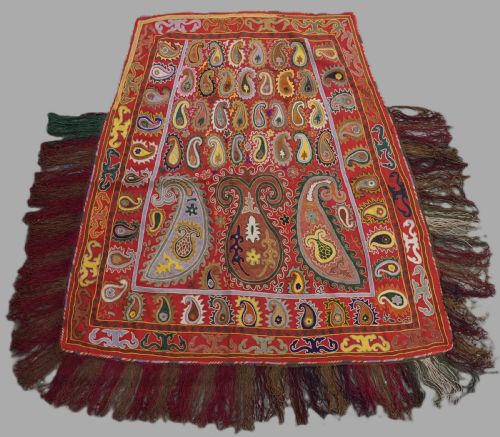
The selections available on this page reflect diverse regional weaving traditions originating primarily from Persia and the Caucasus, alongside related embroidered textiles from Central Asia and India. Many pieces integrate the boteh motif within overall field designs, repeat patterns, or striped formats, executed across different weaving and needlework techniques.
The production dates for these floor coverings and textiles generally cluster around the late nineteenth century and the early decades of the twentieth century. Dating is drawn from specific stylistic traits, regional dyeing methods, and structural characteristics typical of traditional workshops and nomadic tribes of those eras.
What varies in quality
Quality in these woven and embroidered works is determined by the precision of the execution and the fineness of the materials selected. Tighter knot counts in knotted carpets and finer needlework in embroidered covers demonstrate greater artisan skill and time investment.
The clarity and balance of the design layout significantly influence the standing of an individual piece. Balanced proportions within the boteh motifs and harmonious colour distribution across the field indicate superior workshop or tribal execution.
Listings span production dates from the 1870s through the 1930s, featuring knotted wool rugs and embroidered felt textiles.
The Antique Paisley Rug Glossary
- Boteh
- A stylised teardrop, almond or pine-cone shaped motif of Persian origin that forms the defining design element of paisley patterns. This ancient symbol represents a floral spray, cypress tree or flame.
- Knot count
- The density of individual knots tied per square unit within a woven carpet. Higher counts generally permit greater intricacy and sharper definition in curved motifs like the boteh.
- Warp
- The stationary longitudinal threads stretched across a loom upon which the vertical structure of a rug is built. Wefts are then interwoven across these foundational threads.
- Appliqué
- A needlework technique where pieces of fabric, such as silk or felt, are sewn onto a larger background ground material to build up a decorative design. This method appears frequently in regional embroidery.
- Runner
- A long, narrow format of carpet or rug designed specifically for corridors, hallways or staircases. These pieces often feature repeating geometric or boteh patterns suited to linear spaces.
Antique Paisley Rug: Frequently Asked Questions
What is a boteh design?
The boteh is an ancient Persian motif resembling a twisted teardrop, leaf, or palm shoot. It serves as the primary visual element in paisley patterns and appears extensively in regional weaving.
Weavers rendered this shape in numerous variations, from stiff geometric forms to curving, floral-filled interpretations across different tribal and village traditions.
Where were these rugs made?
These textiles originate primarily from historic weaving centres in Persia, the Caucasus, and surrounding regions including Uzbekistan and India. Each area developed distinct structural and artistic traditions.
Village workshops, nomadic tribes, and urban manufactories all contributed specific regional aesthetics, colour palettes, and knotting techniques to the surviving examples.
How do I care for an antique rug?
Maintaining an older woven or embroidered textile requires gentle handling and protection from direct sunlight and excessive moisture. Regular light vacuuming without a rotating brush helps remove accumulated dust.
Professional cleaning tailored to antique wool and silk textiles should be utilised periodically to preserve the integrity of the natural fibres and dyes.
What materials were used?
The primary material is natural wool, used for both the pile and the foundational structure of most knotted carpets. Cotton and silk also appear frequently in foundations and pile work.
Certain regional textiles incorporate alternative grounds such as woven felt or velvet, decorated with silk embroidery and appliqué work rather than a knotted pile.
How are ages determined?
Age is assessed through structural analysis, examination of materials, and comparison of design motifs against known historical examples from specific weaving regions. Stylistic shifts in colour usage also provide clues.
Expert evaluation considers knotting style, wear patterns, and dye characteristics to place pieces within broad periods such as the late nineteenth or early twentieth century.