





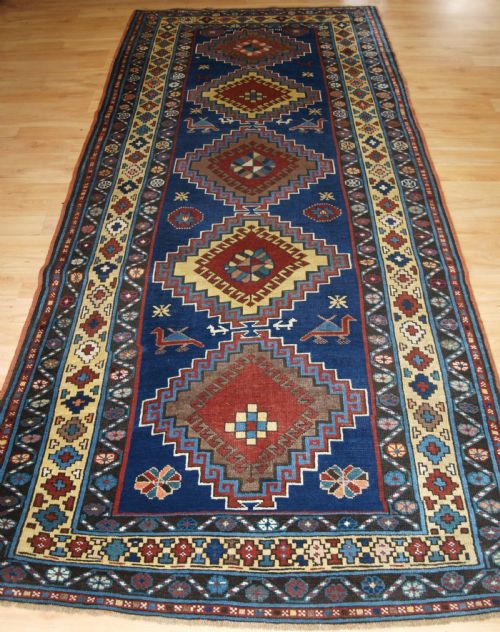
Antique Kazak Long Rug
An antique kazak long rug brings bold Caucasian geometry and deep saturated dyes into a hallway or living space.
Antique Kazak Long Rug
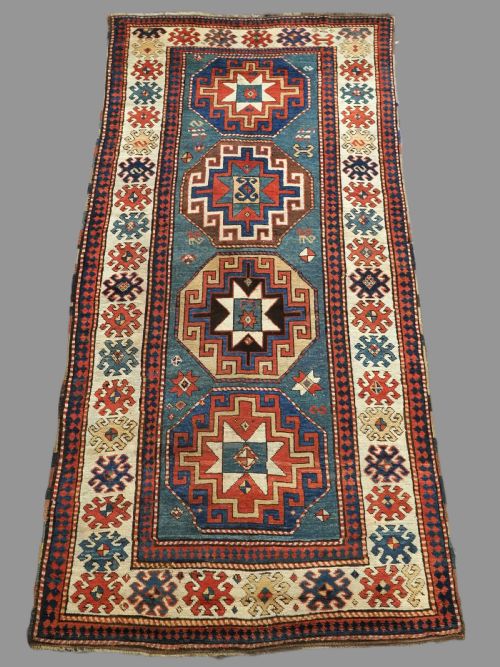
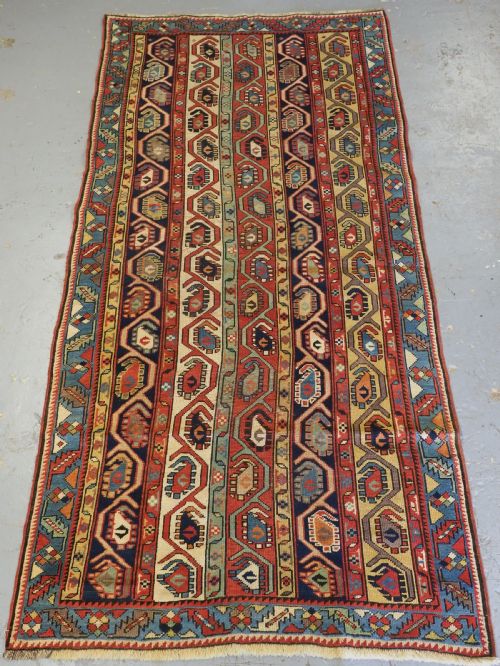
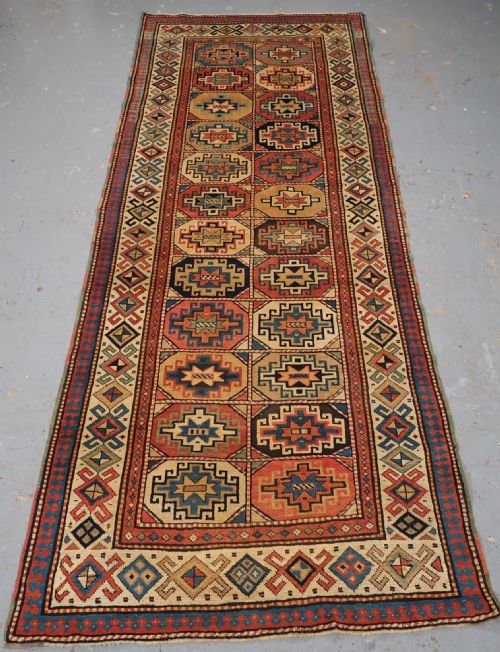
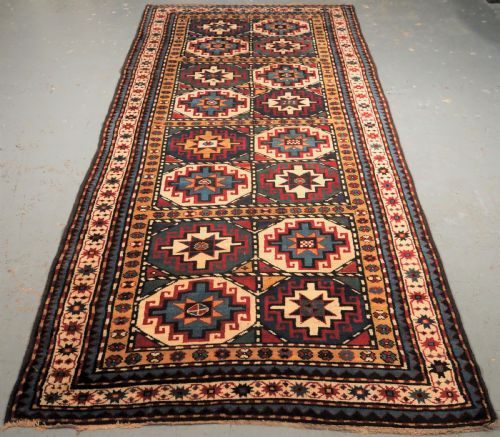
These floor coverings emerge from the Caucasus region, taking the form of elongated runners and narrow carpets designed for corridors and extended spaces. An antique kazak long rug typically displays striking tribal motifs, including hooked medallions, memling guls, and floral lattice patterns woven by village weavers.
The format accommodates narrow architectural spaces while delivering the visual weight of a much larger carpet. Surviving examples span the latter half of the nineteenth century and the opening years of the twentieth century, bridging traditional regional weaving and collectible antiquity.
Materials and construction
Every piece in this tradition relies entirely on wool, utilised for both the foundation warp and weft threads and the plush surface pile. The natural fibre takes dye deeply, producing the characteristic soft yet saturated hues recorded across nineteenth-century examples.
Weavers knot the pile by hand onto the vertical loom, creating a durable structure designed to withstand heavy domestic traffic. The resulting long glossy pile contributes both physical resilience and a rich play of light across the surface pattern.
Some weavers cleverly hid tiny stray tufts of differently coloured wool within the border, a charming reminder of human hands at the loom.
Factors of distinction
Visual impact relies heavily on the depth and saturation of the natural dyes, where certain tones achieve greater vibrancy and complexity. The precision and variety of the geometric drawing, from diagonal stripes to repeat medallion designs, set individual pieces apart.
Preservation of the original pile length and structural integrity directly influences the standing of a textile. Examples maintaining a full, glossy coat alongside intact ends and selvedges represent the pinnacle of surviving production.
The Antique Kazak Long Rug Glossary
- Kazak
- A designation for rugs woven in the southwestern region of the Caucasus, known for bold geometric patterns and primary colours. These pieces often feature large medallions and rectilinear motifs.
- Gendje
- A sub-type of Caucasian weaving frequently associated with diagonal stripes or intricate floral lattice designs. These patterns offer a structured alternative to larger medallion layouts.
- Moghan
- A specific design grouping within Caucasian textiles, often characterised by repeated octagonal motifs or hooked medallion structures. The style provides a strong sense of rhythm along the length of a runner.
- Boteh
- A stylised almond or pear-shaped motif representing a sprouting floral spray or cypress tree. This ancient symbol appears frequently in repeating rows across regional runner formats.
- Memling gul
- An octagonal gul motif featuring hooked appendages projecting from the central polygon. Named after the fifteenth-century painter who depicted similar Anatolian carpets, this tribal design anchors many field compositions.
Antique Kazak Long Rug: Frequently Asked Questions
Where should I place an antique kazak long rug?
The narrow proportions of these textiles make them well suited for hallways, corridors, and gallery spaces where standard rectangular carpets fail to fit. They also function effectively alongside long dining tables or flanking a bed.
Positioning the runner away from direct, harsh sunlight preserves the saturated wool dyes. Allowing adequate walking space around the edges protects the hand-knotted structure from excessive wear.
How do I care for wool pile runners?
Routine maintenance involves gentle vacuuming without a rotating brush bar to prevent snagging the hand-knotted pile. Professional cleaning should be undertaken sparingly by specialists familiar with antique village textiles.
Placing a breathable underlay beneath the runner prevents slipping and cushions the wool against hard flooring. This simple addition reduces friction between the foundation threads and the floorboards below.
What defines a Gendje or Moghan kazak?
These designations refer to specific design traditions and weaving sub-groups within the broader Caucasian category. Gendje pieces frequently display diagonal stripes or structured lattices, whereas Moghan examples often incorporate repeating hooked medallions or distinct guls.
Recognising these subtypes helps collectors identify regional variations in layout and palette. Each designation reflects the particular aesthetic preferences of the village communities crafting the textiles.
How are different periods identified?
Dating relies on assessing the nuances of natural dye palettes, wool quality, and the specific structural characteristics of the foundation. Pieces from the mid-nineteenth century often display a particularly deep, glossy pile and complex abrash.
Later examples shifting towards the turn of the twentieth century may introduce slightly altered proportions or modified border arrangements. Comparing motif execution against dated comparative examples refines the attribution.