




Boteh Pattern Runner
A boteh pattern runner delivers tribal geometry and signature seed or almond motifs along narrow hallway floors with enduring historic character.
Boteh Pattern Runner
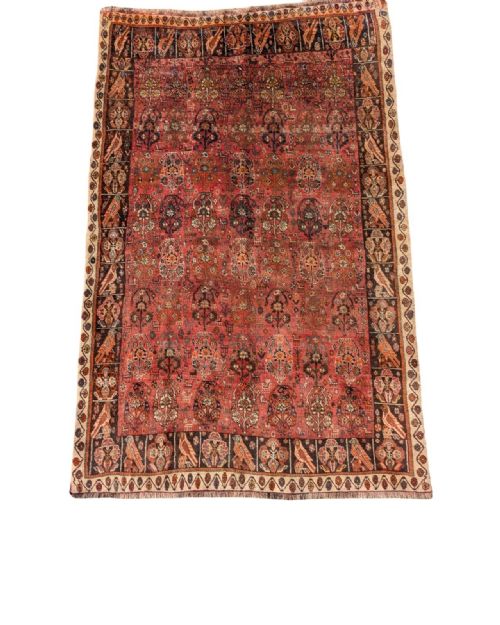
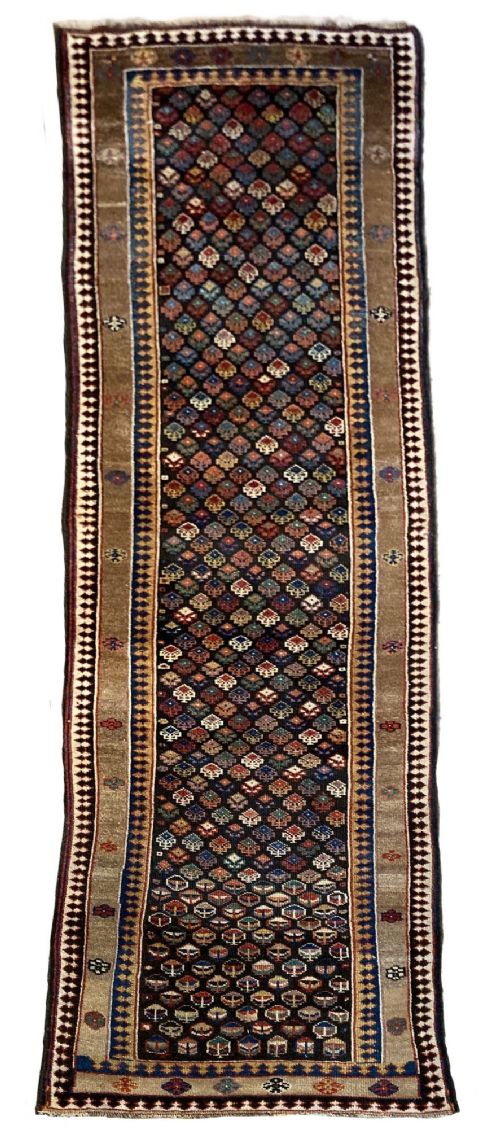
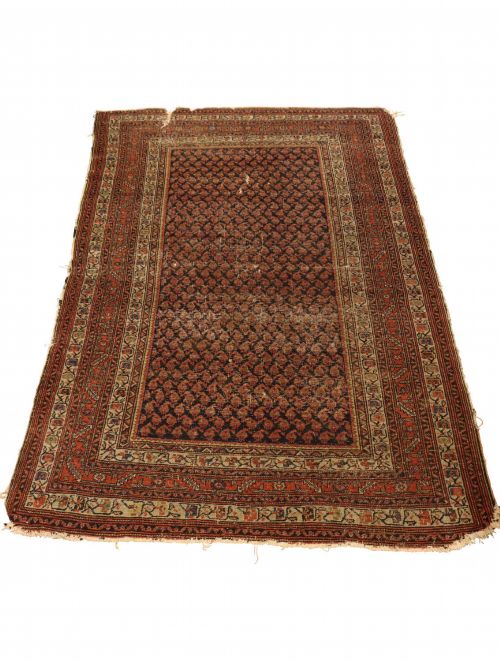
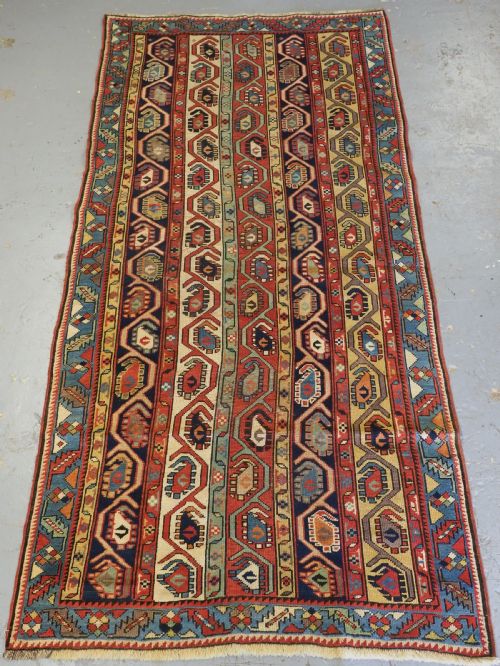
A boteh pattern runner brings elongated format weaving to narrow spaces, deploying repeating paisley or almond motifs across the field. Buyers examine these pieces for historical floor coverings originating from Caucasian and Persian weaving traditions.
The selection centres on nineteenth and early twentieth century examples, spanning periods from eighteen eighty to nineteen thirty. Runners and long formats dominate, featuring regional designs associated with Kurdish, Caucasian, and Afshar makers.
Pieces frequently display regional stylistic traits such as diagonal rows, all-over layouts, or striped arrangements of the motif. Geometric borders frame the central field, maintaining the traditional composition expected in tribal and village weaving.
Assessing quality in regional runners
Quality rests in the precision of the knotting and the complexity of the design layout. Finer density allows sharper definition of the boteh motif within the geometric field.
The depth and variation of natural dyes distinguish superior examples. Balanced proportions in the runner format and well-preserved borders complete the markers of higher grade weaving.
Weavers occasionally pointed individual boteh motifs in opposing directions, introducing subtle asymmetry into rigid geometric rows.
The Boteh Pattern Runner Glossary
- Boteh
- A stylised teardrop, almond, or paisley motif representing a floral spray or cypress tree. This ancient symbol appears singly, in rows, or covering the entire field of oriental carpets.
- Runner
- A long, narrow carpet format designed for corridors, hallways, and stairs. These pieces measure significantly longer than they are wide.
- Natural Dyes
- Colourants derived from plant, insect, and mineral sources prior to the invention of synthetic aniline dyes. They produce complex, ageing patinas that collectors prize.
- Hand-Knotted
- A construction technique where individual tufts of wool are tied by hand around the warp threads. This method creates a dense pile characteristic of traditional village rugs.
- Caucasian
- Pertaining to rugs woven in the Caucasus region, known for bold geometric patterns and vibrant palettes. These pieces often feature sharp, angular interpretations of traditional motifs.
Boteh Pattern Runner: Frequently Asked Questions
Where should I place a runner?
Runners suit narrow spaces such as hallways, corridors, and bedside areas where floor coverage requires an elongated format. Their proportions guide movement and protect high-traffic wooden boards.
Ensure the dimensions match your floor space, leaving a clear margin of exposed flooring around the perimeter of the rug.
How do I clean an antique runner?
Professional cleaning suited to antique wool textiles remains essential for removing embedded grit without damaging natural dyes. Regular gentle vacuuming without a rotating brush bar maintains surface cleanliness.
Avoid chemical spot treatments or excessive moisture, which can weaken natural fibres and cause dye bleeding.
What is a boteh motif?
The boteh is a repeating teardrop or almond shape found across Persian and Caucasian weaving traditions. It symbolises life and eternity through its stylised floral origins.
Makers arrange the motif in rows, diagonals, or all-over patterns across the field of the rug.
How do I date these rugs?
Dating relies on structural analysis, wool quality, and the specific chemical composition of natural dyes. Stylistic indicators within the border and field design also point to distinct production periods.
Comparative study of regional weaving centres helps narrow the era of manufacture.