
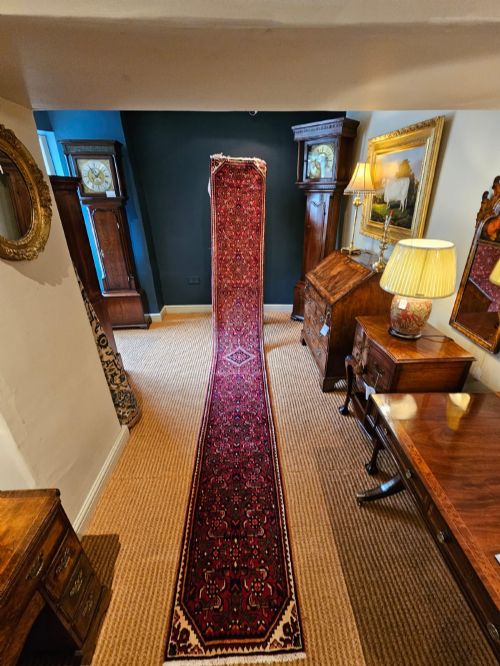
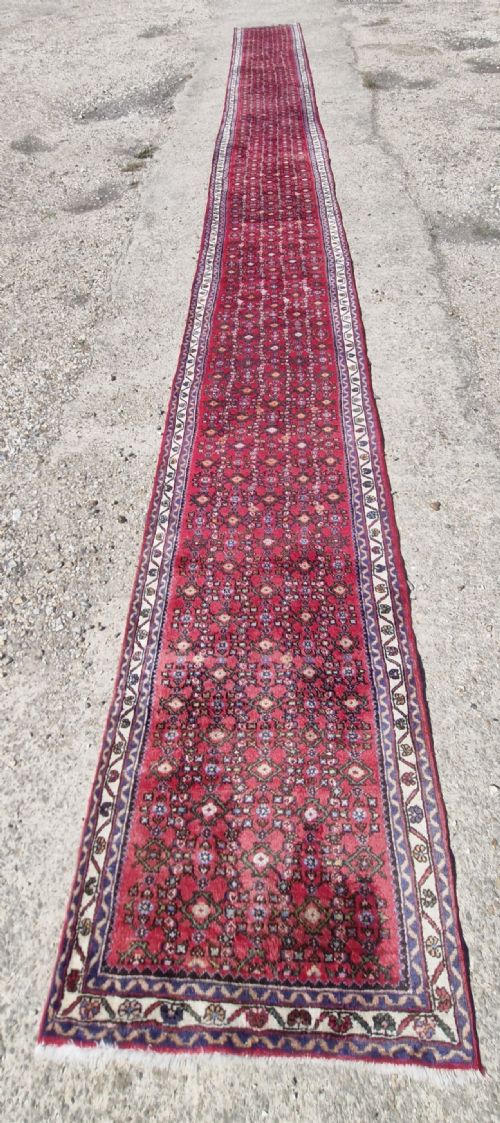
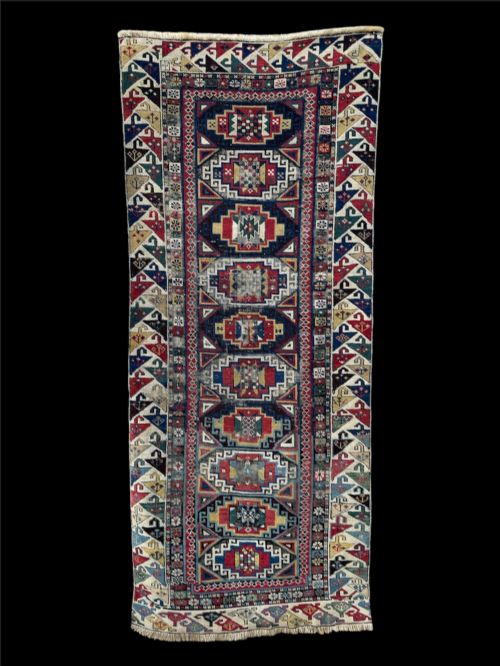
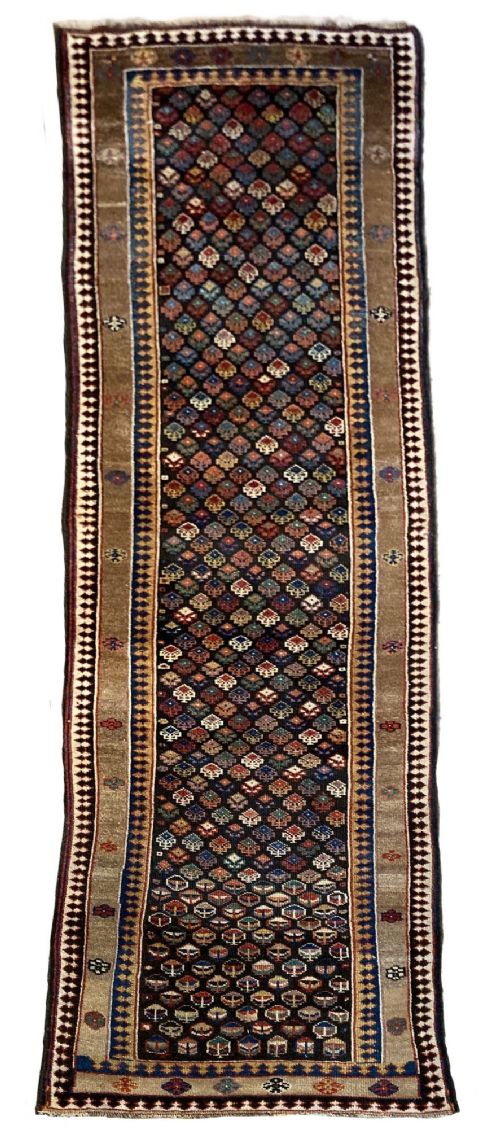
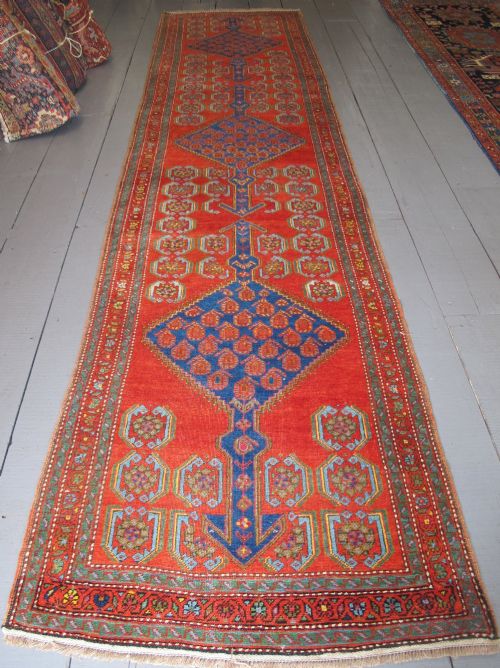


Antique Hall Runner
An antique hall runner brings immediate character and grounding to a narrow space through weathered dyes and tribal geometry.
Antique Hall Runner
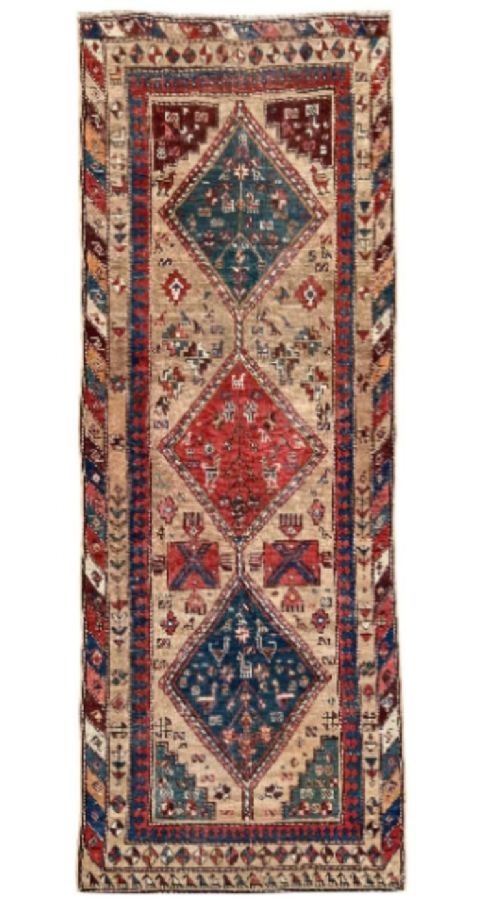
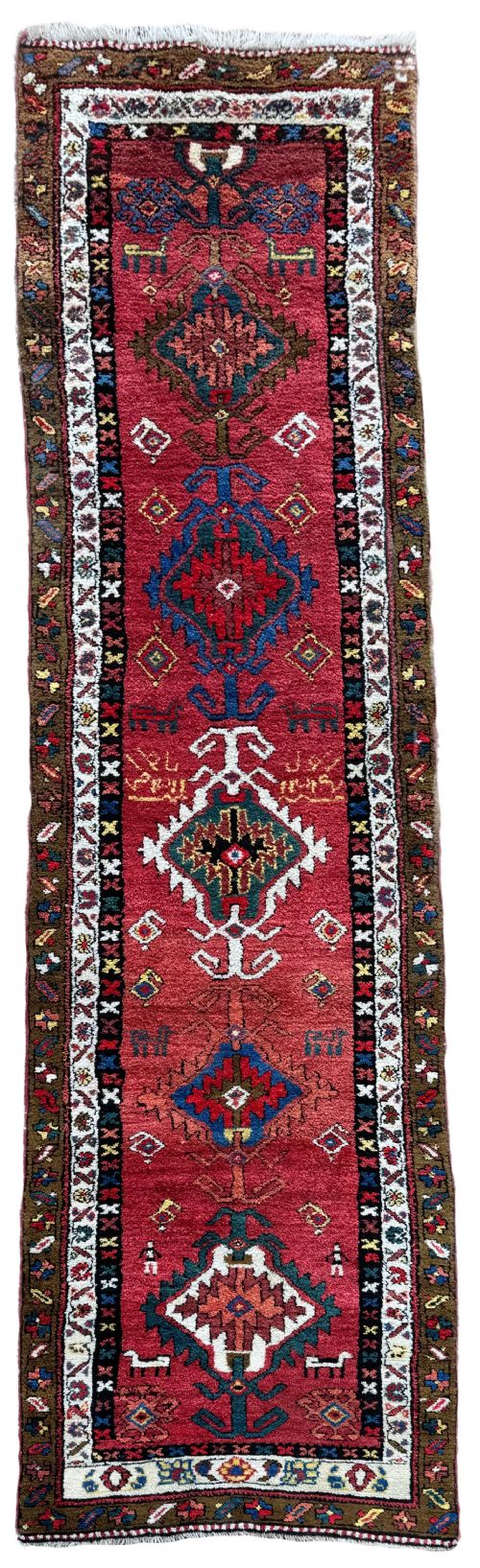
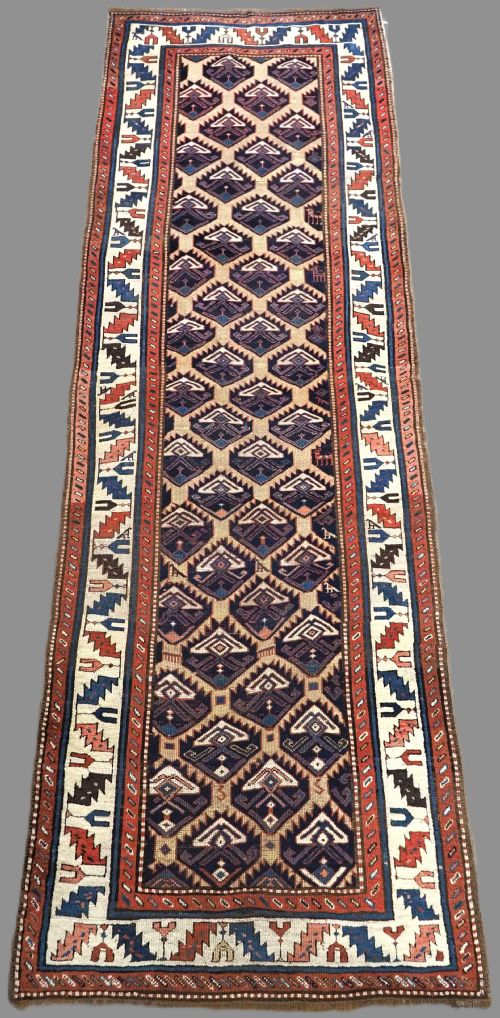
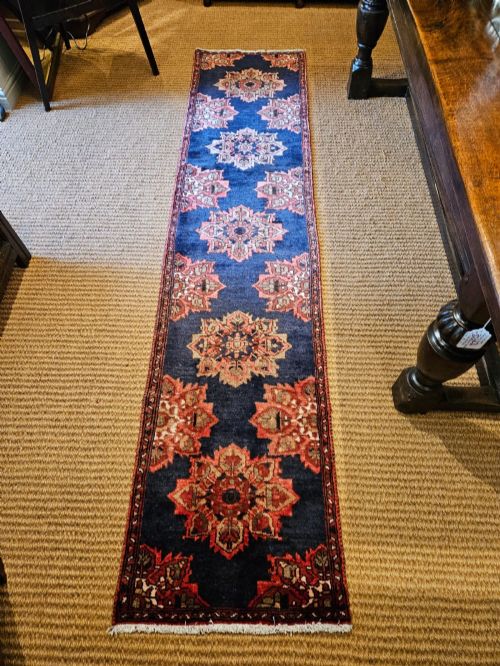
An antique hall runner is a long, narrow carpet designed specifically for corridors, hallways, and transitional spaces within a home. The pieces found here span the late nineteenth century and early twentieth century, originating from weaving traditions across the Caucasus and Persia. Buyers encountering this selection will find tribal and village rugs such as Bakshaish, Kurdish, Talysh, Karabagh, and Kazak examples.
These formats naturally suit narrow architectural layouts due to their elongated proportions, which often measure over three metres in length while remaining under a metre in width. The designs draw upon regional motifs, including boteh patterns, geometric medallions, and European influences adapted by local weavers. Each runner reflects the specific heritage of the nomadic or village communities that produced them.
Materials and Construction
The construction relies on traditional hand-spun wool for the pile and foundation, occasionally paired with cotton elements in specific regional types. Weavers utilised natural dyes to achieve deep tones and soft secondary shades that age gracefully over generations. The resulting textiles combine dense knotting with flexible wool foundations designed to withstand heavy foot traffic.
Antique Hall Runner Retail Price Guide 2026
Typical asking prices for hall runner among the pieces listed under this phrase on Sellingantiques today, from the lower quarter to the upper quarter. They describe what is for sale here now, not the wider market.
Listings feature nineteenth-century and early twentieth-century origins, spanning 1850 through 1910.
What Separates Examples
The distinction between standard and exceptional pieces rests upon the finesse of the design execution and the depth of the palette. Superior runners display harmonious proportions, balanced borders, and complex tribal motifs rendered with clarity and precision. The quality of the wool and the vibrancy or subtlety of the natural dyes further elevate an example.
Condition and integrity also define the upper tier, noting that uniform pile wear differs from structural degradation. Pieces retaining their original selvedges and complete end finishes demonstrate superior preservation. The artistic character of regional attribution, such as a well-drawn Talysh or an expressive Kazak design, commands particular attention.
The Antique Hall Runner Glossary
- Boteh
- A traditional almond or paisley shaped motif representing a seed, floral spray, or flame, frequently found in Persian and Caucasian weaving. This ancient symbol appears across numerous regional styles.
- Kilim
- A flatwoven textile produced without a pile, used both as a standalone rug and as a technique for the ends of knotted carpets. These pieces offer a sleek profile on the floor.
- Selvedge
- The reinforced side edges of a rug formed by wrapping the warp threads, protecting the carpet from fraying. Original selvedges indicate careful preservation.
- Pile
- The upright surface of yarn that forms the soft texture of a knotted carpet, created by tying individual knots around the warp threads. Wool pile provides warmth and durability.
- Warp
- The stationary vertical threads stretched onto a loom that form the structural backbone of the rug. The foundation supports the entire knotted design.
Antique Hall Runner: Frequently Asked Questions
How do I measure for a hall runner?
Measure the clear floor space of your corridor, leaving an even border of exposed wood or tile around the perimeter of the rug. Ensure doors can swing freely over the thickness of the pile without catching.
Account for radiators, baseboards, and entry points when determining the maximum length and width. A well-proportioned runner leaves adequate flooring visible at both ends of the hallway.
Are these runners durable enough for everyday use?
These carpets were constructed by nomadic and village weavers using robust hand-spun wool designed for heavy domestic traffic. The dense natural fibres withstand regular walking while maintaining their structural flexibility.
Placing an appropriate underlay beneath the runner prevents slipping and cushions the wool against hard subfloors. Routine gentle care ensures the antique materials endure for decades of daily life.
How do I identify a Caucasian runner?
Caucasian runners typically feature bold geometric medallions, stark primary colours, and angular motifs rather than curved floral patterns. Regional subgroups like Kazak or Talysh display distinct border arrangements and colour palettes.
The wool handling and structural characteristics often point to specific Caucasian weaving centres. Comparing the knotting structure and secondary colours helps confirm the regional origin.
What is the difference between Persian and Caucasian rugs?
Persian weaving frequently incorporates curvilinear floral designs, intricate medallion systems, and refined botanical details influenced by workshop traditions. Tribal Persian pieces, such as Kurdish or Bakshaish work, bridge this with geometric village interpretations.
Caucasian carpets lean towards sharper geometry, primary palettes, and stylized animal or plant forms. Each tradition reflects the specific cultural landscape of its makers.