


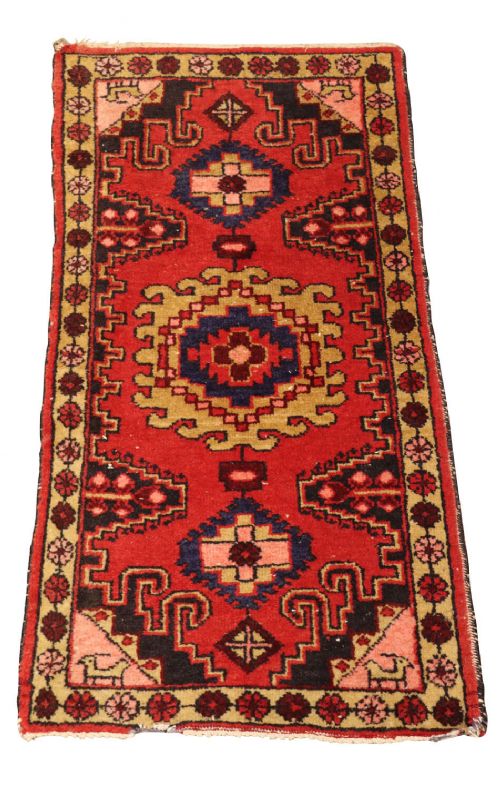


19th Century Runner
Discover a 19th century runner to anchor a hallway with authentic tribal motifs and rich historical depth.
19th Century Runner
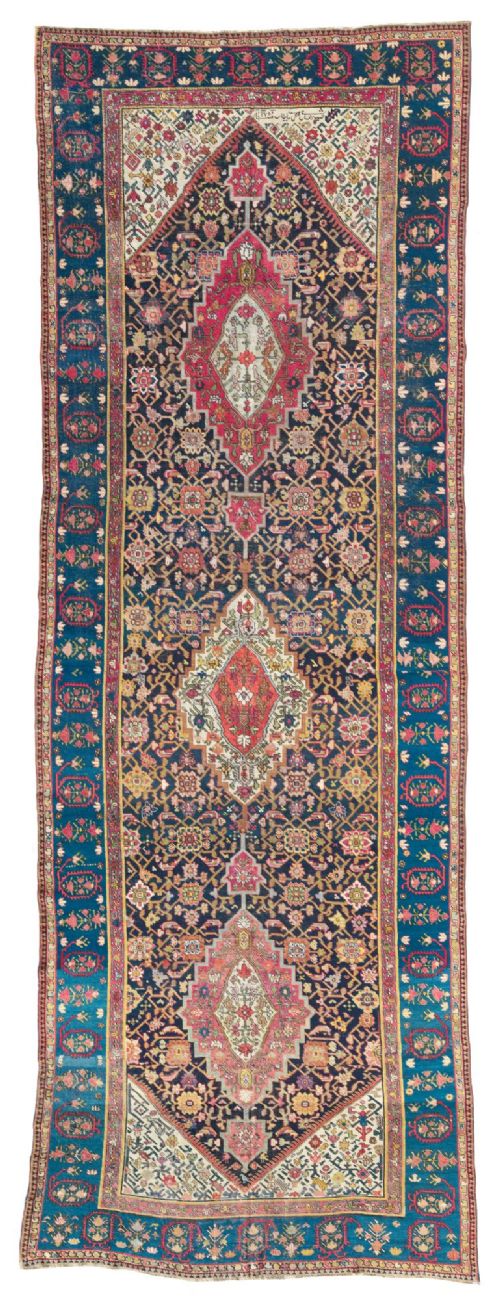
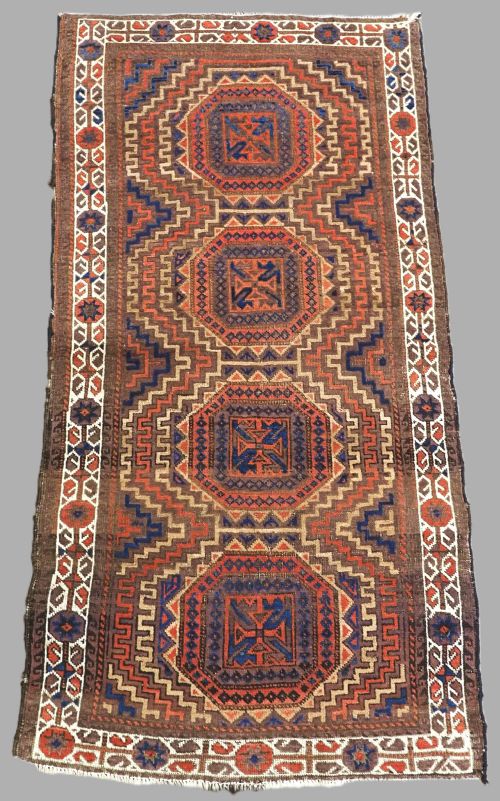
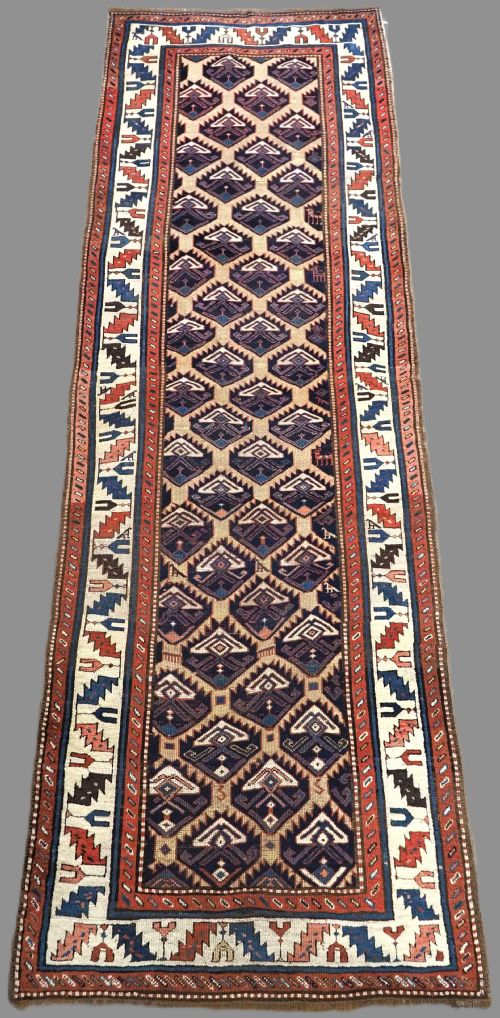
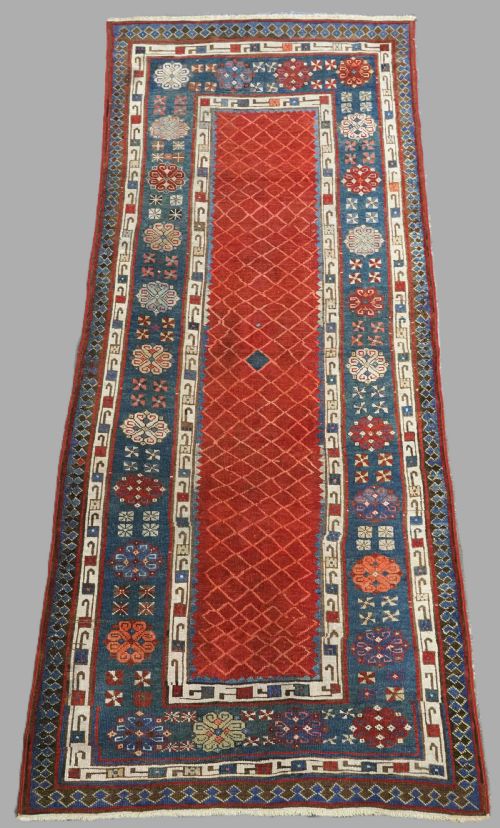
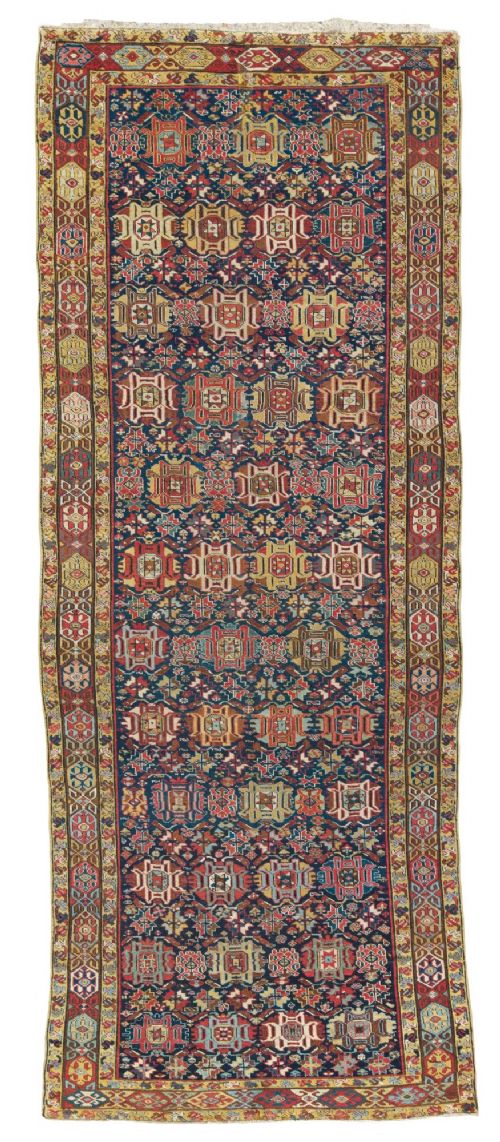
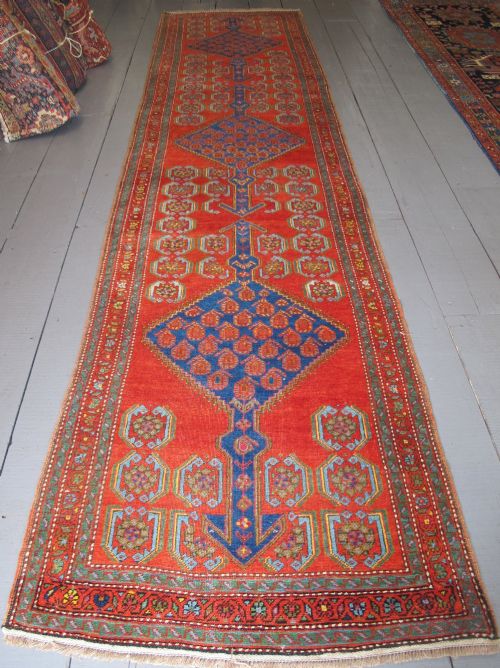
A 19th century runner provides a narrow, elongated format designed originally for corridors and long spaces. These textiles come from diverse weaving traditions across the Caucasus, Persia, and Central Asia. Collectors encounter pieces featuring geometric medallions, lattice patterns, and tribal guls.
The selection encompasses Persian village weaves alongside Caucasian and Turkmen pieces created during the 1800s. Makers produced these floor coverings on vertical and horizontal looms for domestic utility or nomadic migration. Each surviving example reflects the specific regional iconography of its weaving community.
What Varies in Quality
Knot density and structural tension dictate the longevity and definition of the woven design. Tighter foundations allow intricate lattice and animal motifs to remain sharp over generations of use.
The chemical composition of the dye determines colour stability and depth as the textile ages. Pieces retaining pure natural dye variations exhibit a nuanced patina that synthetic alternatives cannot replicate.
19th Century Runner Retail Price Guide 2026
Typical asking prices for 19th century runner among the pieces listed under this phrase on Sellingantiques today, from the lower quarter to the upper quarter. They describe what is for sale here now, not the wider market.
Listings feature wool, cotton, goat hair, and natural dyes across Caucasian, Persian, and Central Asian tribal styles.
The 19th Century Runner Glossary
- Gul
- An octagonal medallion motif repeated across Turkmen and Baluch carpets. This design element often serves as a tribal identifier for specific weaving groups.
- Kelleh
- A large format carpet format intermediate in proportion between a standard rug and a gallery runner. These pieces traditionally occupied the central floor space of a formal room.
- Kilim
- A flatweave textile produced without a pile by tightly interweaving warp and weft threads. This technique creates lightweight geometric panels utilised for floor coverings and tent furnishings.
- Torba
- A small storage bag produced by nomadic weavers to hang inside a tent. Surviving fragments often display intricate guls and fine knotting.
- Warp
- The vertical foundation threads stretched lengthwise on the loom before weaving begins. These structural elements support the entire tension of the knotted pile.
19th Century Runner: Frequently Asked Questions
How do I identify a Caucasian runner?
Look for crisp geometric medallions, stark primary colour fields, and characteristic star or lattice motifs. These elements distinguish Caucasian workshop production from softer curvilinear Persian designs.
Examine the palette and wool texture to confirm regional characteristics typical of Talish, Gendje, or Seychour weaving traditions.
Where were these runners originally used?
Nomadic tribes and village households utilised these narrow formats inside tents, along extended hallways, and across large domestic spaces. Their dimensions suited high-traffic corridors and partition areas.
Wealthier urban dwellings also incorporated long carpets to define walking paths through formal reception rooms.
How should I clean a vintage wool runner?
Gentle surface vacuuming without a rotating brush prevents fibre degradation while removing loose particulate matter. Professional textile conservators should handle wet washing to protect natural dye integrity.
Avoid chemical spot treatments that can strip historical dyes from hand-spun wool and cotton foundations.
What defines a Baluch tribal rug?
Baluch weavings typically feature darker indigo and deep brown palettes punctuated by camel hair and intricate shrub or kalam donneh motifs. These pieces reflect nomadic life across regions of Afghanistan and Persia.
Compact dimensions and dense handle differentiate these works from larger sedentary village carpets.